


The human visual system is a sophisticated transducer that converts patterns of light energy into neuronal signals via the retina. Because the retina is functionally an extension of the brain, pathologies can arise from local ocular issues, systemic metabolic disturbances, or neurological lesions affecting the visual pathways. Understanding these disorders requires a distinction between those affecting the refractive media, the neurosensory retina, the optic nerve, and the surrounding orbital structures.
Refractive and Lens Disorders
One of the most common reasons for reduced vision is a refractive error, where light does not focus perfectly on the retina. While myopia (nearsightedness) and hyperopia (farsightedness) are common, cataracts represent a progressive pathological change in the lens itself. A cataract involves the clouding of the lens, often driven by aging or metabolic factors such as diabetes. This clouding prevents light from being clearly focused on the retina, leading to decreased visual acuity. The standard treatment for significant cataracts is surgical extraction of the cloudy lens followed by the placement of an intraocular lens (IOL).
Clinical Pearl: In patients with acute-onset myopia, always screen for diabetes mellitus, as hyperglycemia can induce lens edema that shifts the refractive state.
Glaucoma and Optic Neuropathy
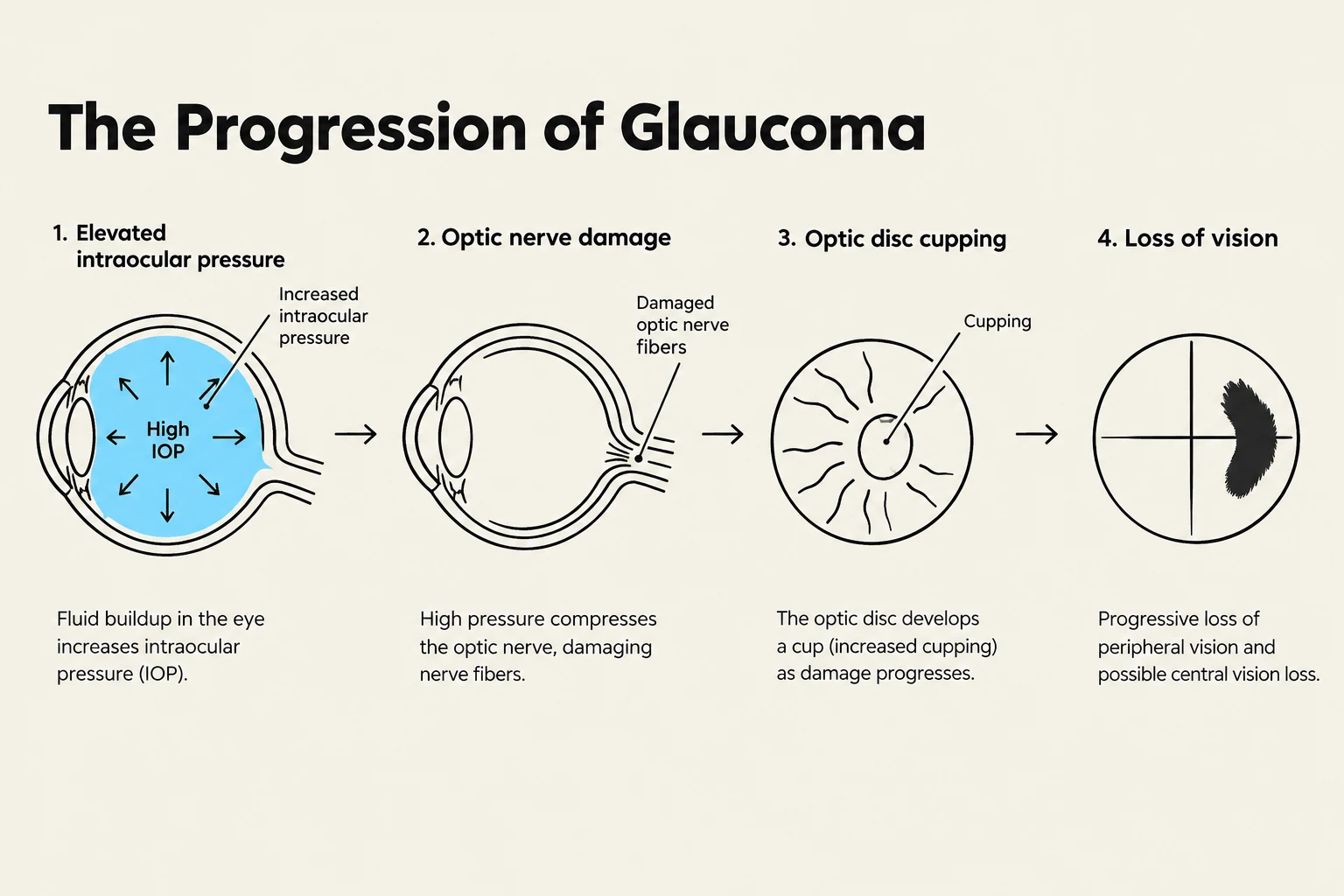
Glaucoma is an insidious optic neuropathy characterized by the progressive loss of retinal ganglion cells. It is most commonly associated with a chronic elevation of intraocular pressure (IOP), which leads to pathologic "cupping" of the optic disc. As the nerve fibers are destroyed, patients often develop characteristic visual field defects known as arcuate scotomas—curved blind spots that emanate from the blind spot and sweep around the fixation point.
Keep reading for free.
Create an account to finish this reading and make it part of your study routine.
Continue reading freeAlready have an account? Log in
Updated