


Palpitations are one of the most common cardiovascular complaints encountered in clinical practice. While often benign, they can serve as the primary symptom of significant cardiac arrhythmias that require urgent intervention. For a clinician, the challenge lies in distinguishing between physiological sensations—such as those triggered by anxiety or caffeine—and pathological electrical disturbances of the heart. This article provides a structured approach to assessing heart rhythm sensations, identifying triggers, and recognizing red-flag symptoms.
Understanding the Sensation
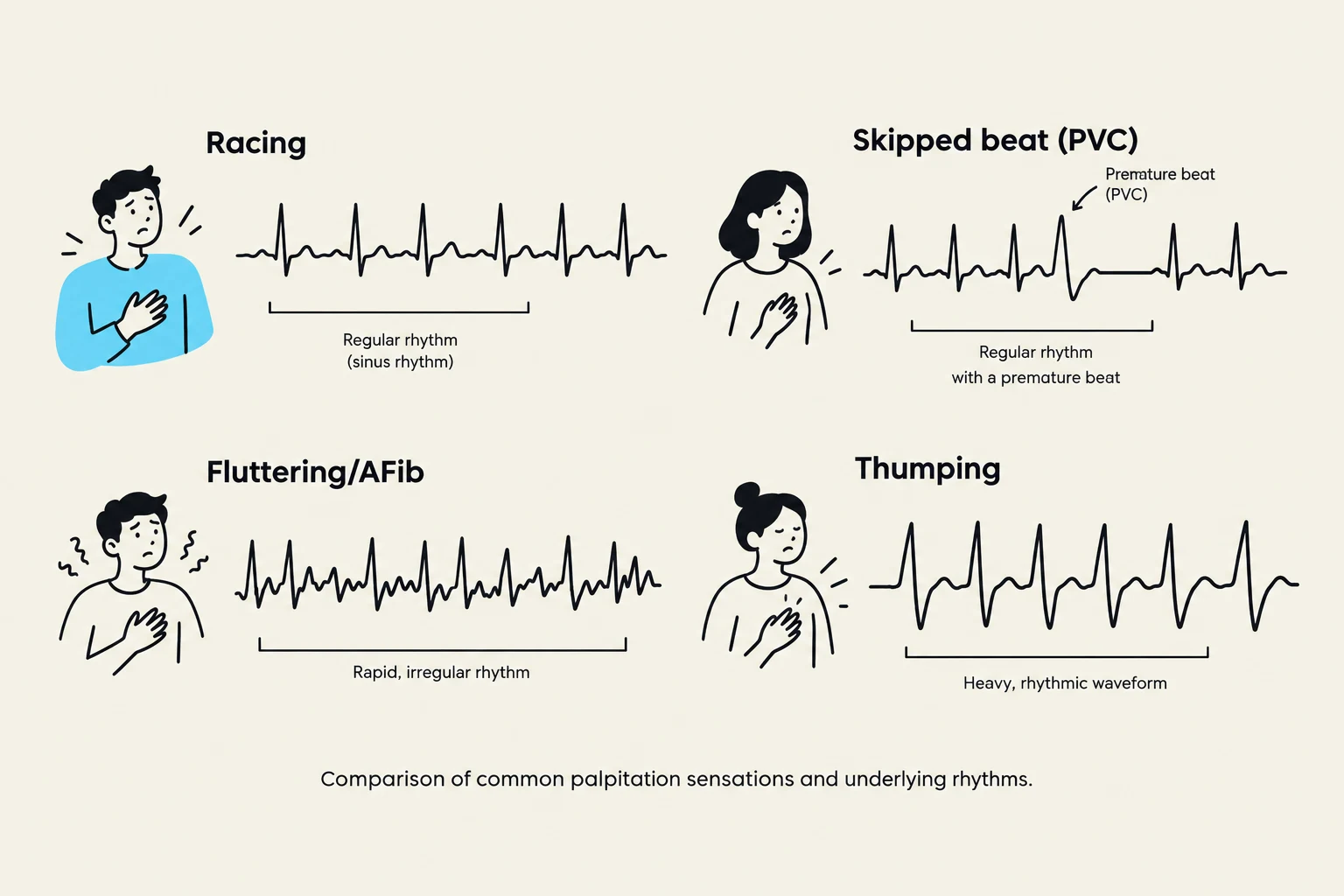
- Fluttering: A sensation of "wings flapping" in the chest.
- Skipped beats: The feeling that the heart has paused, often followed by a forceful contraction.
- Thumping or Pounding: A heavy, rhythmic sensation, often felt in the neck or chest.
- Racing: A rapid, continuous increase in heart rate.
Accurately characterizing the rhythm is essential for narrowing down the differential diagnosis. For instance, a sensation of "skipped beats" might suggest premature ventricular contractions (PVCs) or premature atrial contractions (PACs), whereas a sustained, rapid racing sensation might point toward supraventricular tachycardia (SVT) or atrial fibrillation.
Clinical Tip: Always ask the patient to demonstrate the rhythm with their hands if they find it difficult to describe. This can provide valuable qualitative data about the regularity or irregularity of the sensation.
Identifying Triggers and Patterns

Keep reading for free.
Create an account to finish this reading and make it part of your study routine.
Continue reading freeAlready have an account? Log in
Updated