


If you were to look at a map of the world, you would notice that certain animals and plants are strictly confined to specific regions. You won't find polar bears in the Amazon rainforest, nor will you find cacti thriving in the frozen tundra. While factors like competition, predation, and soil chemistry play significant roles in ecology, the most fundamental "filter" determining where life can exist is the climate.
Understanding climate as a distribution driver means looking at how energy and moisture availability dictate the physiological limits of organisms. This article explores why climate acts as the primary architect of global biodiversity patterns.
The Physiological Filter: Energy and Water
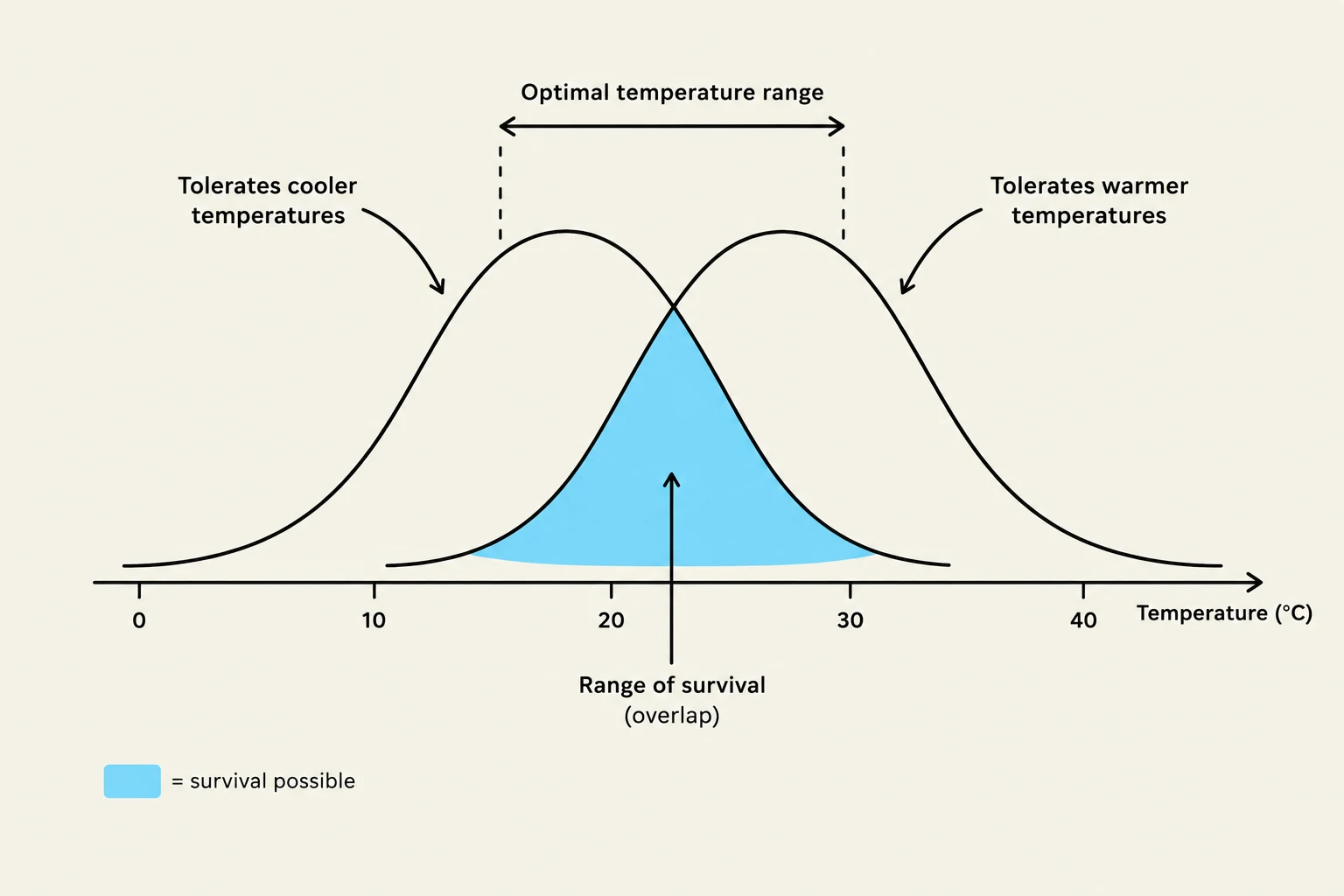
At its core, climate dictates the "rules of survival" through two main variables: temperature and precipitation. Every organism has a specific physiological tolerance range. If the temperature exceeds a certain threshold, proteins may denature; if it drops too low, cellular fluids may freeze. Similarly, water availability determines whether an organism can maintain osmotic balance or perform photosynthesis.
We can think of climate as a multi-dimensional envelope. For a species to persist in a location, the local climate must fall within its "fundamental niche"—the set of environmental conditions under which it can survive and reproduce.
Exam Tip: When discussing distribution, distinguish between the fundamental niche (the range of conditions a species can tolerate) and the realized niche (the range it actually occupies due to biological interactions like competition). Climate primarily defines the fundamental niche.

Keep reading for free.
Create an account to finish this reading and make it part of your study routine.
Continue reading freeAlready have an account? Log in
Updated