This content explains how to classify physical activity into light, moderate, and vigorous intensity levels using metrics like METs, energy expenditure, and maximum heart rate. It also discusses the purposes of physical activity for health, fitness, and performance, and the importance of reducing sedentary behavior.
Physical activity is defined as any bodily movement that requires skeletal muscle and results in energy expenditure. While we often use terms like "exercise" and "physical activity" interchangeably, they are distinct: exercise is a structured, planned subset of physical activity specifically aimed at improving fitness. Because different activities provide different physiological benefits, it is essential to understand how to classify them. By measuring intensity through energy expenditure, metabolic equivalents, and heart rate, we can tailor our movement to meet specific goals for health, fitness, or athletic performance.
Measuring Intensity: METs and Energy Expenditure
To categorize physical activity, scientists use several standardized metrics. One of the most common is the Metabolic Equivalent (MET). A MET represents the amount of oxygen consumed while a person is sitting at rest. For example, an activity rated at 2 METs requires twice the oxygen consumption of sitting still.
Beyond METs, we can measure intensity through energy expenditure in kilocalories (kcals) per minute. This provides a direct look at how much fuel your body is burning during a specific task. Finally, we use maximum heart rate (MHR) as a physiological marker. A simple way to estimate your MHR is to subtract your age from 220:
MHR=220−age
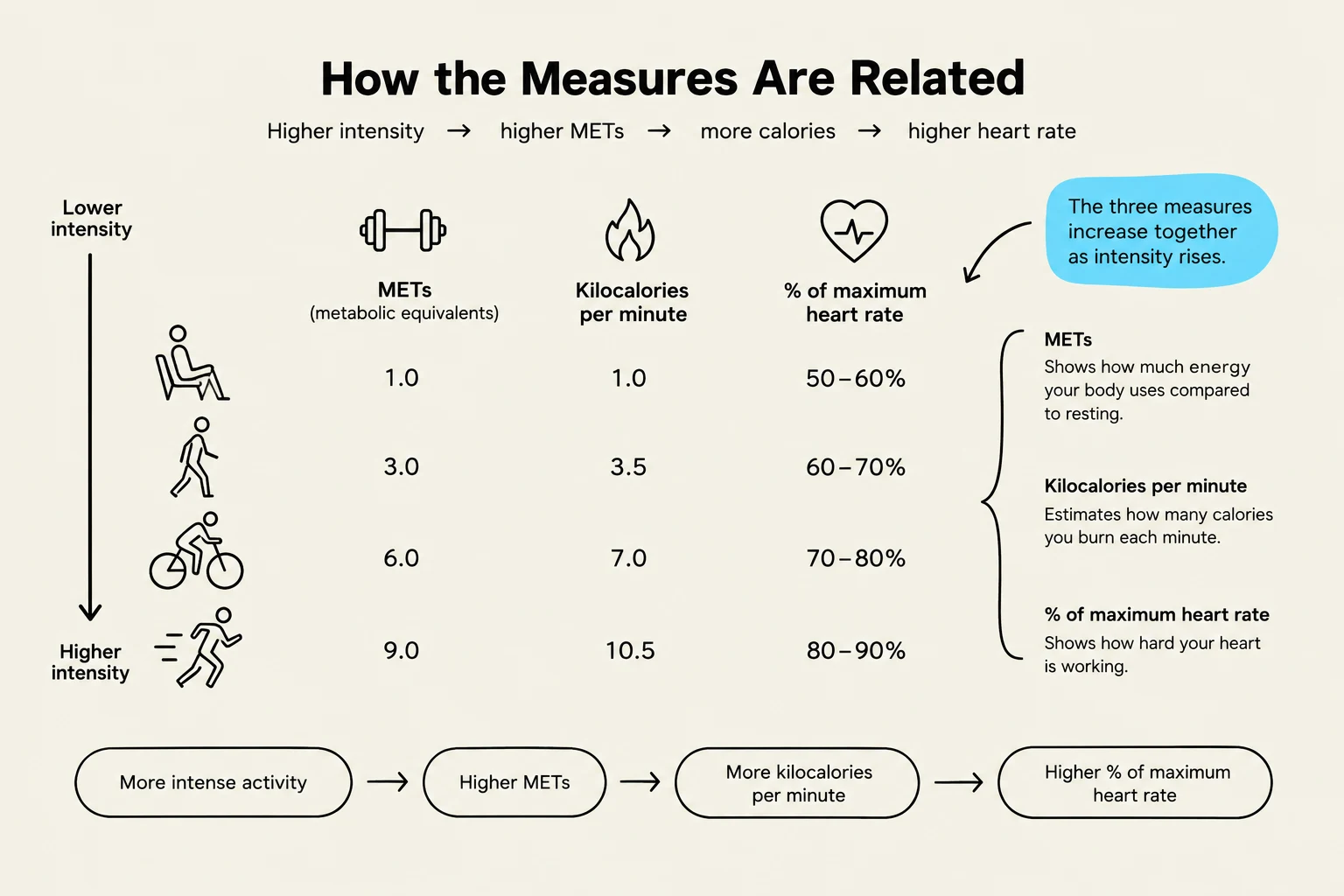
This diagram illustrates the relationship between exercise intensity and key physiological measures: METs (metabolic equivalents), kilocalories burned per minute, and percentage of maximum heart rate. As exercise intensity increases, so do these three measures.
The Three Levels of Intensity
Physical activity is divided into three distinct tiers based on the effort required and the physiological response of the body.
1. Light-Intensity Physical Activity
Light-intensity activities require the least amount of effort. A practical way to gauge this level is the "sing test": if you can sing a song while performing the activity, you are likely in the light-intensity zone.
Energy Expenditure: Less than 3 METs or less than 3.5 kcal/min.
Heart Rate: 55–64% of your MHR.
Examples: Slow walking (such as while shopping), making a bed, or preparing food.
2. Moderate-Intensity Physical Activity
Moderate intensity involves harder breathing and slight sweating. At this level, you should be able to talk to someone, but you will not be able to sing.
Energy Expenditure: 3–6 METs or 3.5–7 kcal/min.
Heart Rate: 65–74% of your MHR.
Examples: Brisk walking, hiking, water aerobics, yoga, or vigorous household chores like vacuuming.
3. Vigorous-Intensity Physical Activity
Vigorous activity causes heavy sweating and significant breathlessness. At this intensity, it is difficult to say more than a few words without pausing for breath.
Energy Expenditure: Over 6 METs or more than 7 kcal/min.
Heart Rate: 75–90% of your MHR.
Examples: Running, jogging, rock climbing, competitive sports (like soccer or basketball), and cross-country skiing.
Student Tip: The Talk Test
If you are unsure of your intensity, use your breath as a guide. If you can sing, it's light. If you can talk but not sing, it's moderate. If you can only gasp out a few words, it's vigorous.
Purposes of Physical Activity
Depending on your goals, you will choose different intensities and types of movement.
Physical Activity for Health
The primary goal here is disease prevention and maintaining general well-being. Adhering to movement guidelines can significantly reduce the risk of death from coronary heart disease, stroke, osteoporosis, colon cancer, hypertension, and type 2 diabetes. For health, even small lifestyle choices—like taking the stairs instead of the elevator—are valuable.
Physical Activity for Fitness
Fitness refers to specific attributes like cardiorespiratory endurance, muscular strength, and flexibility. Unlike general health activity, fitness-oriented activity is often structured and involves pushing toward a "point of discomfort" to trigger physiological adaptations. For example, improving cardiorespiratory fitness typically requires aiming for a target heart rate of 70–90% of your MHR.
Physical Activity for Performance
Common among athletes, this level focuses on improving specific skills like power, speed, agility, or reaction time. This often involves advanced training methods such as plyometrics (e.g., box jumps) or interval training.
This illustration depicts different levels of physical activity, ranging from sedentary behavior to vigorous physical activity, with examples and descriptions for each category.
A Note on Sedentary Behavior
It is a common misconception that being "physically active" for 30 minutes makes you "not sedentary". Sedentary behavior is defined as any waking behavior characterized by an energy expenditure of less than 1.5 METs while in a sitting, reclining, or lying position.
You can meet your daily physical activity guidelines and still be highly sedentary if you spend the rest of your day sitting at a desk or watching TV. Reducing sedentary time is just as important for health as increasing active time, as high levels of sitting are linked to increased risks of obesity, type 2 diabetes, and cardiovascular disease.
Keep reading for free.
Create an account to finish this reading and make it part of your study routine.