


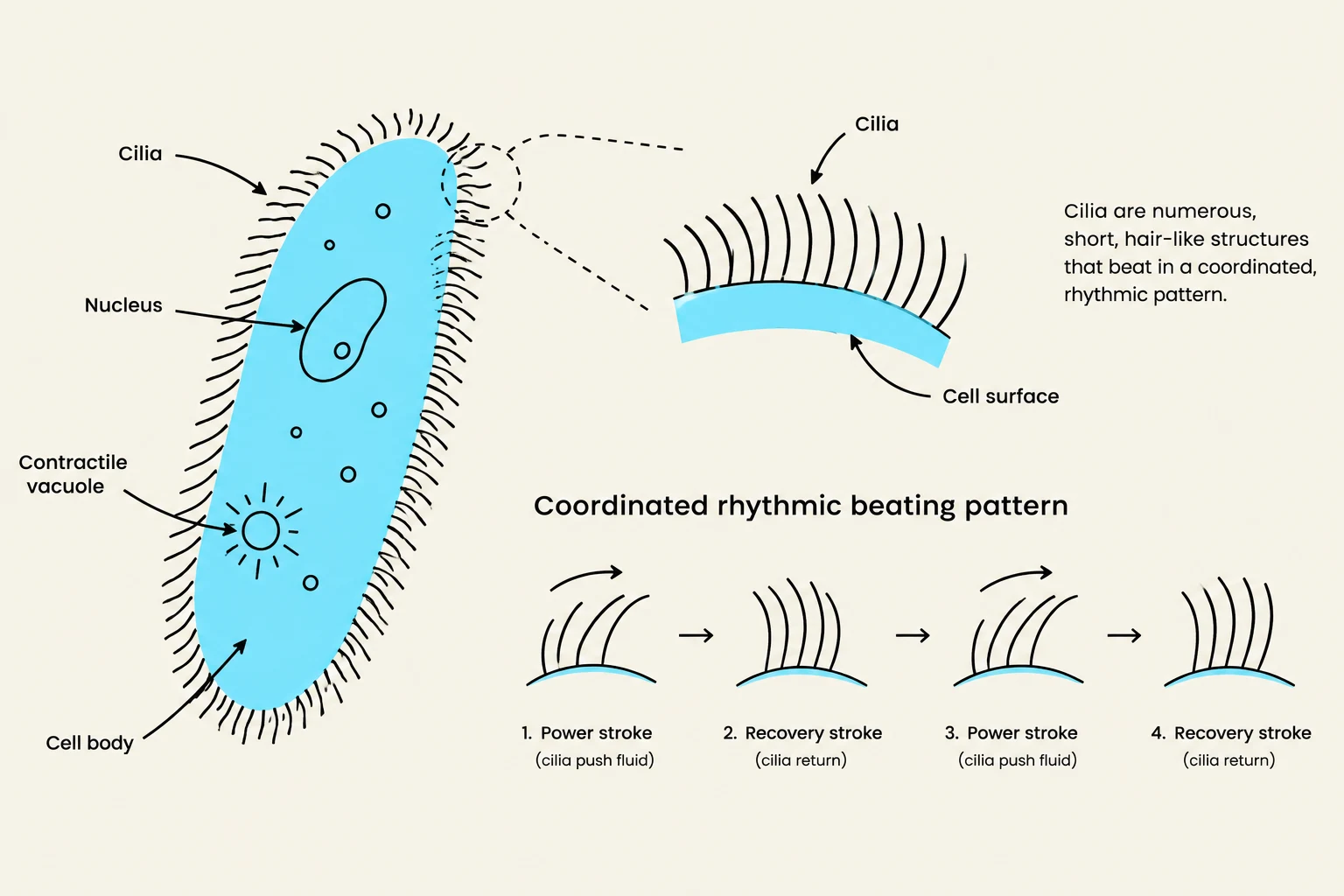
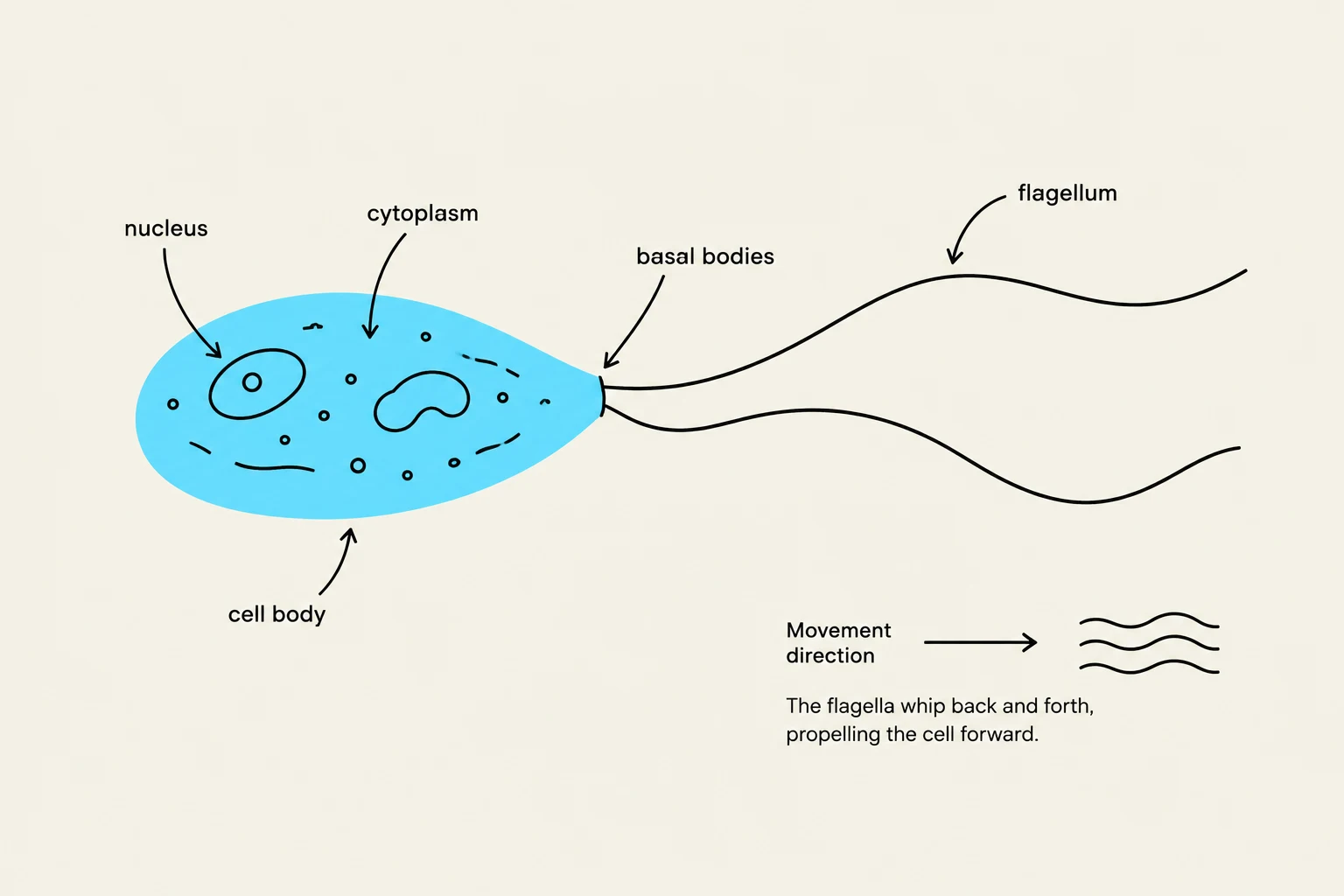
In the microscopic world, movement is not just a way to get from point A to point B; it is a fundamental way to classify single-celled organisms. While multicellular animals use complex muscular and skeletal systems, unicellular eukaryotes rely on specialized cellular extensions to navigate their environments. By observing how a cell moves, biologists can often identify its taxonomic group and understand its ecological niche. This article explores the three primary modes of locomotion used by these tiny organisms: amoeboid movement, ciliary movement, and flagellar movement.
Amoeboid Movement: The Flow of Cytoplasm
Amoeboid movement is perhaps the most fluid and "shapeshifting" form of locomotion. Instead of using a fixed appendage, the organism moves by extending parts of its own body, known as pseudopodia (literally "false feet"). This process is driven by the constant rearrangement of the cell's internal cytoplasm.
The mechanism involves a cycle of cytoplasmic streaming. The cell's cytoplasm exists in two states: a more fluid "sol" state and a more viscous "gel" state. To move, the cell pushes its fluid endoplasm toward a specific point on the cell membrane, causing it to bulge outward and form a pseudopodium. As the cytoplasm flows into this protrusion, the cell's entire body follows. This method is not only used for traveling but is also the primary way many amoeboid organisms capture food through a process called phagocytosis.

Keep reading for free.
Create an account to finish this reading and make it part of your study routine.
Continue reading freeAlready have an account? Log in
Updated