


In the vast world of microbiology, understanding how organisms are organized is fundamental to studying their roles in health, industry, and the environment. Scientists use taxonomy—the science of classifying organisms based on similarities—and systematics (or phylogeny) to study the evolutionary history of life. By using a standardized nomenclature, researchers can identify specific groups and subgroups that share unique characteristics.
While all life is categorized into three domains—Eukarya (animals, plants, fungi), Bacteria, and Archaea—the prokaryotic domains (Bacteria and Archaea) require special attention due to their distinct cellular structures and ecological roles.
The Domain Archaea: Extremophiles and Beyond
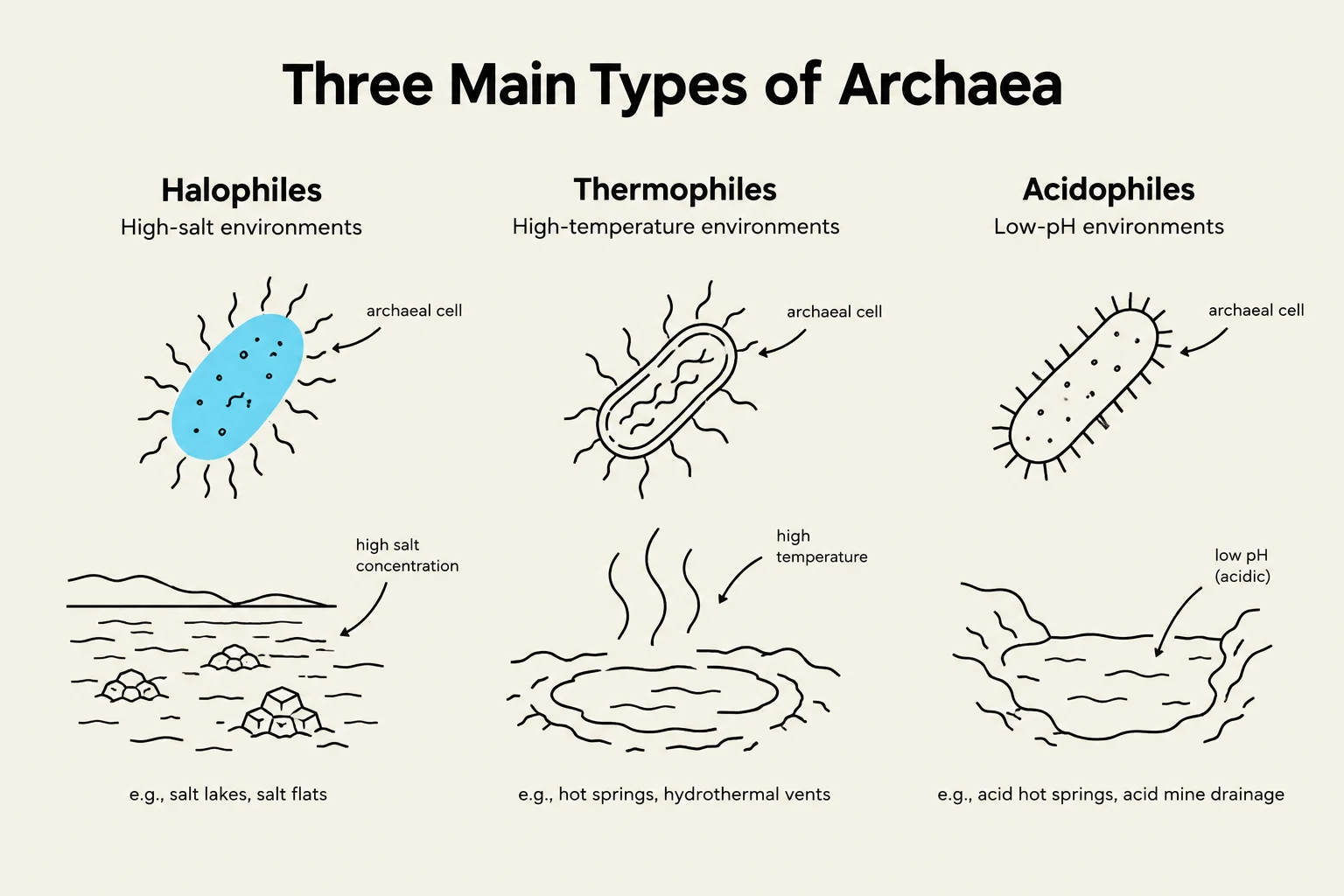
Archaea are prokaryotic organisms that are distinct from bacteria, most notably because they lack peptidoglycan in their cell walls. Many archaea are known as extremophiles, meaning they thrive in environments that would be lethal to most other life forms.
Key groups of Archaea include:
- Halophiles: Organisms that require extremely high salt concentrations, typically .
- Thermophiles: Organisms that require high growth temperatures, often exceeding .
- Methanogens: Anaerobic organisms that produce methane as a metabolic byproduct.
Beyond their ability to survive in extreme heat or salt, Archaea are vital to global ecosystems through nutrient cycling and wastewater treatment. They also play a surprising role in human health. Archaea make up approximately $1.2%$ of the human microbiome; they help defend the skin by reducing its pH and may even produce compounds that help prevent cardiovascular disease. Furthermore, they are industrially indispensable as the source of Taq polymerase, the essential enzyme used in Polymerase Chain Reaction (PCR).
Keep reading for free.
Create an account to finish this reading and make it part of your study routine.
Continue reading freeAlready have an account? Log in
Updated