


At the heart of every living organism lies a complex set of instructions known as DNA. To ensure that life continues—whether through the growth of a single body or the creation of offspring—this genetic material must be precisely copied and distributed. This process involves a sophisticated dance of chromosomes, ensuring that every new cell receives the correct amount of information. If the copying or sorting goes wrong, the consequences for the organism can be significant.
The Blueprint: Chromosomes and Nuclear DNA
In a somatic cell (a non-reproductive cell), the genetic information is organized into structures called chromosomes. These chromosomes are composed of nuclear DNA, which carries the essential instructions for the cell's function and development.
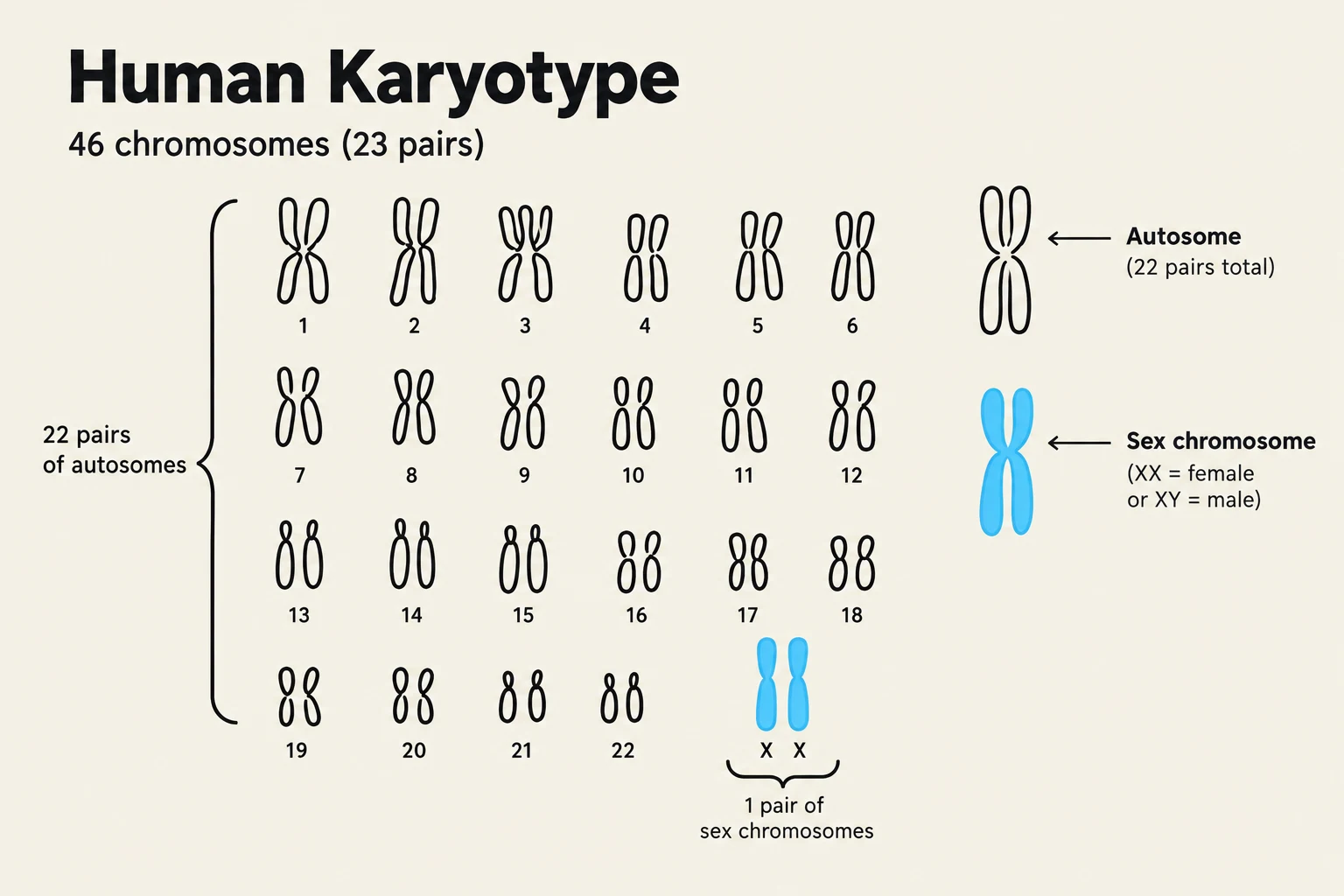
In humans, a typical somatic cell contains 46 chromosomes, organized into 23 pairs. These pairs are categorized into two distinct groups:
- Autosomes: These are the 22 pairs of chromosomes that carry genes for general body characteristics.
- Sex Chromosomes: This is the 23rd pair, which determines the biological sex of the individual.
To visualize the chromosomal makeup of an individual, scientists use a karyotype. A karyotype is a test used to examine the number and overall structure of an individual's chromosomes.
Preparing for Division: DNA Replication
Before a cell can divide, it must undergo DNA replication. During this phase, the cell makes an exact copy of its DNA so that there is enough material for two cells. This process is managed by a complex machinery of enzymes, proteins, and primers.
Keep reading for free.
Create an account to finish this reading and make it part of your study routine.
Continue reading freeAlready have an account? Log in
Updated