


In the nucleus of a eukaryotic cell, several meters of DNA must be packed into a microscopic space. This packaging is not merely a storage solution; it is a sophisticated regulatory mechanism. The way DNA is wrapped around proteins determines whether a gene is "on" or "off." This article explores how the architecture of chromatin and chemical modifications to its components control gene expression without altering the underlying genetic code.
Understanding Chromatin Structure
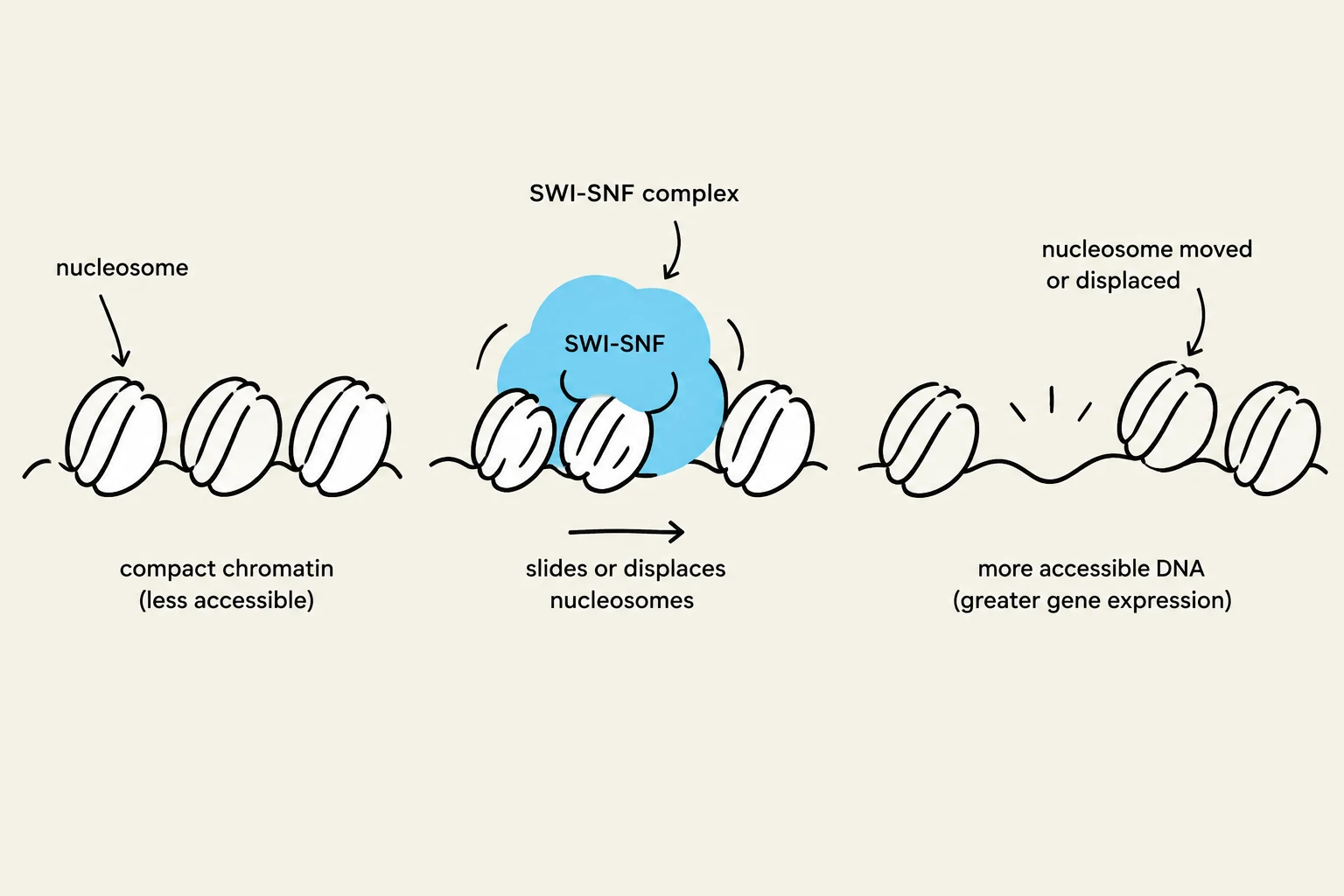
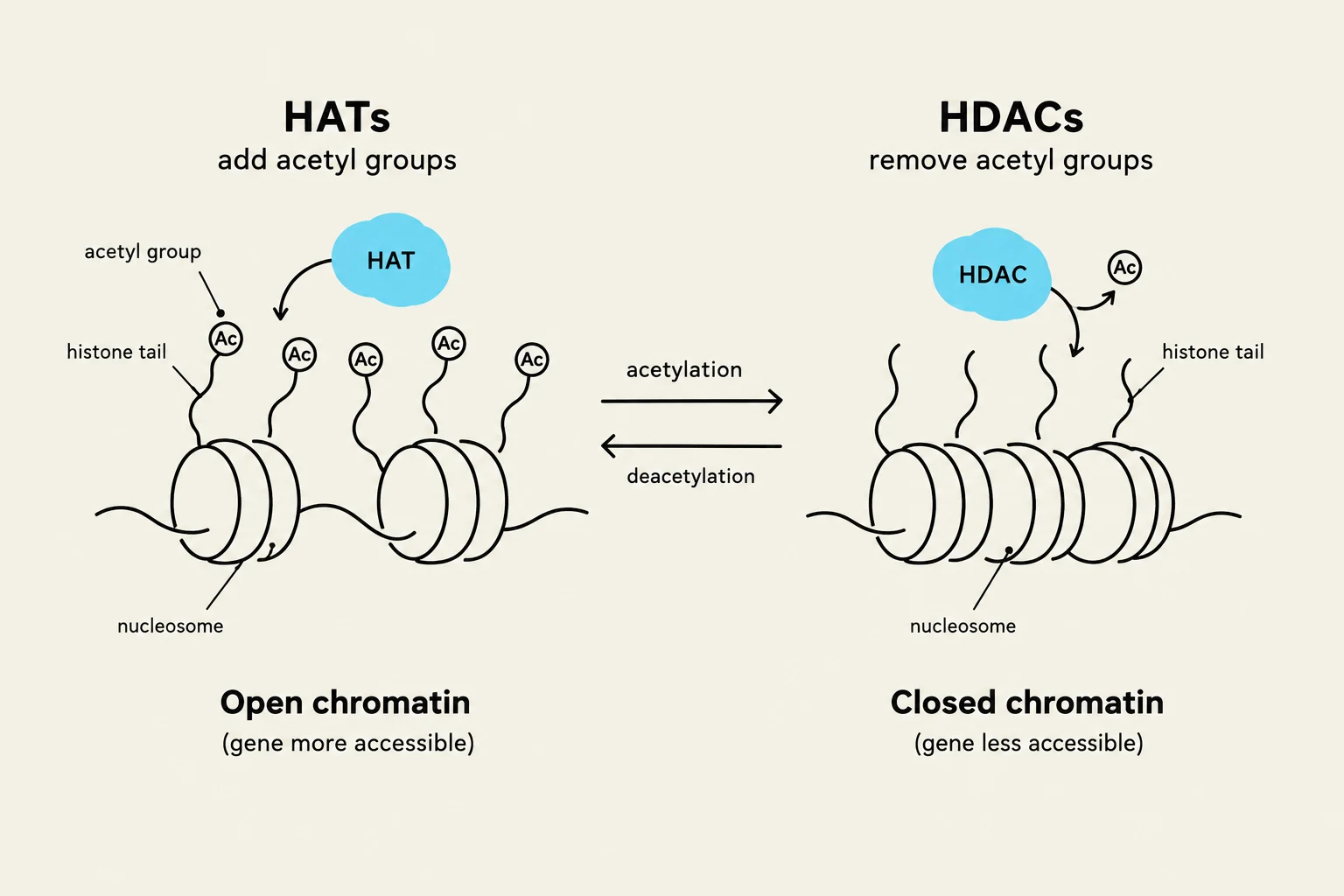
DNA does not exist as a naked strand in the cell. Instead, it is wrapped around protein complexes called histones to form a structure known as chromatin. The density of this packaging is the primary determinant of whether the cellular machinery can reach the DNA to initiate transcription.
Depending on how tightly the DNA is coiled, chromatin can be categorized into two functional states:
- Transcriptionally Inactive DNA: In this state, the chromatin is highly condensed (often referred to as heterochromatin). The DNA is so tightly packed that the enzymes required for transcription cannot physically access the promoter regions of genes.
- Transcriptionally Active DNA: In this state, the chromatin is more relaxed or "open" (often referred to as euchromatin). This openness allows transcription factors (TFs) and RNA polymerase to bind to specific DNA sequences and begin the process of gene expression.

Keep reading for free.
Create an account to finish this reading and make it part of your study routine.
Continue reading freeAlready have an account? Log in
Updated