In the study of pharmacology, understanding the cholinergic system is essential because it touches almost every organ in the body. This system is governed by the neurotransmitter acetylcholine (ACh), which mediates the "rest and digest" functions of the parasympathetic nervous system. When we discuss drugs that increase cholinergic activity, we are often looking at a specific class of medications known as indirect acting agonists. Rather than binding directly to a receptor to turn it on, these drugs manipulate the environment to allow the body's own acetylcholine to work more effectively.
The Mechanism: Acetylcholinesterase Inhibition
To understand how these drugs work, one must first understand how a nerve signal is terminated. Under normal physiological conditions, a nerve impulse triggers the release of acetylcholine from the axon terminal. The ACh crosses the synapse and binds to cholinergic receptors on a target organ, producing a parasympathetic effect (such as slowing the heart or increasing GI motility).
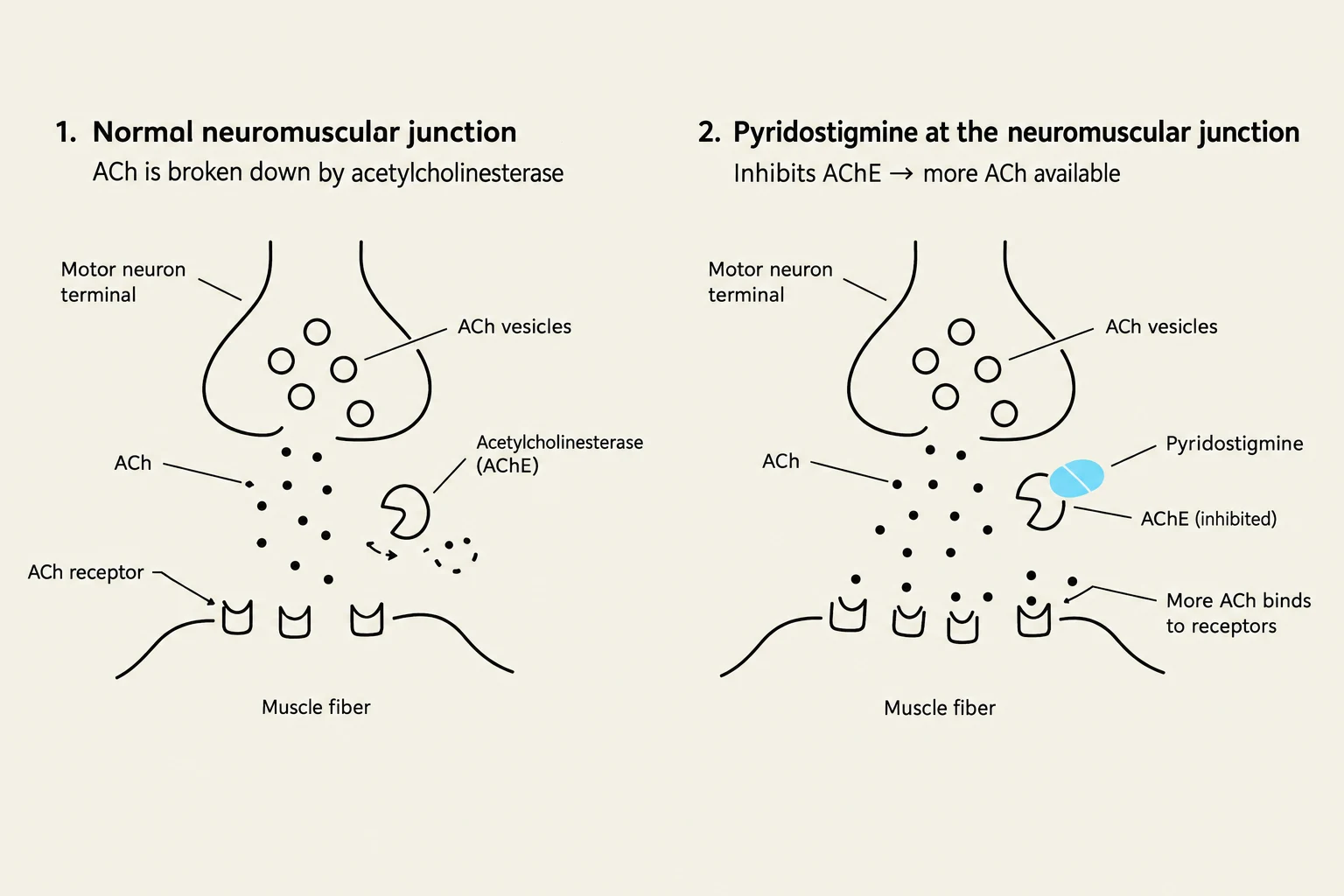
Once the signal is delivered, an enzyme called acetylcholinesterase "swoops in" to break down the acetylcholine, clearing the synapse and resetting the system for the next impulse. Cholinesterase inhibitors work by blocking this "cleanup crew". By inhibiting the enzyme, the drug prevents the breakdown of ACh, causing it to accumulate in the synapse. This results in a stronger, more sustained signal.
Diagram illustrating the process of synaptic transmission, showing the release of acetylcholine from a nerve terminal, its binding to receptors on the postsynaptic membrane, and its subsequent breakdown by acetylcholinesterase into choline and acetate.
Because these drugs do not directly activate the receptor but instead amplify the existing signal, they are classified as indirect acting agonists. A helpful naming tip for students is that many drugs in this class end with the suffix -stigmine.
Clinical Applications: Pyridostigmine and Donepezil
While the mechanism of action is the same for many cholinesterase inhibitors, their clinical utility depends entirely on where in the body they act. Two primary examples are pyridostigmine and donepezil.
Pyridostigmine and Myasthenia Gravis
Pyridostigmine is a neuromuscular drug primarily used to treat myasthenia gravis. Myasthenia gravis is an autoimmune disease where the body produces antibodies that attack and destroy acetylcholine receptors at the neuromuscular junction. Even though the nerve releases ACh, there are not enough receptors left to receive the signal, leading to progressive muscle weakness, drooping eyelids, and potentially respiratory failure.
Pyridostigmine "buys time" for the patient. By preventing the breakdown of ACh, it allows the remaining, unattacked receptors to be stimulated more frequently and for longer periods, improving muscle function. It is also used as an antidote to reverse muscle paralysis caused by neuromuscular blocking agents used during surgery.
Donepezil and Alzheimer's Disease
Donepezil is a "brain drug" used in the management of Alzheimer's disease. In Alzheimer's, the neurons in the brain that produce acetylcholine progressively die off, leading to a significant decline in ACh levels. This decline is directly linked to cognitive symptoms like memory loss, confusion, and difficulty with reasoning.
Donepezil works by making the dwindling supply of acetylcholine last longer in the central nervous system (CNS). It is important to note that donepezil does not cure the disease or reverse existing damage; rather, it aims to slow the rate of cognitive decline and help maintain function for as long as possible.
Diagrams illustrating the normal function of a neuromuscular junction and the effect of pyridostigmine in inhibiting acetylcholinesterase, leading to increased acetylcholine availability.
Toxicity and the Cholinergic Crisis
Because these drugs amplify the parasympathetic nervous system, giving too much can lead to overstimulation. This state of toxic excess is known as a cholinergic crisis.
One of the most dangerous interactions involves combining these drugs with beta-blockers. Since both can slow the heart rate, the combination can lead to severe bradycardia (dangerously slow heart rate). Additionally, excessive stimulation at the neuromuscular junction can cause the junction to "lock up," which paradoxically looks like muscle weakness or muscle paralysis.
To identify overstimulation, clinicians use the SLUDGE mnemonic to remember the cluster of side effects:
Salivation (drooling)
Lacrimation (tearing)
Urination
Defecation
GI distress (cramping, nausea)
Emesis (vomiting)
Exam Tip: If a patient presents with the SLUDGE symptoms while taking a "-stigmine" medication, suspect a cholinergic crisis or overdose.
Summary Table of Cholinesterase Inhibitors
Drug
Primary Target
Clinical Application
Pyridostigmine
Neuromuscular Junction
Myasthenia Gravis; reversal of paralysis
Donepezil
Central Nervous System
Alzheimer's Disease (slowing decline)
Transitioning to Antagonists: The Opposite Side
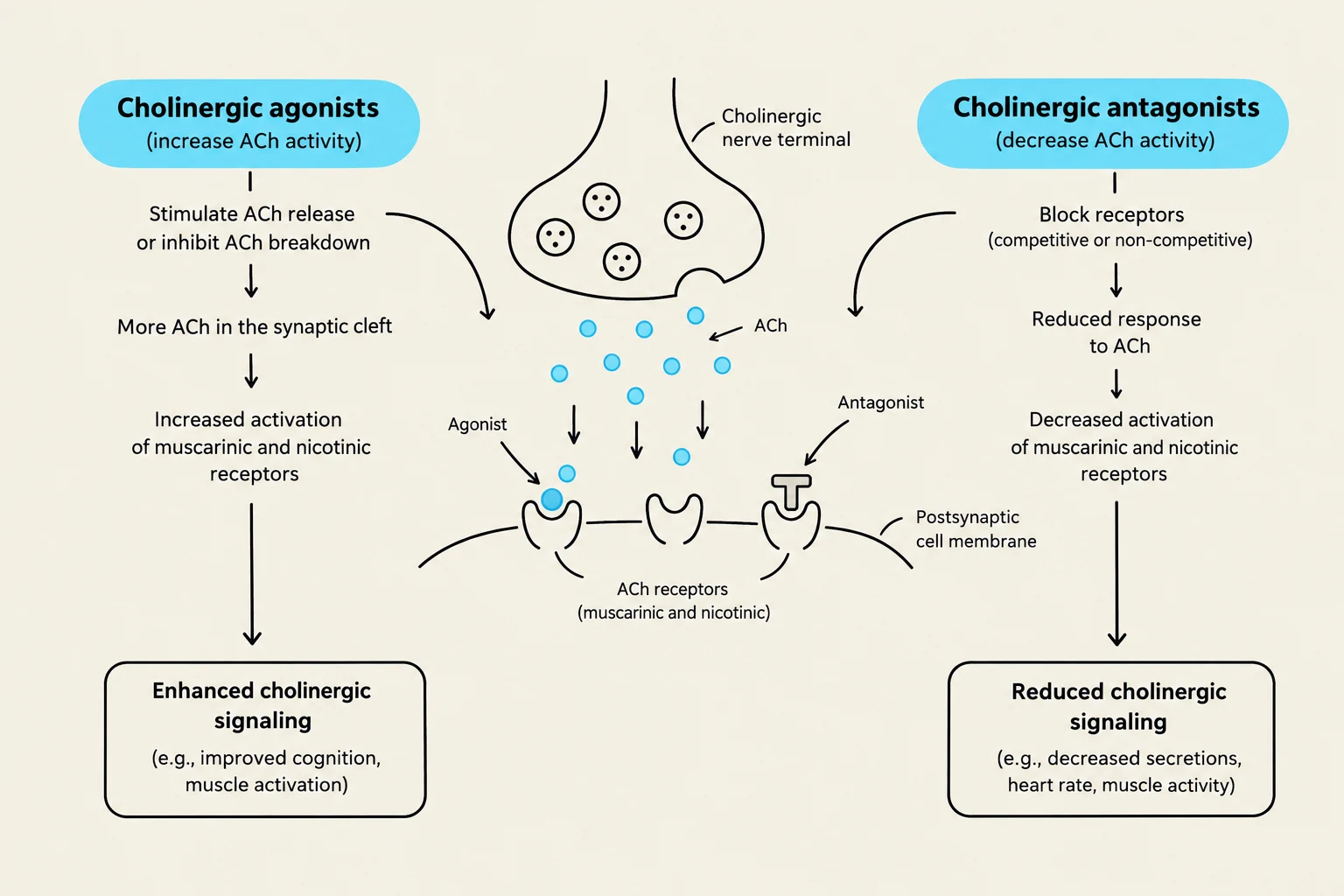
While the drugs discussed above "boost" the system, the next class of drugs—cholinergic antagonists—works to "block" it. Drugs like atropine, glycopyrrolate, and hyoscyamine work by competitively blocking muscarinic receptors, effectively suppressing parasympathetic activity. This results in the opposite of the "rest and digest" response: increased heart rate, dried secretions, and slowed GI motility.
Diagram illustrating the mechanisms of cholinergic agonists and antagonists on acetylcholine activity at a synapse, leading to enhanced or reduced cholinergic signaling, respectively.
Keep reading for free.
Create an account to finish this reading and make it part of your study routine.