


In the complex world of multicellular organisms, survival depends on more than just individual cell function; it requires precise coordination across vast distances. Chemical signaling in animals is the fundamental process by which cells communicate to synchronize physiological responses, ranging from muscle contraction to metabolic shifts. This communication is achieved through cell-cell signaling, where specialized molecules act as messengers to convey instructions between a signaling cell and a target cell.
The Nature of the Signal: Lipid vs. Protein
Not all signals are created equal. The chemical nature of a signaling molecule—specifically whether it is hydrophobic or hydrophilic—determines how it reaches its destination and which receptor it will activate.
Lipid signals, such as steroid hormones (e.g., testosterone or estrogen), are hydrophobic. Because they are "fat-loving," they can easily dissolve in and cross the plasma membrane of the target cell. Once inside, they typically bind to receptors in the cytosol. This receptor-ligand complex then moves into the nucleus to directly influence target gene DNA, altering gene expression.
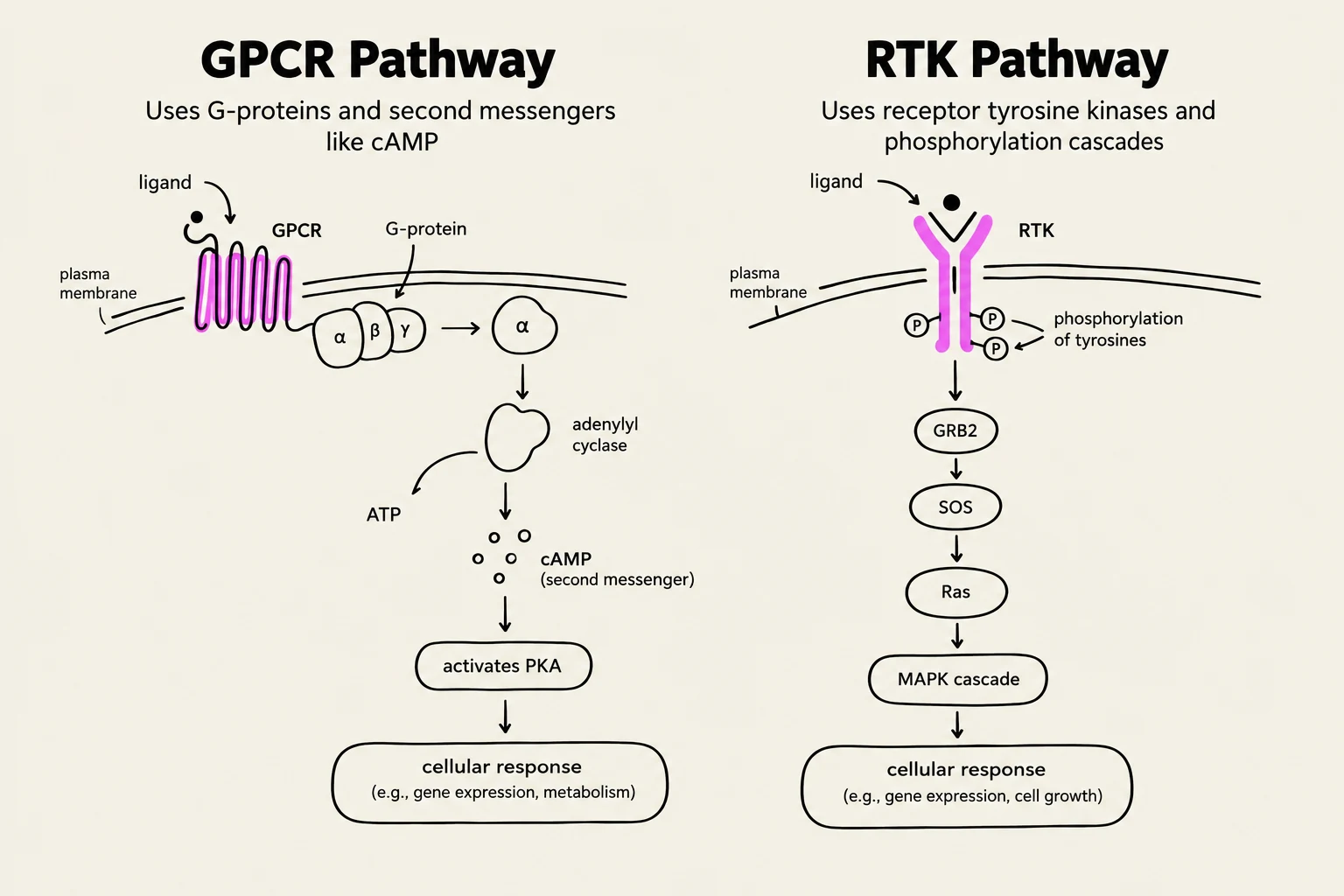
In contrast, protein or non-lipid signals are generally hydrophilic (water-soluble). These molecules cannot pass through the fatty acid tails of the plasma membrane. Instead, they must bind to extracellular receptors located on the cell surface to initiate a response.

Signal Transduction and Amplification
When a signaling molecule (the ligand) binds to its specific receptor, it induces a conformational change—a physical shift in the receptor's shape. This structural change acts as a switch, triggering a signal transduction pathway (or a signal transduction cascade).
Keep reading for free.
Create an account to finish this reading and make it part of your study routine.
Continue reading freeAlready have an account? Log in
Updated