


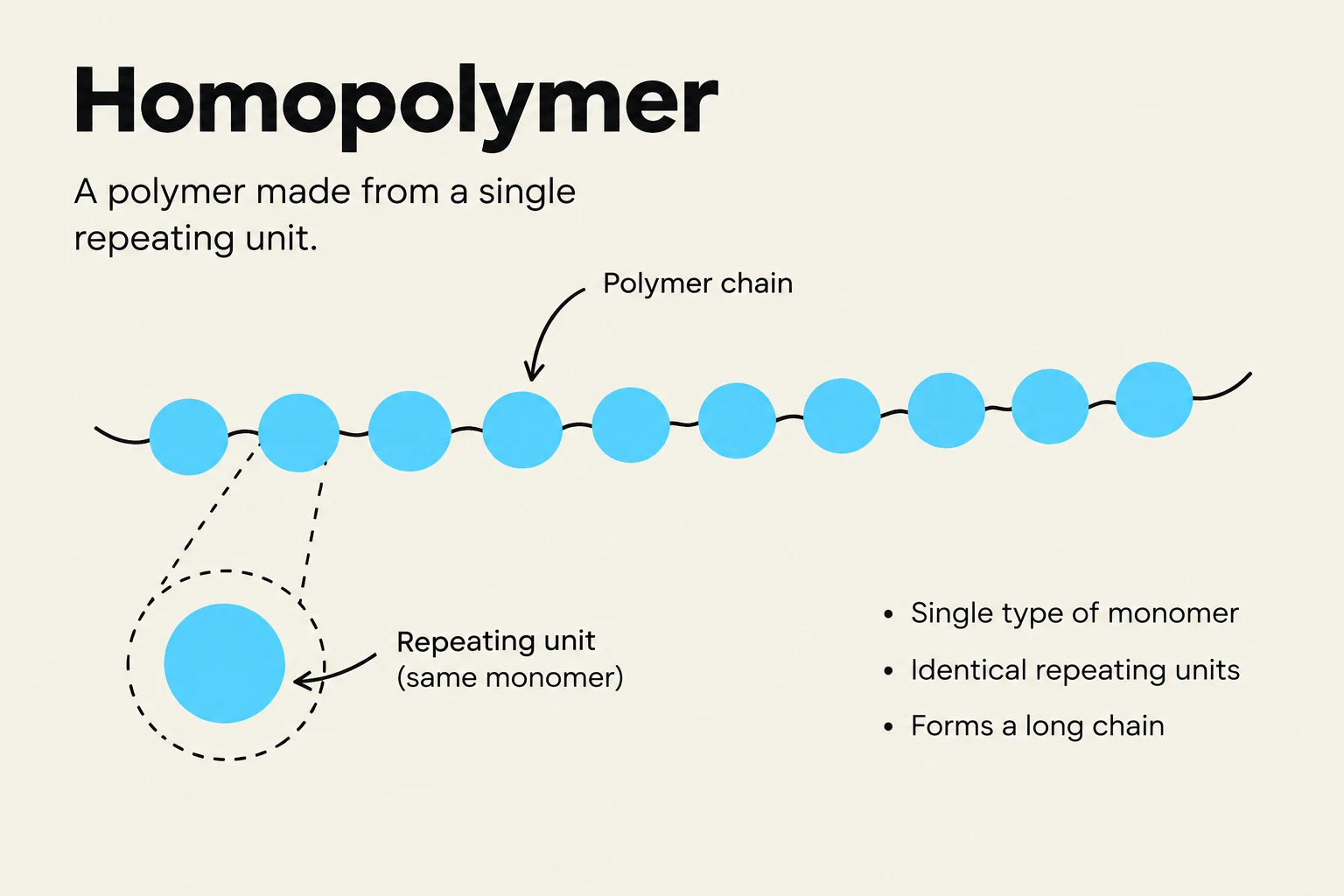
Plastics are among the most versatile synthetic materials in modern engineering, serving industries ranging from packaging to high-performance textiles. At its core, a plastic is a polymer—a large molecule composed of repeating structural units called monomers. However, not all plastics behave the same way. The utility of a plastic material is not determined solely by its chemical formula, but rather by its molecular architecture: how those chains are shaped, how they interact with one another, and how they are composed.
By understanding the relationship between chain structure, density, and monomeric composition, engineers can predict how a material will respond to stress, heat, and environmental factors.
Types of Plastic: Molecular Architecture
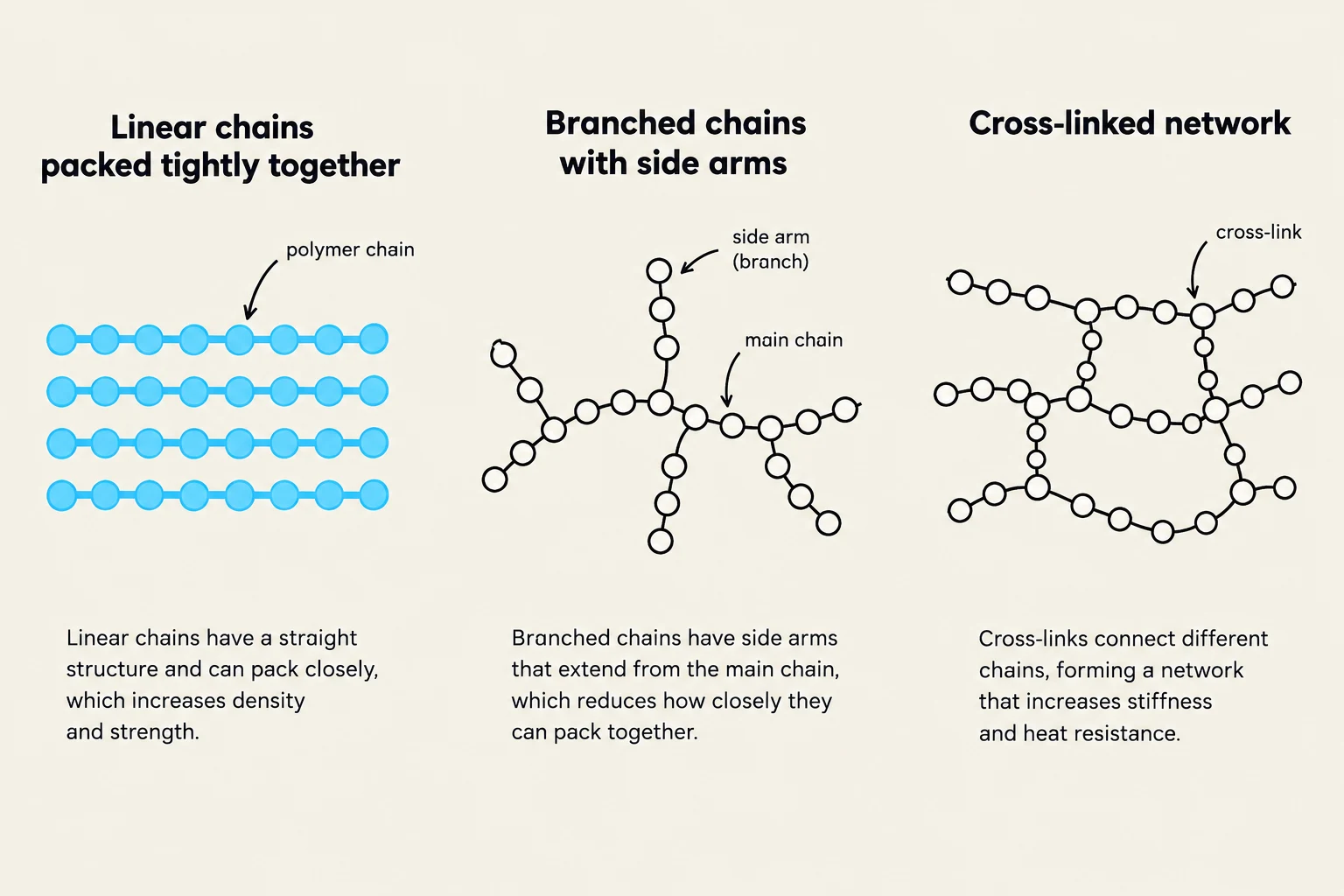
The physical behavior of a plastic is primarily dictated by the arrangement of its polymer chains. We generally classify these arrangements into three distinct structural categories: linear, branched, and cross-linked.
1. Linear Polymers
Linear polymers consist of long, continuous chains of molecules that resemble a single strand of spaghetti. Because these chains are straight and lack significant protrusions, they can align themselves very closely to one another. This tight packing is the fundamental reason why linear plastics often exhibit higher strength and higher density.
2. Branched Polymers
In branched polymers, the main "backbone" of the chain has smaller side chains, or "arms," extending outward. These branches act as physical obstacles, preventing the main chains from sliding close to one another. Imagine trying to pack a box with straight sticks versus a box filled with tree branches; the branches create gaps and empty spaces, making it impossible to achieve the same level of compaction.
Keep reading for free.
Create an account to finish this reading and make it part of your study routine.
Continue reading freeAlready have an account? Log in
Updated