


Muscle tissue is a specialized group of cells designed to produce movement, maintain posture, and generate heat. While there are different types of muscle—skeletal, cardiac, and smooth—they all share a fundamental biological purpose: converting chemical energy into mechanical force. To understand how the body moves, we must first look at the universal properties of muscle cells and then dive into the complex, highly organized structure of the skeletal muscle fiber.

Universal Physiological Characteristics
Regardless of whether a muscle is attached to a bone or found in the walls of an organ, all muscle cells possess five universal physiological properties. These characteristics allow muscles to respond to their environment and perform work.
- Excitability (Responsiveness): The ability of the muscle cell to respond to chemical signals, physical stretch, or electrical changes across its plasma membrane.
- Conductivity: Once an electrical excitation occurs, the cell has the ability to propagate that wave of excitation along the entire muscle fiber.
- Contractility: The unique ability of muscle tissue to shorten forcefully when it receives a stimulus.
- Extensibility: The capacity of the muscle to be stretched between contractions without being damaged.
- Elasticity: The ability of the muscle to return to its original resting length after being stretched.
Skeletal Muscle: Definition and Organization
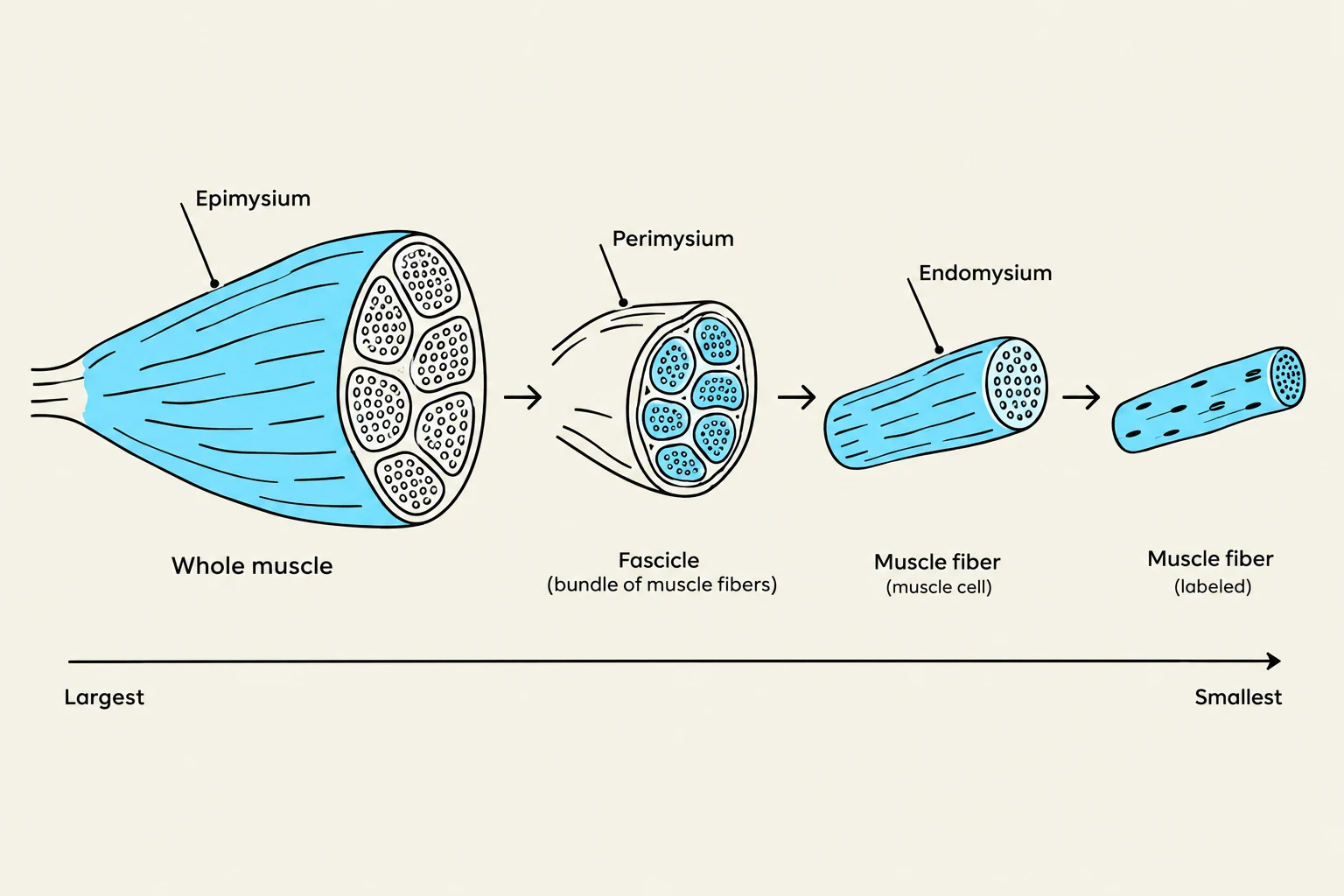
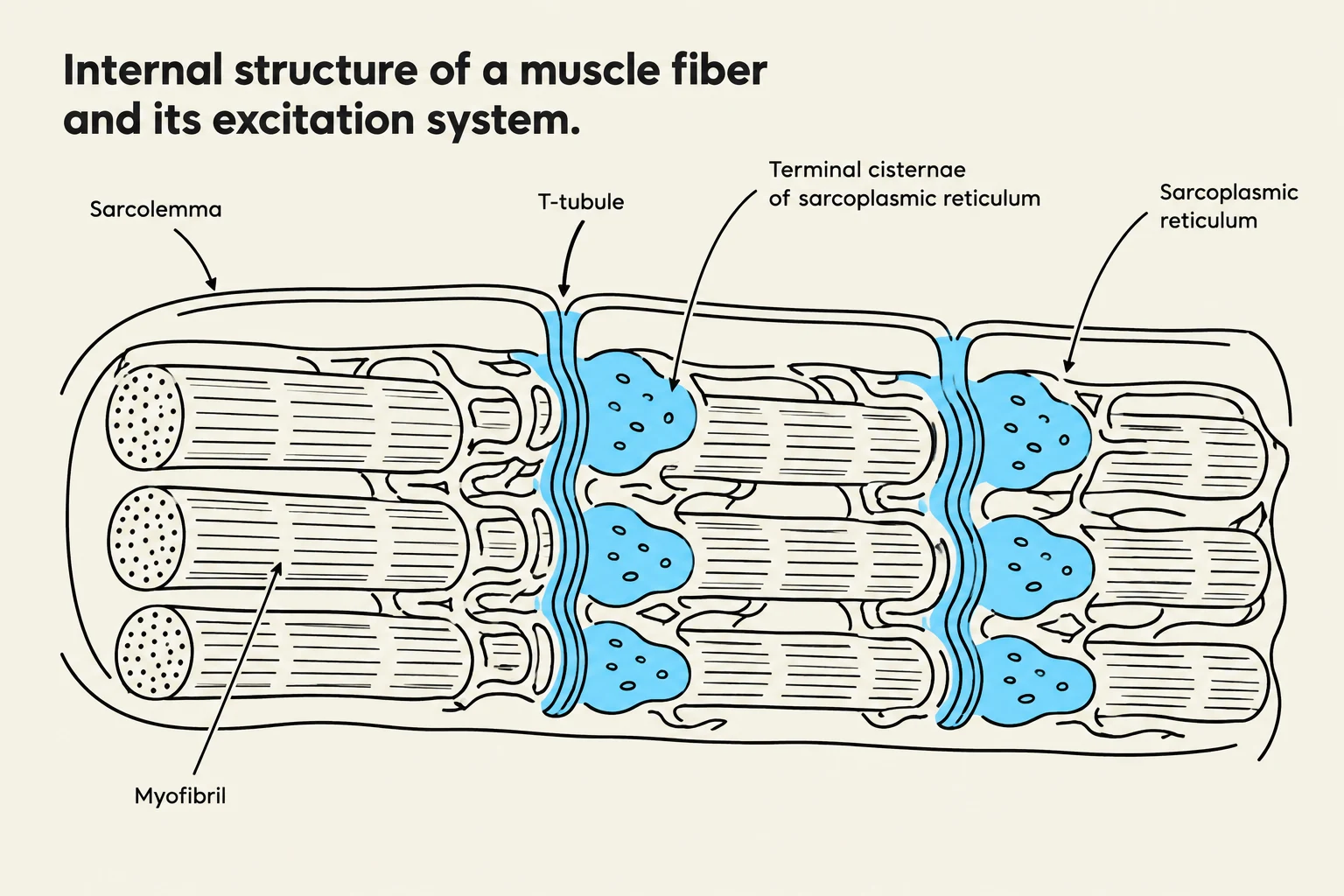
Skeletal muscle is distinct from other muscle types because it is voluntary, meaning it is typically subject to conscious control. It is also characterized by striations, which are alternating light and dark transverse bands visible under a microscope. These stripes are not mere decorations; they are the visual result of the precise, overlapping arrangement of internal contractile proteins.
Keep reading for free.
Create an account to finish this reading and make it part of your study routine.
Continue reading freeAlready have an account? Log in
Updated