


In the complex machinery of the human musculoskeletal system, joints serve as the critical points of contact between bones. While some joints are designed for stability with little to no movement, synovial joints (diarthroses) are engineered for high mobility. To facilitate this movement without destroying the underlying bone, the ends of the bones are coated with a specialized tissue known as articular cartilage. This tissue is essential for distributing mechanical loads and ensuring that joint surfaces glide against one another with minimal friction.
Characteristics of Articular Cartilage
Articular cartilage is a highly specialized connective tissue that appears smooth, shiny, and white in a healthy state. Its primary biological "mission" is to withstand the significant stresses imposed by the movement of bony structures during activities such as walking, running, or lifting.
One of the most defining biological characteristics of articular cartilage is that it is avascular, aneural, and alymphatic. This means it lacks blood vessels, nerves, and lymph channels. Because it lacks a direct blood supply, the tissue has a limited capacity for self-repair; therefore, defects or injuries to the cartilage can lead to major, permanent joint disruptions.
Clinical Note: Because articular cartilage lacks nerves, early-stage damage often does not cause pain. Pain typically arises only once the damage reaches the underlying bone or causes significant inflammation in the surrounding synovial membrane.
Composition of Articular Cartilage
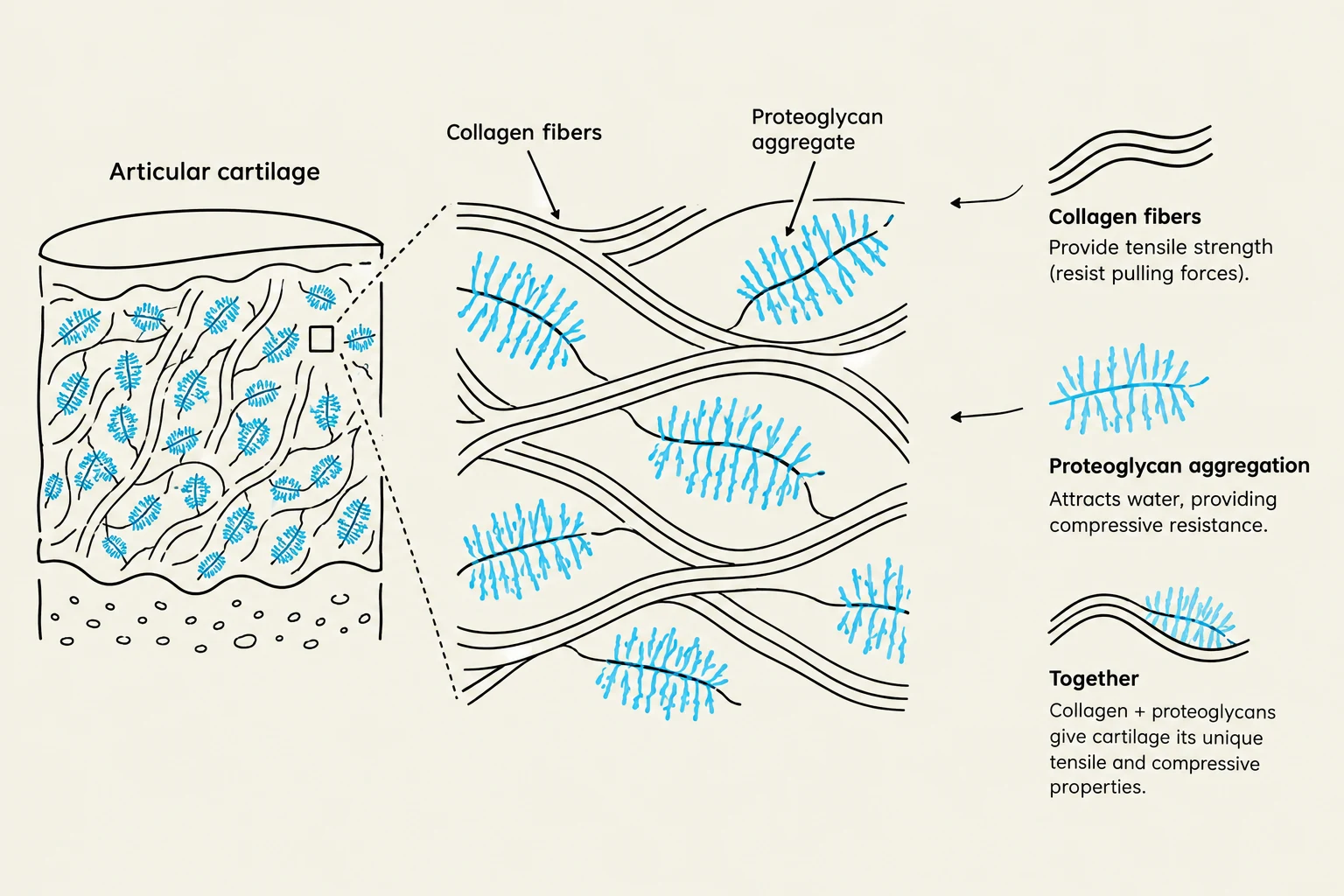
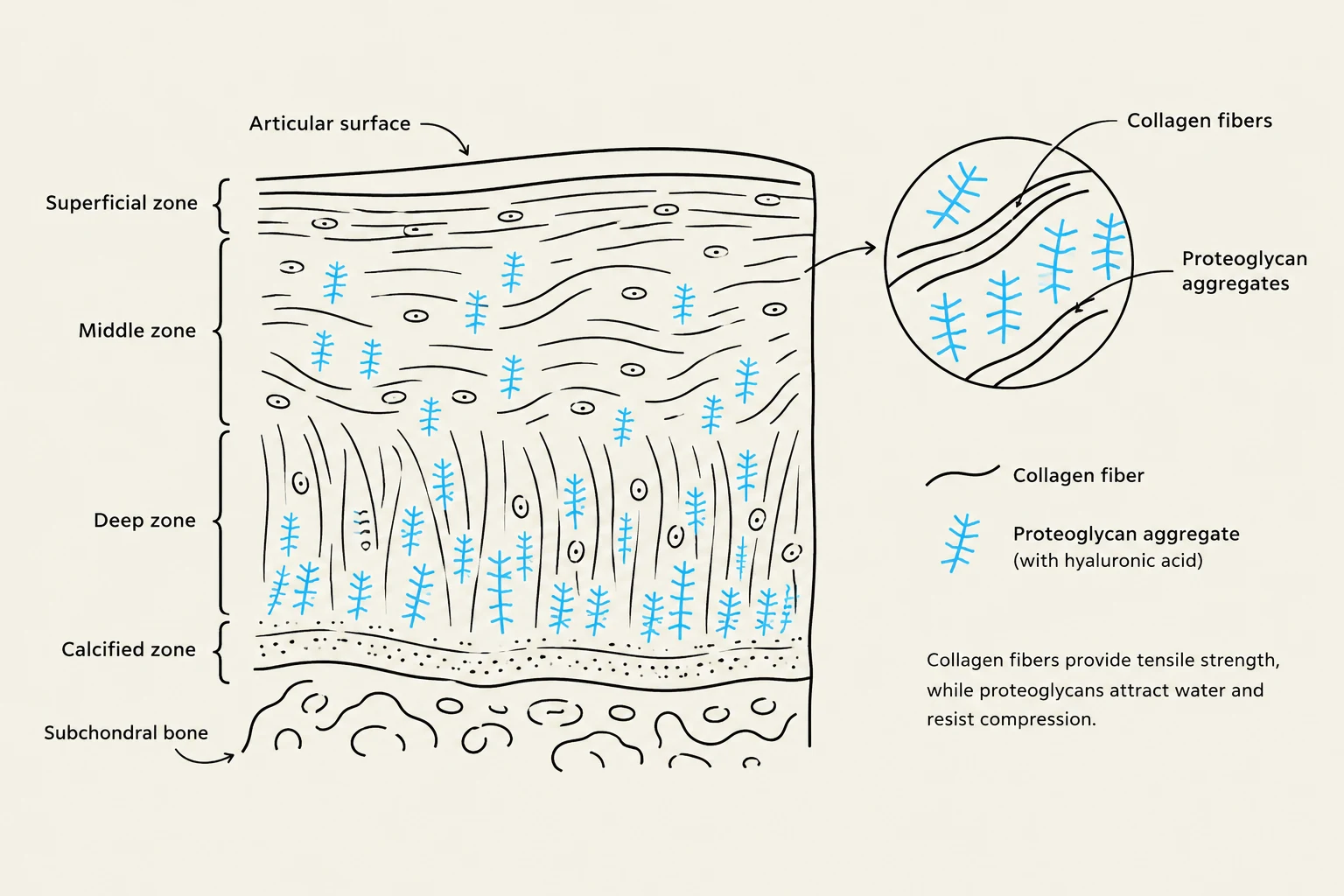
The functionality of cartilage is a direct result of its unique chemical and cellular makeup. It is not a solid, inert block of material, but rather a sophisticated biological matrix.

Keep reading for free.
Create an account to finish this reading and make it part of your study routine.
Continue reading freeAlready have an account? Log in
Updated