


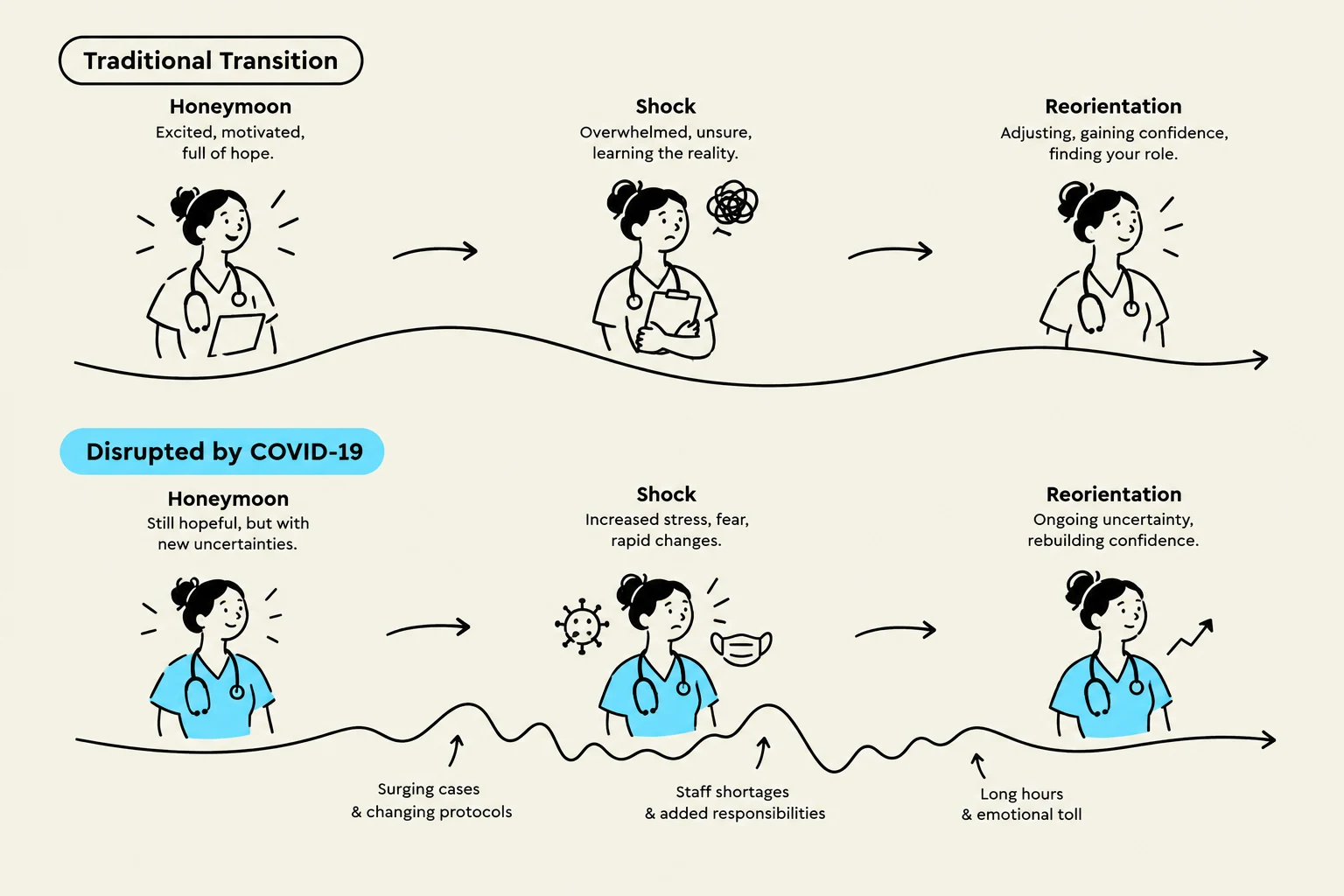
The transition from nursing student to professional practitioner is widely recognized as a period of intense stress, role adjustment, and "reality shock". Traditionally, this transition involves a gradual progression through stages of excitement, shock, recovery, and resolution. However, for the cohort of graduate nurses entering the workforce during the COVID-19 pandemic, this developmental process was fundamentally disrupted. Rather than a predictable evolution, these new professionals faced an unprecedented healthcare crisis that amplified the inherent difficulties of being new to the profession.
The Weight of Being New
For most graduate nurses, the first year of practice is a critical period of competency development. Under normal circumstances, nurses move through phases of "doing," "being," and "knowing". Yet, those starting during the pandemic often bypassed the traditional "honeymoon phase"—the initial period of excitement about joining the profession.
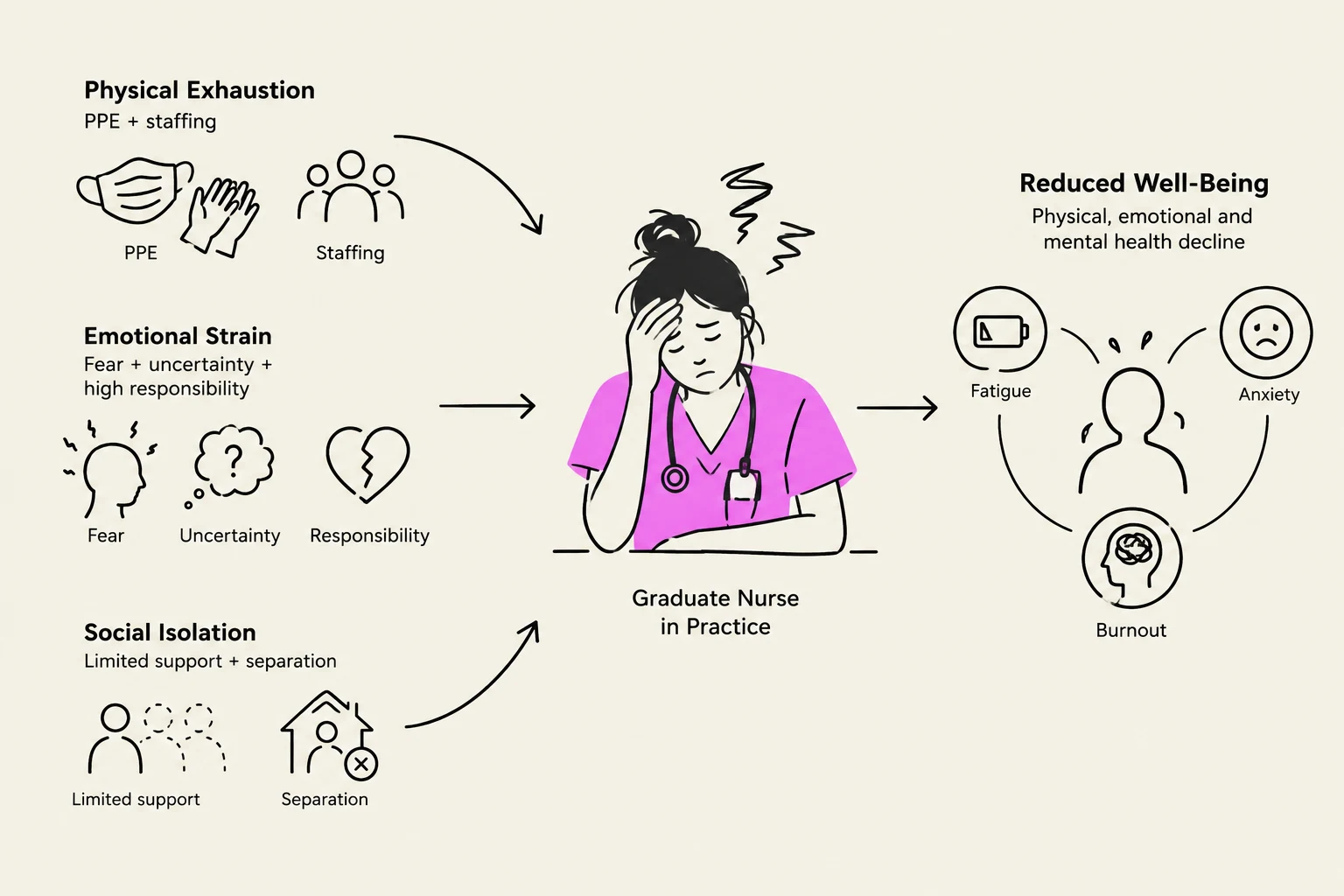
Instead, many reported feeling "thrown into practice," experiencing a sudden, overwhelming increase in responsibility without the benefit of a gradual learning curve. This "rapid fire progression" meant that new graduates were often managing high-acuity patients and complex clinical situations almost immediately, leading to significant anxiety and a fear that they were not doing enough.
Policy Shifts and Knowledge Disconnects
One of the most significant stressors identified by graduate nurses was the disconnect between their academic preparation and the reality of clinical practice during a pandemic.
Infection Control and Policy Volatility
Graduate nurses faced constant changes in infection control policies and protocols. These changes were often communicated electronically and occurred daily, requiring a level of flexibility that many felt was beyond their experience level. This created a sense of a "double standard" where the rules learned in school were frequently superseded by emergency hospital protocols.

Keep reading for free.
Create an account to finish this reading and make it part of your study routine.
Continue reading freeAlready have an account? Log in
Updated