


In eukaryotic cells, the ability to compartmentalize functions within specific organelles is fundamental to life. This compartmentalization is made possible by a highly regulated system of membranes that facilitate the movement of lipids and proteins between different cellular locations—a process known as trafficking. Understanding how a protein moves from its site of synthesis to its final destination, whether that be the plasma membrane, a lysosome, or secretion outside the cell, requires an exploration of the endomembrane system and the various transport mechanisms at play.
The Endomembrane System
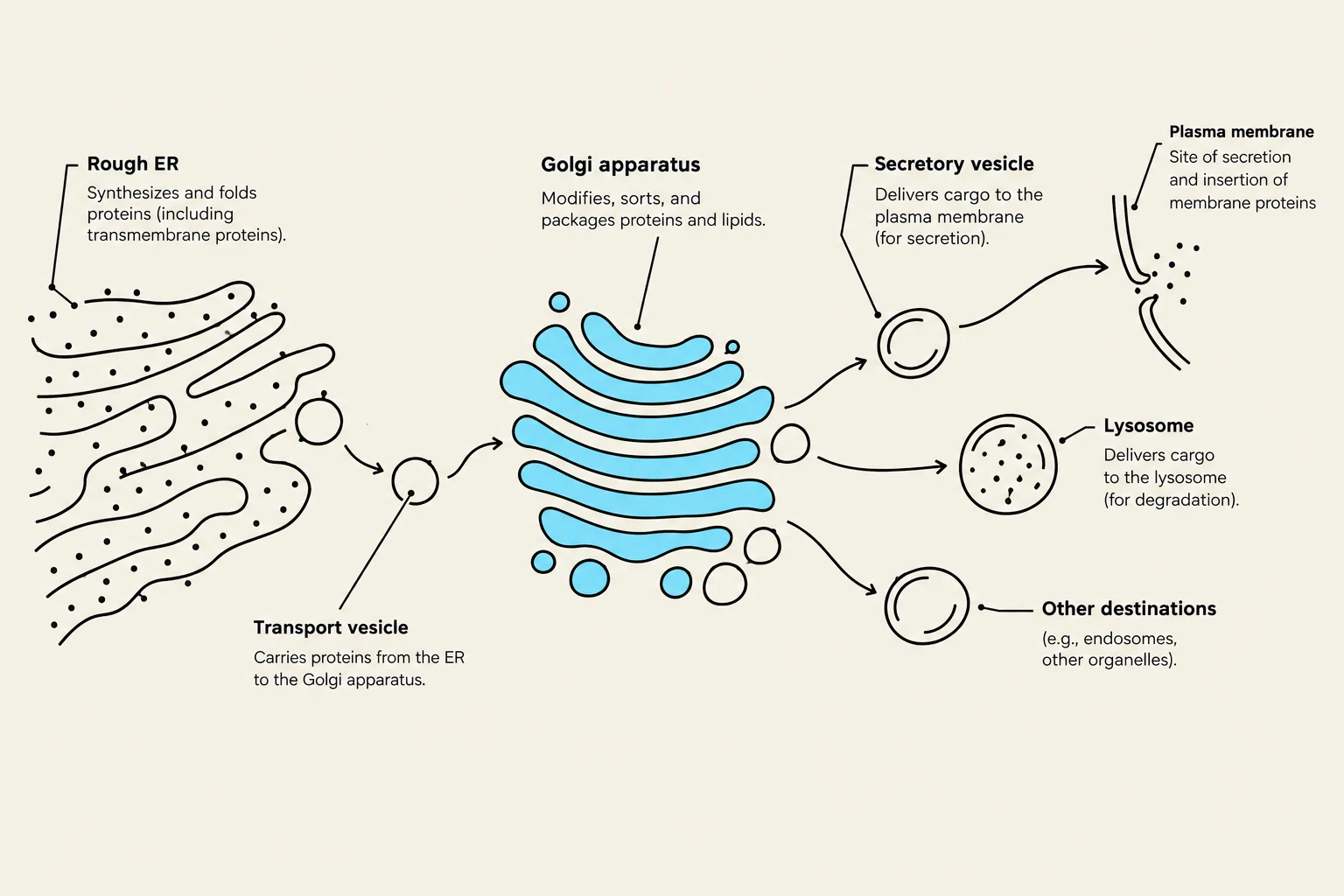
The endomembrane system is a coordinated network of organelles that work together to synthesize, process, sort, and transport proteins and lipids. The primary components include:
- Endoplasmic Reticulum (ER): The site of protein and lipid synthesis.
- Golgi Complex: The central sorting and packaging station.
- Endosomes: Vesicles that carry and sort materials brought into the cell.
- Lysosomes: Organelles containing digestive enzymes to break down macromolecules.
The ER is divided into two types: the Rough ER, which is studded with ribosomes and specializes in protein synthesis for the endomembrane system or export, and the Smooth ER, which lacks ribosomes and is involved in lipid synthesis, drug detoxification, and calcium storage.
Protein Import into the ER
Proteins destined for the endomembrane system or for secretion follow a specific pathway. There are two primary modes of entry into the ER: cotranslational import and posttranslational import.
Cotranslational Import
Most proteins destined for the ER are inserted into the membrane while they are still being synthesized by the ribosome. This process is guided by the Signal Hypothesis, which states that the N-terminus of these proteins contains an ER signal sequence. The Signal Recognition Particle (SRP) recognizes this sequence, binds to the ribosome, and halts translation until the complex attaches to a translocon (a pore complex) in the ER membrane. Once the ribosome is docked, translation resumes, and the growing polypeptide is pushed through the Sec61 pore into the ER lumen.

Keep reading for free.
Create an account to finish this reading and make it part of your study routine.
Continue reading freeAlready have an account? Log in
Updated