Cellular Processes and the Development of Neoplasia
Explores the fundamental cellular processes of proliferation, differentiation, and apoptosis, and how disruptions in these processes, through genetic mutations and epigenetic changes, can lead to the development of neoplasms, including benign and malignant tumors.
In a healthy multicellular organism, life is a delicate balance of growth and decay. Cells must replicate to replace lost tissue, specialize to perform specific functions, and undergo programmed death when they are no longer needed or become damaged. When the regulatory mechanisms governing these processes fail, the result is a breakdown in cellular homeostasis, often leading to the development of abnormal growths known as neoplasms. Understanding the transition from normal cellular behavior to malignancy requires an exploration of genetics, epigenetics, and the fundamental processes of life.
The Fundamentals of Cellular Life
To understand disease, we must first understand the three pillars of cellular behavior: proliferation, differentiation, and apoptosis.
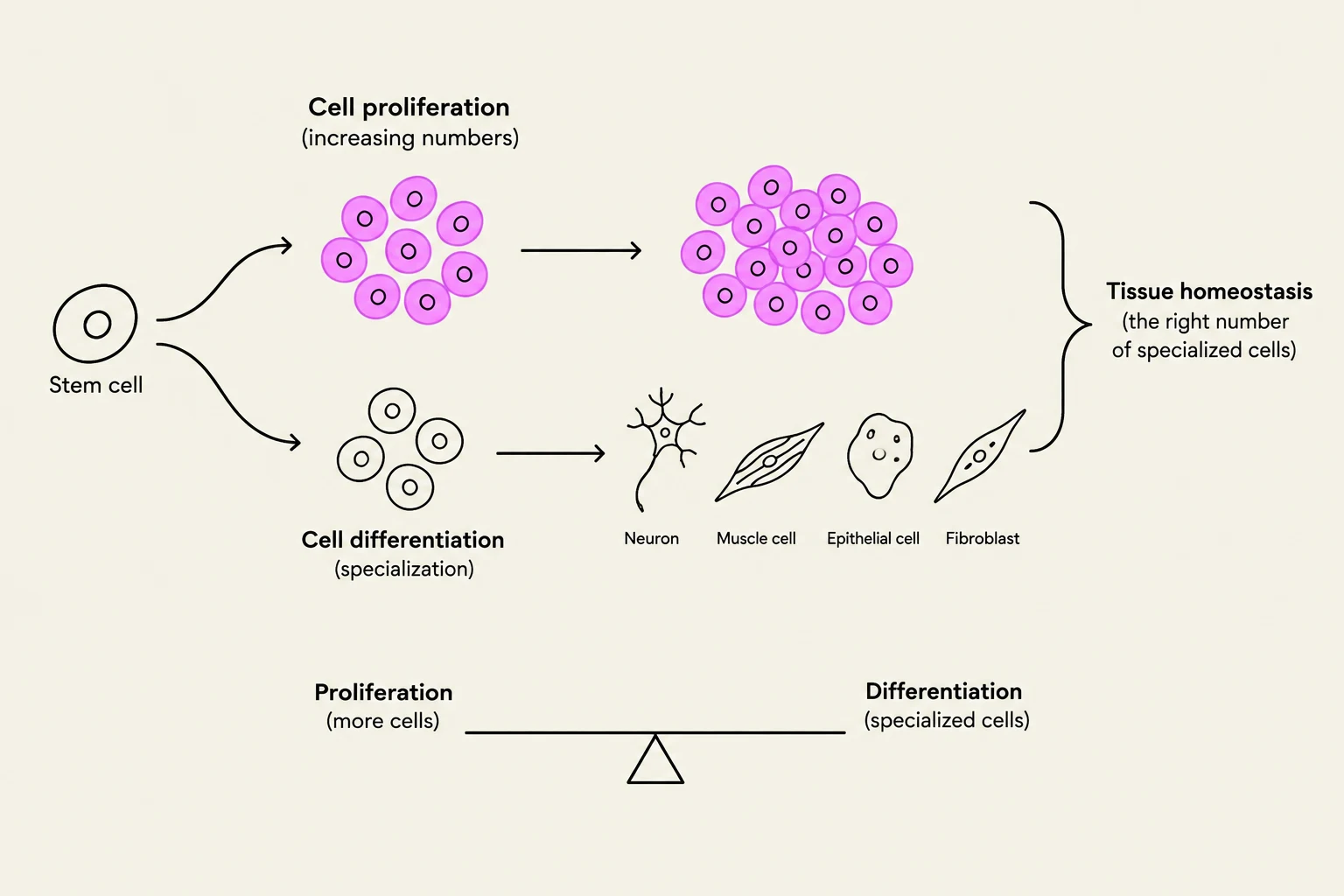
Cell Proliferation refers to the process of replication, where a cell divides to increase the total number of cells in a tissue. This is essential for growth and wound healing.
Cell Differentiation is the process of specialization. As cells divide, they undergo "commitment," where they acquire specific structural and functional characteristics that distinguish them from other cell types. This commitment is passed down to future daughter cells.
Stem Cells serve as the reservoir for these processes. They are highly undifferentiated cells that possess the unique ability to replicate both to maintain their own original pool and to produce progenitor cells that eventually differentiate into specialized tissues.
Apoptosis is the programmed cell death that balances proliferation. It ensures that old, damaged, or unnecessary cells are removed, preventing the accumulation of dysfunctional cells.
This diagram illustrates the processes of cell proliferation and cell differentiation originating from a stem cell, leading to tissue homeostasis.
Study Tip: Think of proliferation as the "accelerator," apoptosis as the "brake," and differentiation as the "steering wheel" that directs a cell toward its specific job.
Genetic Disruptions: Mutations and Instability
The instructions for these cellular behaviors are written in DNA. When errors occur during DNA replication, sorting, or repair, they result in mutations. These mutations can change how a protein functions, alter the number of genes present, or disrupt the control of gene expression.
One significant type of error is nondisjunction, which involves the mis-sorting of chromosomes during cell division. Such errors can lead to large-scale chromosomal changes, contributing to genetic instability—a hallmark of many cancers.
The Drivers of Neoplasia
A neoplasm is an abnormal growth of tissue, forming a distinct population of cells or a tumor. This growth is driven by specific types of gene mutations:
Oncogenes: These arise from proto-oncogenes (normal genes that stimulate the cell cycle) through a "gain of function" mutation. An oncogene acts like a stuck accelerator, constantly signaling the cell to divide.
Tumor Suppressor Genes: These genes normally restrain replication or trigger apoptosis. A "loss of function" mutation in these genes means the cell loses its ability to stop dividing or to die when damaged.
Mutator Genes: These are genes responsible for DNA repair. If these are mutated, the cell's ability to fix other errors is impaired, leading to a rapid accumulation of further mutations.
This diagram illustrates how proto-oncogenes and tumor suppressor genes function normally and how mutations can lead to uncontrolled cell growth, a hallmark of cancer. Proto-oncogenes, when activated by mutation, become oncogenes that promote cell proliferation. Tumor suppressor genes, when inactivated, lose their ability to control cell division and repair DNA, also contributing to uncontrolled growth.
Epigenetics: Beyond the DNA Sequence
Not all cellular changes are caused by changes to the underlying DNA sequence. Epigenetics refers to factors that impact gene expression without altering the actual DNA code. These changes can be inherited and play a massive role in cancer likelihood.
Key epigenetic mechanisms include:
DNA Methylation: The addition of methyl groups to DNA, which can turn genes "on" or "off".
Histone Modification: Altering the proteins (histones) around which DNA is wrapped, changing how accessible certain genes are for reading.
RNA Interference: Using specific forms of RNA to interfere with the translation of genetic information.
From Benign to Malignant: The Progression of Cancer
The clinical outcome of altered proliferation depends on the nature of the neoplasm.
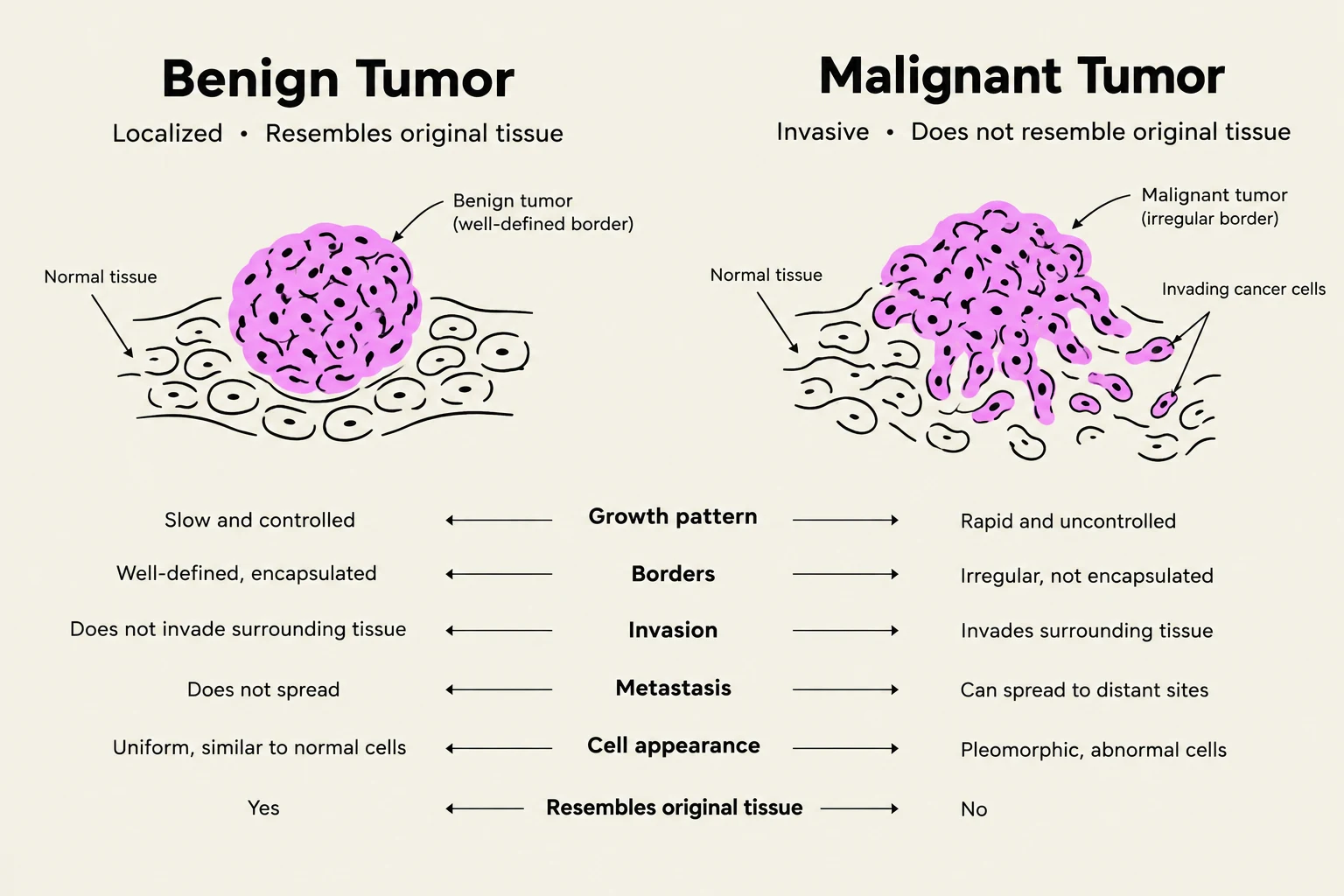
Benign Tumors are localized growths that closely resemble the tissue of origin. They generally do not invade surrounding tissues.
Malignant Neoplasms (Cancerous Tumors) represent the most severe level of cellular change. They are characterized by:
Autonomy: Excessive cellular proliferation that ignores regulatory signals.
Immortal Cells: The ability to continue replicating indefinitely in culture.
Anaplasia: A loss of cellular differentiation, meaning the cells no longer resemble the original tissue.
Invasiveness and Metastasis: Malignant cells are destructive and have the ability to metastasize, or spread to other sites in the body.
External factors, known as carcinogens, can trigger these transitions. These include radiation, chemicals, tobacco, certain hormones, and microbes. The progression of these changes is often proposed to occur in three stages: initiation, promotion, and progression.
This illustration compares benign and malignant tumors, highlighting differences in their growth patterns, borders, invasiveness, metastasis, cell appearance, and resemblance to original tissue.
Exam Summary Table
Feature
Benign Tumor
Malignant Tumor
Differentiation
High (resembles origin)
Low (Anaplasia)
Growth Rate
Generally slow
Rapid
Invasiveness
Localized
Invasive/Destructive
Metastasis
No
Yes
Keep reading for free.
Create an account to finish this reading and make it part of your study routine.