


In the complex landscape of the eukaryotic cell, specialized organelles work in concert to maintain homeostasis, process nutrients, and defend against toxins. Two such critical components are the lysosome, the cell's primary digestive center, and the smooth endoplasmic reticulum (sER), a versatile hub for lipid production and chemical detoxification. While they serve vastly different roles—one focused on breaking down macromolecules and the other on synthesizing and modifying them—both rely on precise molecular signaling and enzymatic activity to function correctly.
The Lysosome: Cellular Digestion and Degradation
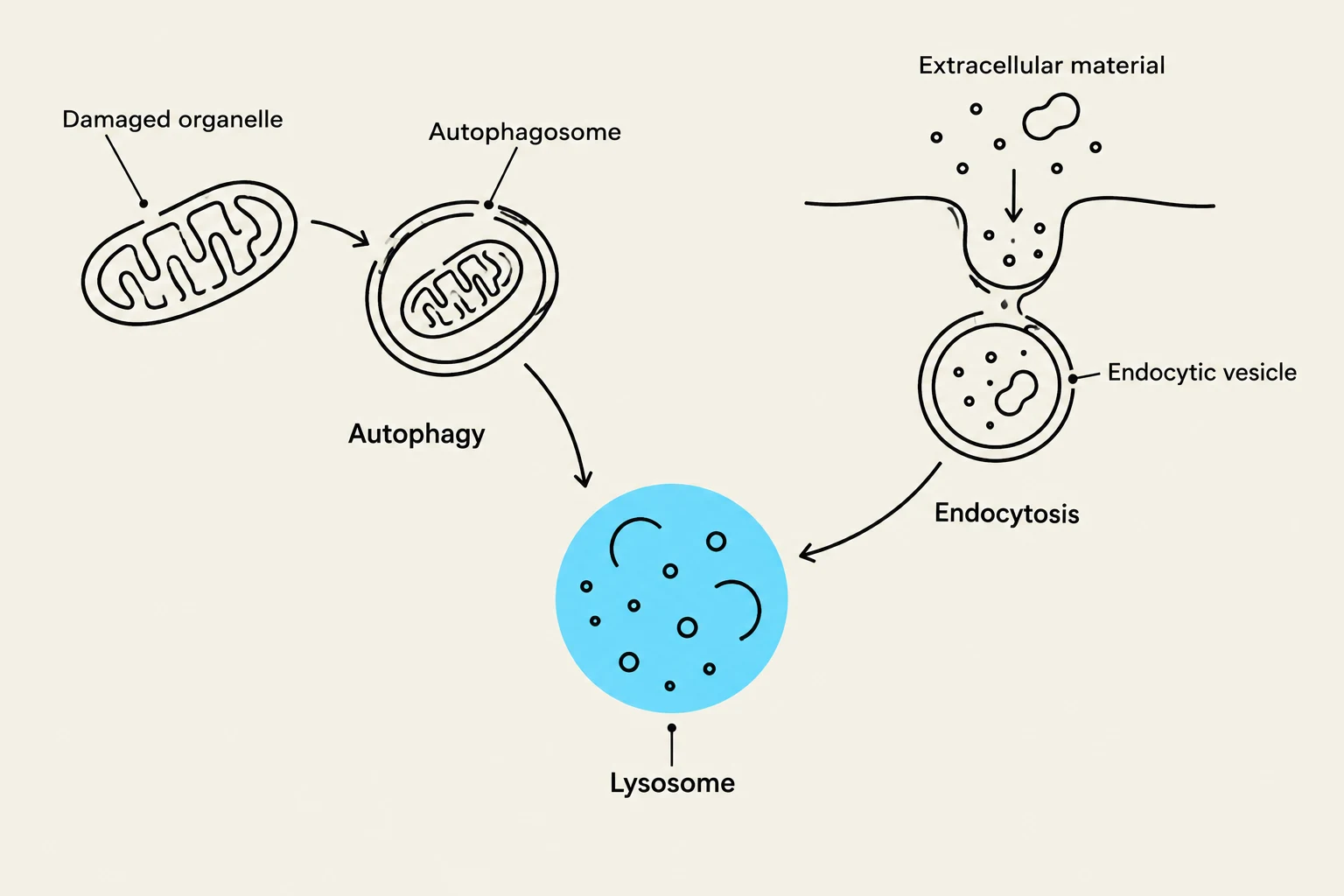
The lysosome is a membrane-bound organelle designed to perform enzymatic degradation of both cellular and extracellular macromolecules. This process occurs within a highly acidic luminal space, which is necessary for the activity of its resident enzymes, known as acid hydrolases.
Mechanisms of Degradation
Lysosomes utilize two primary pathways to manage cellular waste:
- Autophagy: The process by which the cell digests its own internal structures, such as damaged organelles.
- Phagocytosis/Endocytosis: The digestion of extracellular particles that have been brought into the cell via vesicles.
Exam Tip: Remember that while the lysosome handles large-scale degradation of organelles and extracellular matter, the proteasome is a non-membrane-bound protein complex in the cytosol that specifically targets individual misfolded or damaged proteins tagged with ubiquitin.
The Mannose 6-Phosphate Tag and Protein Trafficking
How do acid hydrolases "know" to go to the lysosome instead of being secreted from the cell? The answer lies in post-translational modification.
Keep reading for free.
Create an account to finish this reading and make it part of your study routine.
Continue reading freeAlready have an account? Log in
Updated