Cellular Exchange, Metabolism, and Multicellularity
This content explores the fundamental challenges of life, including energy acquisition, material exchange, and homeostasis. It details metabolic processes like anabolism and catabolism, the influence of body size and temperature on metabolic rates, and the constraints and solutions related to diffusion and cellular exc
All living organisms, from the smallest bacteria to the largest blue whale, face a set of universal challenges required to sustain life. These challenges include acquiring energy, exchanging materials with the environment, responding to stimuli, and reproducing. To solve these problems, organisms must maintain homeostasis—a stable internal environment—while interacting with a changing external world. Central to this survival is the cell, which acts as a regulated boundary that acquires, transforms, and uses energy.
Metabolism: The Engine of Life
At the heart of all biological processes is metabolism, the set of biochemical reactions that transform molecules and transfer energy. Metabolism is essentially how an organism manages its "budget" of energy and carbon.
Energy and Carbon Acquisition
Organisms are classified by how they obtain their "building blocks" (carbon) and their "fuel" (energy):
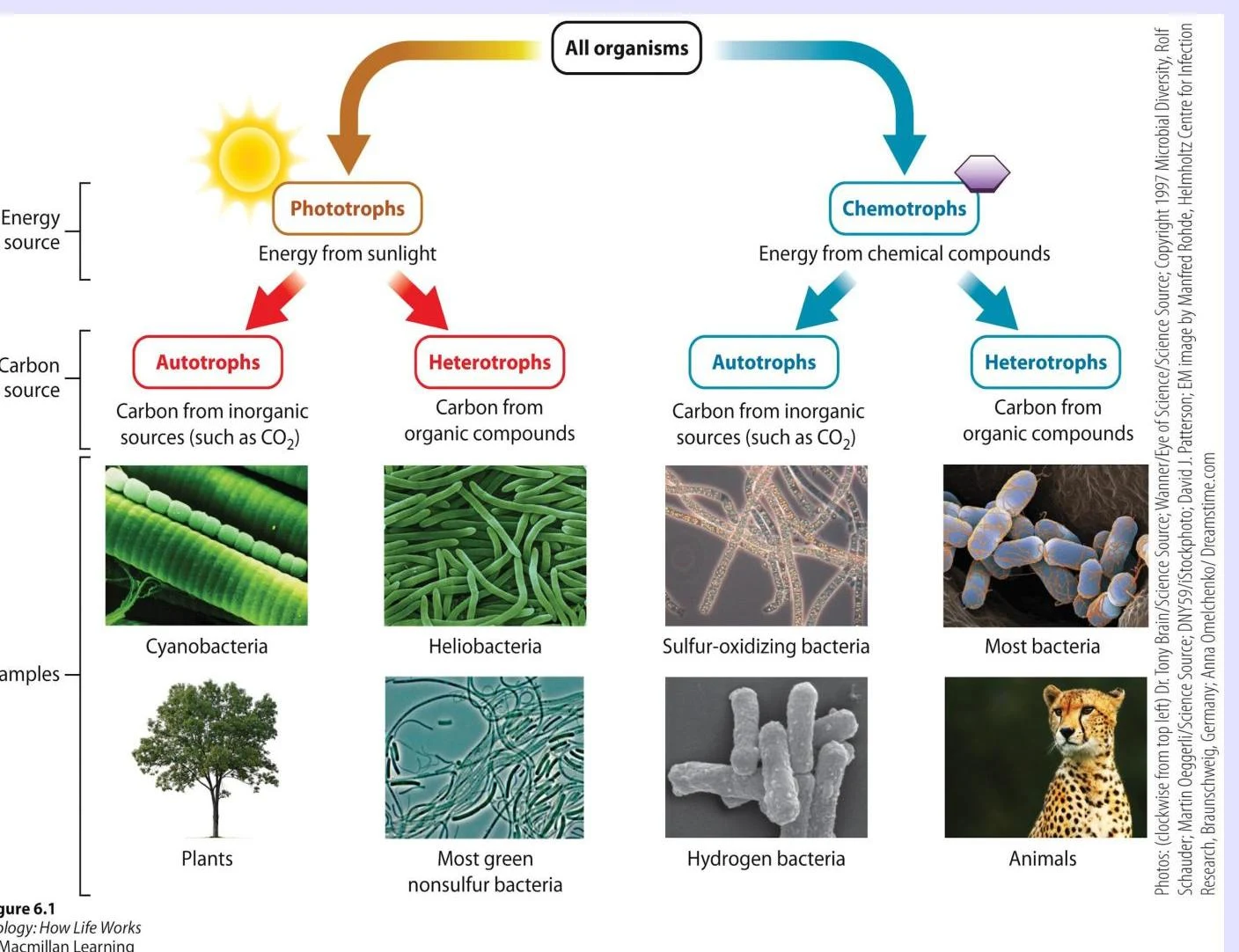
Energy Sources:Phototrophs use light, while chemotrophs use chemical compounds.
Carbon Sources:Autotrophs use inorganic carbon (like CO2), while heterotrophs must consume organic compounds from other organisms.
By combining these, we get four nutritional modes: photoautotrophs, photoheterotrophs, chemoautotrophs, and chemoheterotrophs. For example, a human is a chemoheterotroph because we get both energy and carbon from consuming organic food.
This diagram illustrates the two main ways organisms obtain energy and carbon: phototrophs use sunlight, and chemotrophs use chemical compounds. Both can be autotrophs (making their own food from inorganic sources) or heterotrophs (consuming organic compounds). Examples of each category are shown, including cyanobacteria, plants, heliobacteria, and animals.
Anabolism vs. Catabolism
Metabolic pathways are divided into two opposing but complementary processes:
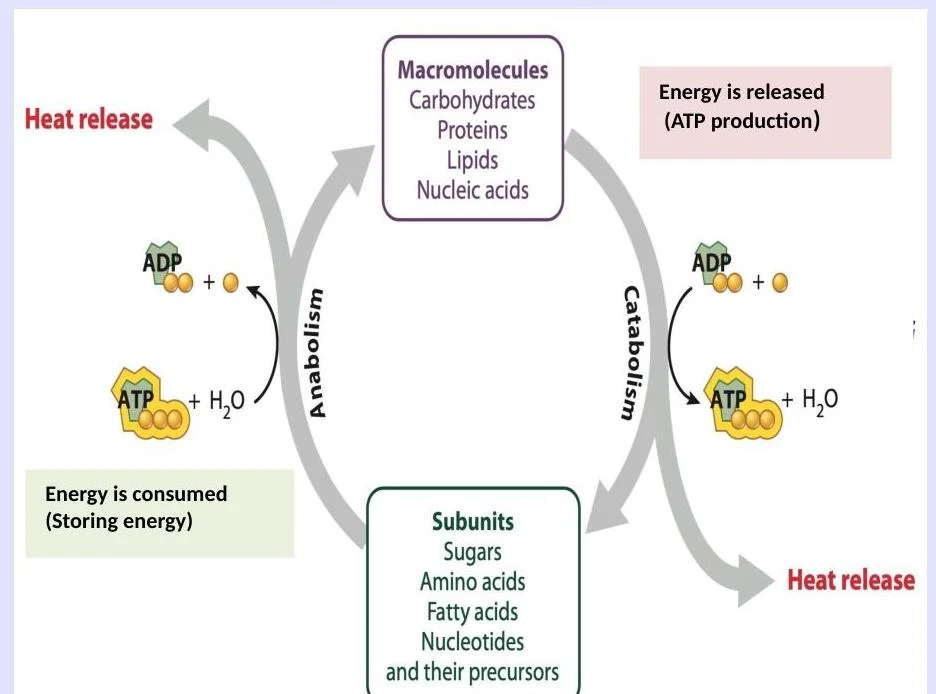
Catabolism: The breakdown of complex molecules to release energy.
Anabolism: The use of energy to build complex molecules.
In animals, the primary energy currency used to power these reactions is adenosine triphosphate (ATP). This ATP is produced through aerobic metabolism (using oxygen) or, when oxygen is depleted, through anaerobic metabolism (fermentation).
This diagram illustrates the relationship between anabolism and catabolism in the context of energy metabolism. Anabolism uses energy to build macromolecules from subunits, while catabolism breaks down macromolecules into subunits, releasing energy in the form of ATP and heat.
Scaling Metabolism: Size and Temperature
An organism's metabolic rate—the speed at which it uses energy—is not uniform across species. It is heavily influenced by body size and thermal strategy.
Mass-Specific Metabolic Rate
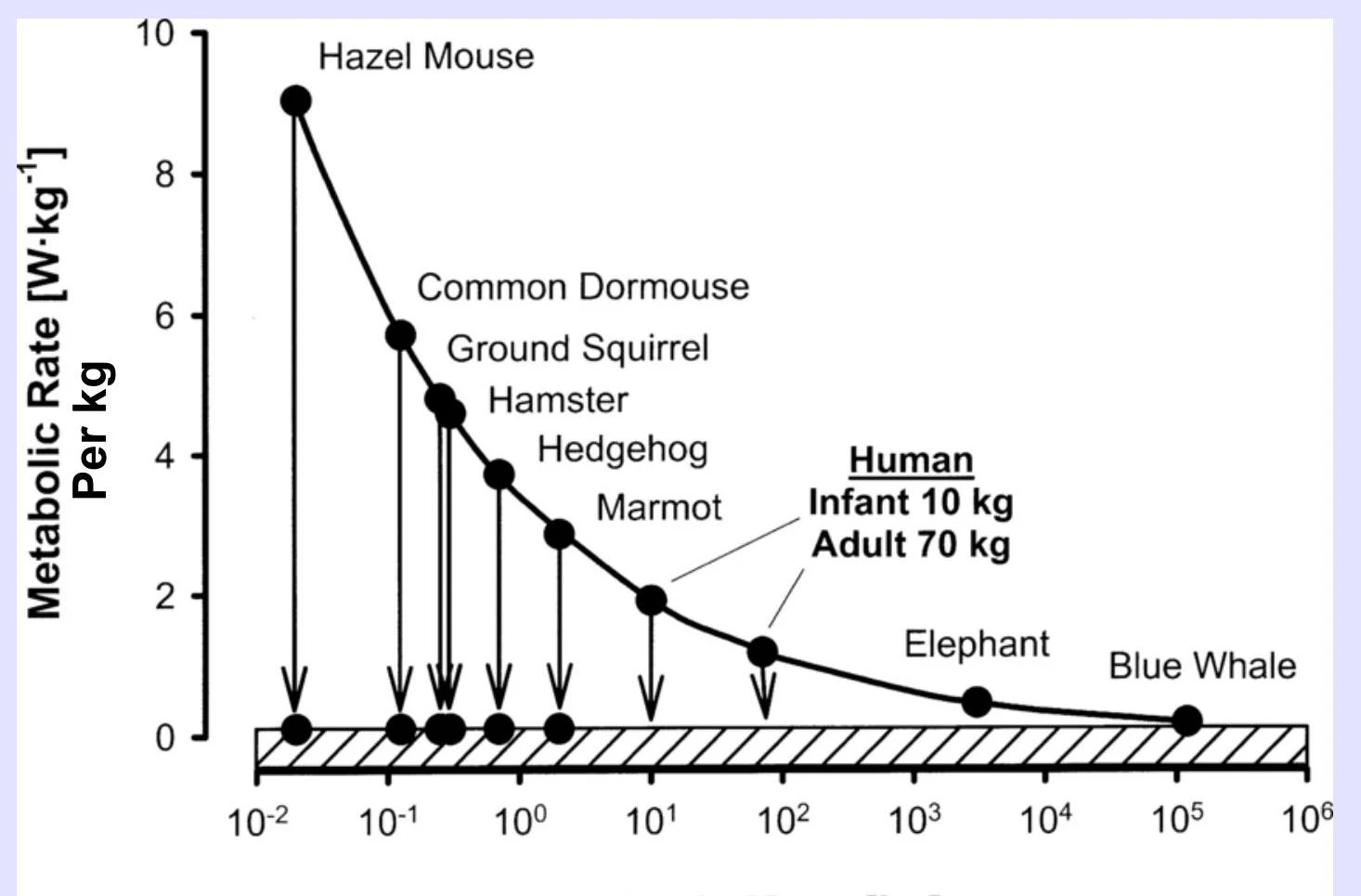
While larger animals have a higher total metabolic rate (they burn more calories per day overall), they actually have a lower mass-specific metabolic rate. This means that, per gram of tissue, a small mouse is much more metabolically active than a large elephant.
Exam Tip: If a question asks about the relationship between body mass and metabolic rate, remember it is non-linear. As body mass increases, the mass-specific metabolic rate decreases.
This graph illustrates the relationship between metabolic rate per kilogram and body mass for various animals, including humans, elephants, and whales. It shows that smaller animals generally have a higher metabolic rate per unit of mass.
Endotherms vs. Ectotherms
Metabolic rates also depend on how an organism manages heat. Endotherms regulate their internal temperature internally, which requires a high, constant metabolic rate. In contrast, ectotherms rely on environmental heat, generally resulting in lower metabolic rates.
The Constraints of Diffusion and Exchange
A major physical constraint on life is how molecules (like oxygen, nutrients, and waste) move in and out of cells.
The Surface Area to Volume Ratio
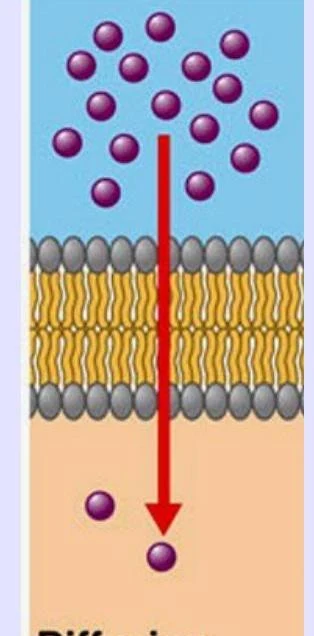
Cells rely heavily on diffusion—a form of passive transport where molecules move from areas of high concentration to low concentration across a selectively permeable membrane.
Diffusion is highly efficient over very short distances, but it becomes incredibly slow as distance increases. This creates a limit on cell size. As a cell grows, its volume increases much faster than its surface area. This results in a decreasing surface area to volume ratio. If a cell becomes too large, it won't have enough surface area to import nutrients or export waste fast enough to support its internal volume.
Illustration of diffusion across a cell membrane.
Biological Solutions to Diffusion Limits
Organisms have evolved various shapes and structures to maximize surface area and circumvent these limits:
Flattening and Folding: Cells or tissues that are thin or highly folded (like the leaves of a plant or the tissues of a jellyfish) increase their surface area relative to their volume.
Projections: Branching filaments or cellular projections increase the area available for exchange.
Bulk Flow: In large, complex multicellular organisms, diffusion is too slow to move materials across long distances. Instead, these organisms use bulk flow—a rapid, long-distance transport mechanism (like a circulatory system) to move molecules throughout the body.
Two marine invertebrates: a sponge and a jellyfish.
Coordination in Multicellularity
For multicellular organisms to function as a single unit rather than a loose collection of cells, they must be highly coordinated. This is achieved through several key mechanisms:
Cell Differentiation (Specialization): This is the process where unspecialized cells develop into specific types (e.g., muscle cells vs. nerve cells) to perform unique functions.
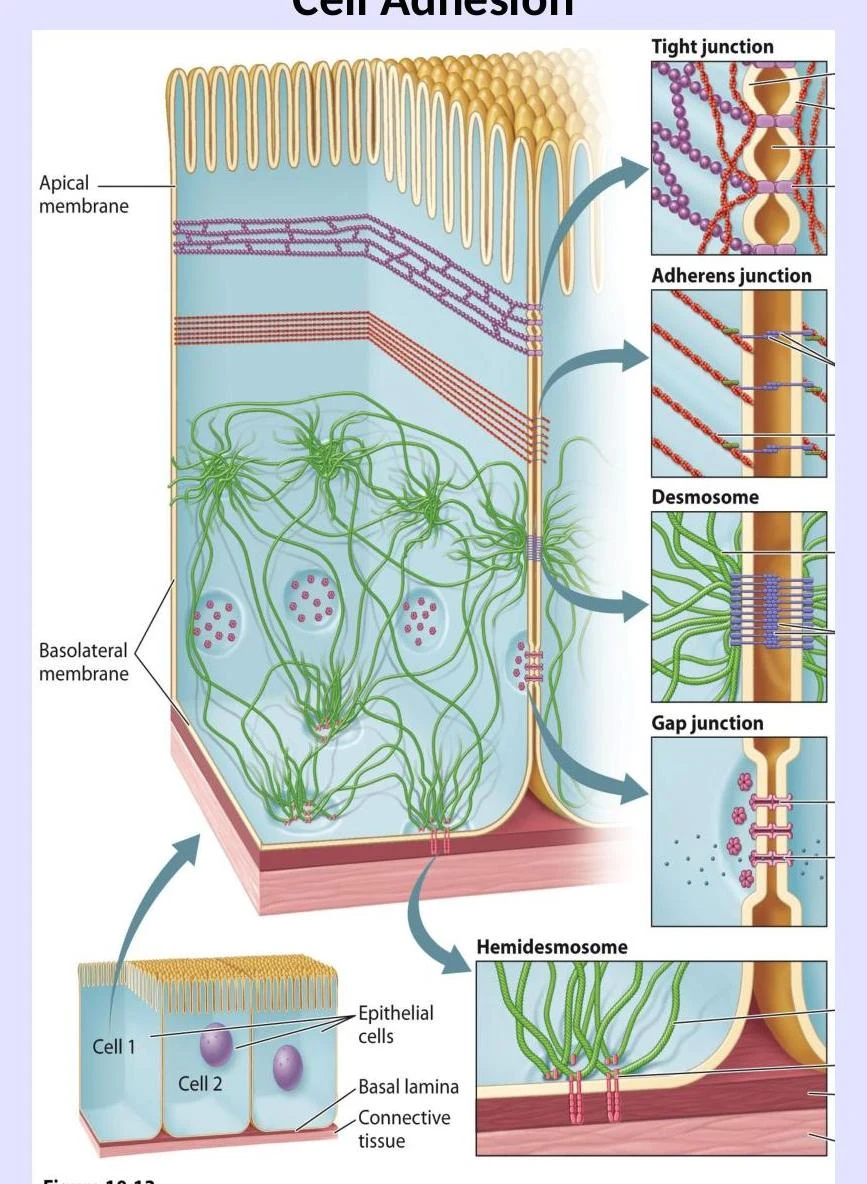
Cell Adhesion: Cells must physically stick together. Specialized proteins provide the molecular "glue" that allows cells to form stable tissues.
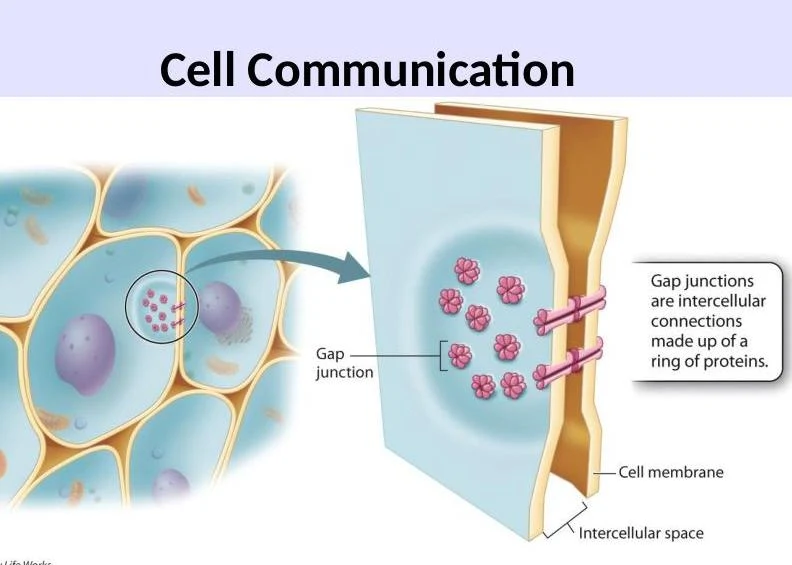
Cell Communication: Cells must "talk" to one another to coordinate responses. This can happen through:
Gap Junctions: Physical channels that allow ions and small signaling molecules to pass directly from one cell to another.
Chemical Signaling: The use of chemical signaling molecules (such as hormones) to send messages over longer distances to target cells.
Diagram illustrating different types of cell junctions: tight junctions, adherens junctions, desmosomes, gap junctions, and hemidesmosomes, as well as the apical and basolateral membranes of epithelial cells.
This illustration depicts cell communication through gap junctions, which are protein structures connecting adjacent cells and allowing for the passage of molecules.
By integrating metabolism, efficient molecular exchange, and complex cellular coordination, organisms are able to overcome the universal challenges of life and thrive in diverse environments.
Keep reading for free.
Create an account to finish this reading and make it part of your study routine.