


To understand how the human body functions, one must first understand the cell. The average adult human body is composed of more than 100 trillion cells, which serve as the basic, living, structural, and functional units of life. The scientific study of these units is known as cell biology or cytology.
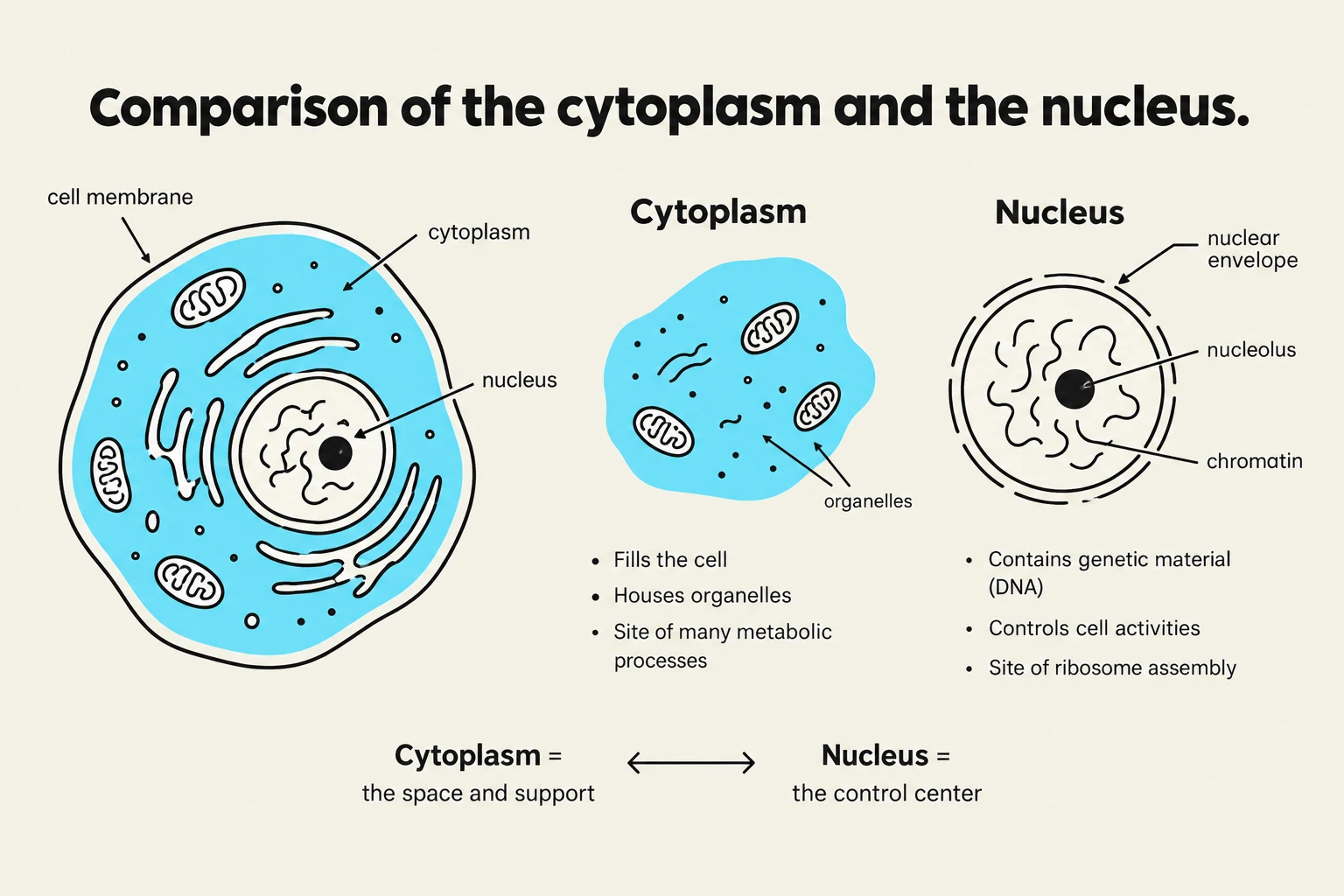
While cells are incredibly complex, they can be divided into three main parts for easier study: the plasma membrane, the cytoplasm, and the nucleus. In this article, we will focus specifically on the internal environment of the cell: the cytoplasm and the nucleus.
The Cytoplasm: The Cell's Internal Environment
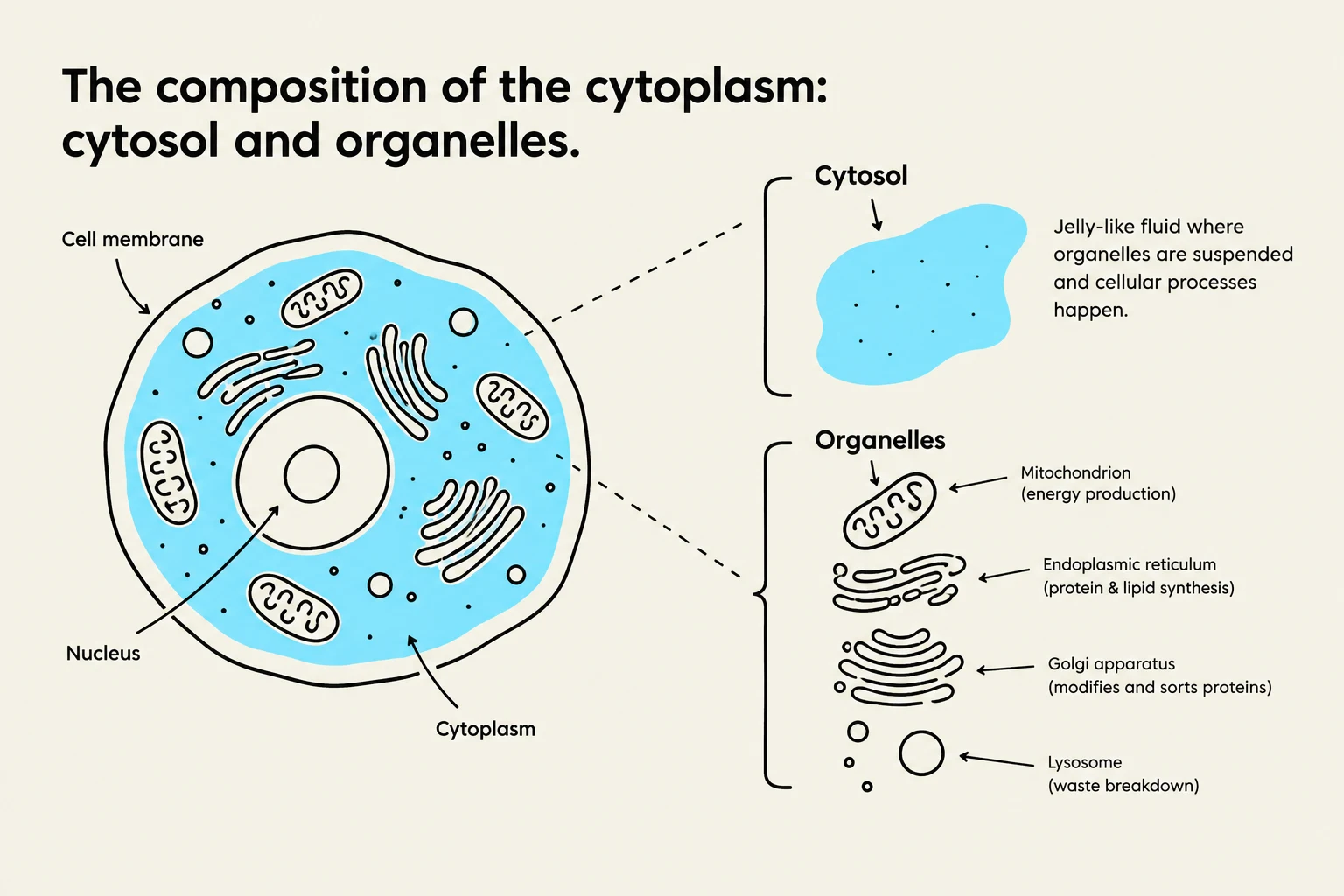
The cytoplasm is defined as all the cellular contents located between the plasma membrane and the nucleus. If you imagine the cell as a factory, the plasma membrane is the outer wall, and the cytoplasm is the entire floor space where the machinery and fluids reside.
The cytoplasm is not a single uniform substance; rather, it is composed of two distinct elements: the cytosol and the organelles.
The Cytosol
The cytosol, also referred to as intracellular fluid, is the fluid portion of the cytoplasm. It is primarily composed of water, but it also contains various dissolved solutes and suspended particles. The cytosol provides the medium in which organelles are suspended and serves as a site for many chemical reactions.
Organelles: The "Little Organs"
The term "organelle" literally means "little organ". Just as your body has organs like the heart or lungs to perform specific tasks, a cell contains specialized structures called organelles, each possessing a characteristic shape and a specific functional role.
Keep reading for free.
Create an account to finish this reading and make it part of your study routine.
Continue reading freeAlready have an account? Log in
Updated