Cellular Compartmentalization: Organelle Specialization and Function
Explore the concept of cellular compartmentalization, focusing on the endomembrane system and energy-transforming organelles like mitochondria and chloroplasts. Understand how specialized structures enable complex life processes through isolation, concentration, and gradient formation.
At first glance, a cell might appear to be a simple, fluid-filled sac containing various molecules. However, beneath the plasma membrane lies a sophisticated architectural marvel. To sustain life, cells must perform a staggering array of simultaneous chemical reactions—some of which are even mutually exclusive. For instance, a cell must build complex proteins while simultaneously breaking down old, damaged components. If these processes occurred in a single, unregulated space, the cell would descend into chemical chaos.
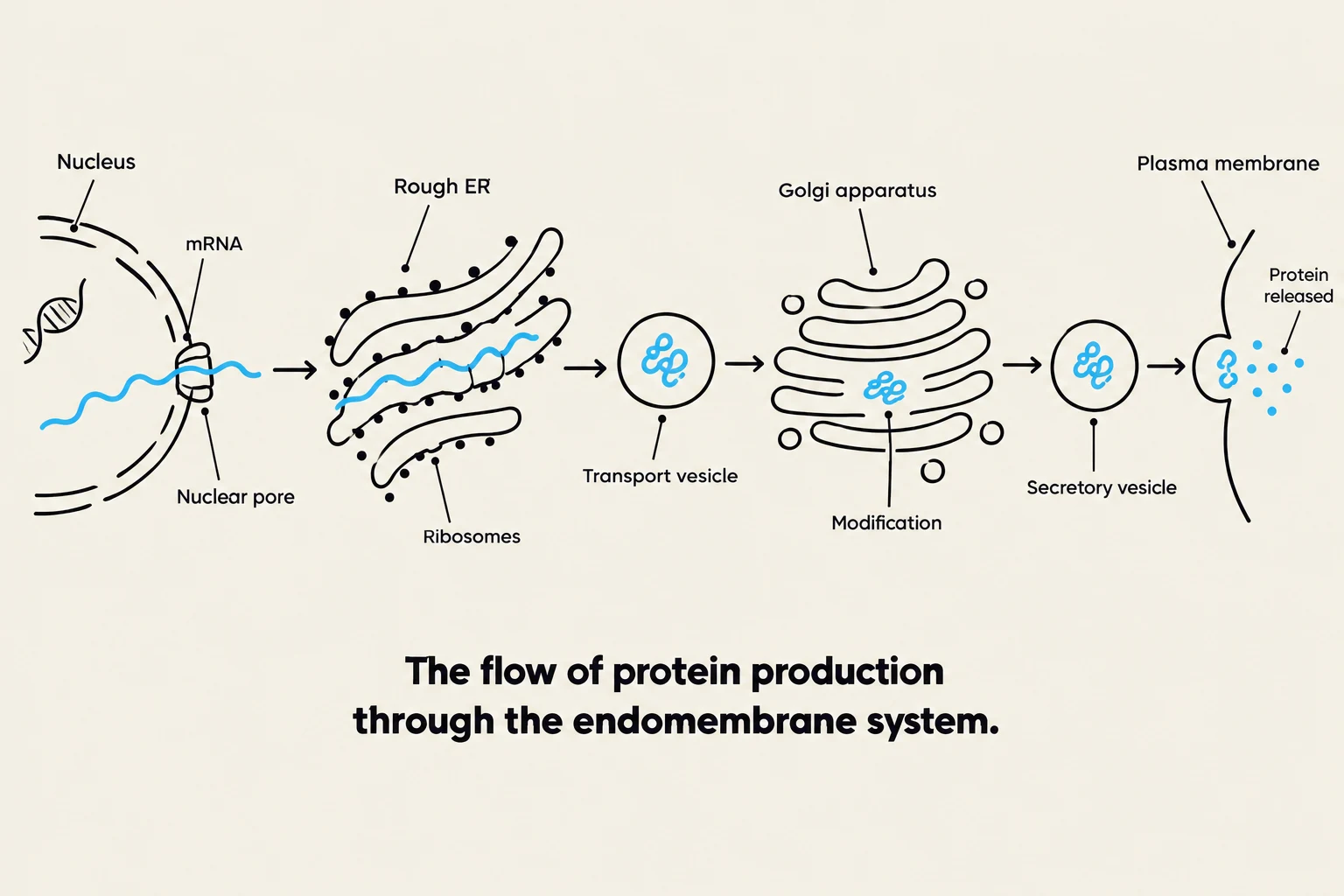
Diagram illustrating the process of protein synthesis and transport through the endomembrane system, from the nucleus to the plasma membrane.
The solution to this problem is compartmentalization. By utilizing specialized membrane-bound structures known as organelles, cells create distinct microenvironments. This organization allows for the concentration of specific enzymes, the regulation of pH levels, and the efficient management of energy, enabling the complex life processes that define eukaryotic organisms.
The Endomembrane System: A Manufacturing and Logistics Network
One of the most critical examples of compartmentalization is the endomembrane system. This network of interconnected membranes works like a factory assembly line, ensuring that proteins and lipids are synthesized, modified, and transported to their correct destinations.
The Nucleus and Protein Synthesis
The process begins in the nucleus, which houses the cell's genetic blueprint. By separating the DNA from the cytoplasm, the nucleus protects the integrity of the genome and allows for regulated control over which genes are expressed. The instructions for building proteins are transcribed from DNA into mRNA, which then exits the nucleus to reach the ribosomes.
The Endoplasmic Reticulum (ER) and Golgi Apparatus
Once the instructions reach the cytoplasm, the Endoplasmic Reticulum (ER) takes center stage. The ER is divided into two specialized regions:
Rough ER: Studded with ribosomes, this region is primarily responsible for the synthesis and folding of proteins destined for secretion or membrane insertion.
Smooth ER: Lacking ribosomes, this region specializes in lipid synthesis, carbohydrate metabolism, and detoxification processes.
After synthesis, products are sent to the Golgi apparatus. Think of the Golgi as the "post office" of the cell. It receives vesicles from the ER, modifies their contents (such as adding sugar chains to proteins to create glycoproteins), and sorts them into new vesicles for delivery to specific cellular locations.
Exam Tip: When studying the endomembrane system, focus on the directionality of flow. A common question involves tracing a protein from its genetic origin in the nucleus, through the Rough ER, to the Golgi, and finally to the plasma membrane.
Energy-Transforming Organelles: Powering the Cell
While the endomembrane system manages the cell's "logistics," other specialized organelles function as the cell's "power plants." These organelles are unique because they are often semi-autonomous, meaning they possess their own DNA and can replicate somewhat independently of the rest of the cell.
Mitochondria: The ATP Factories
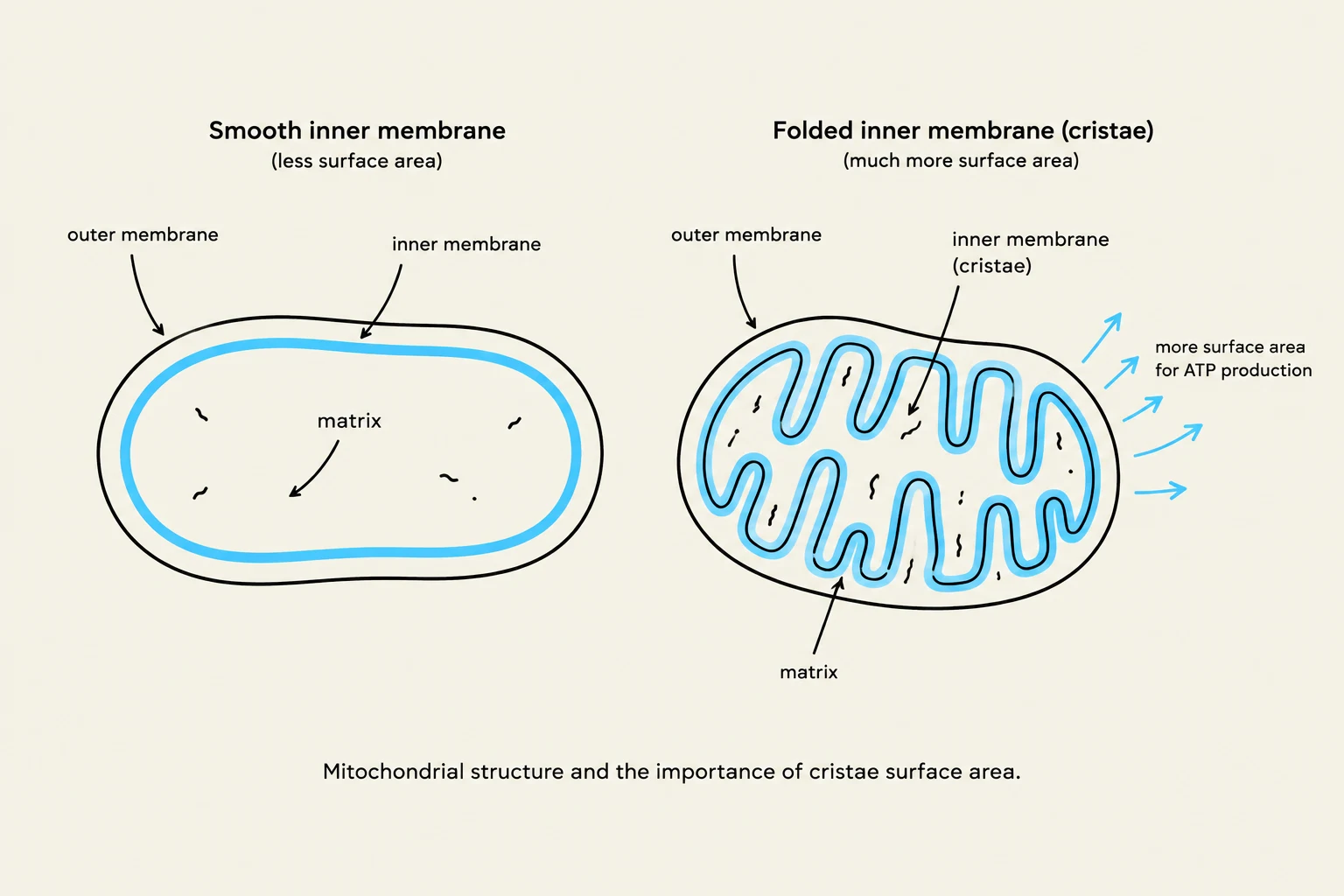
Diagram illustrating the difference in surface area between a smooth inner mitochondrial membrane and a folded inner mitochondrial membrane (cristae), highlighting the increased surface area for ATP production in the latter.
In eukaryotic cells, the production of Adenosine Triphosphate (ATP)—the primary energy currency of life—occurs largely within the mitochondria. The structure of the mitochondrion is a masterclass in functional design. It consists of an outer membrane and a highly folded inner membrane called cristae.
These folds serve a vital purpose: they vastly increase the surface area available for the electron transport chain and ATP synthase enzymes. This increased surface area allows the cell to maximize the rate of aerobic respiration, producing much more energy than could be generated in the cytoplasm alone.
Chloroplasts: Solar Energy Conversion
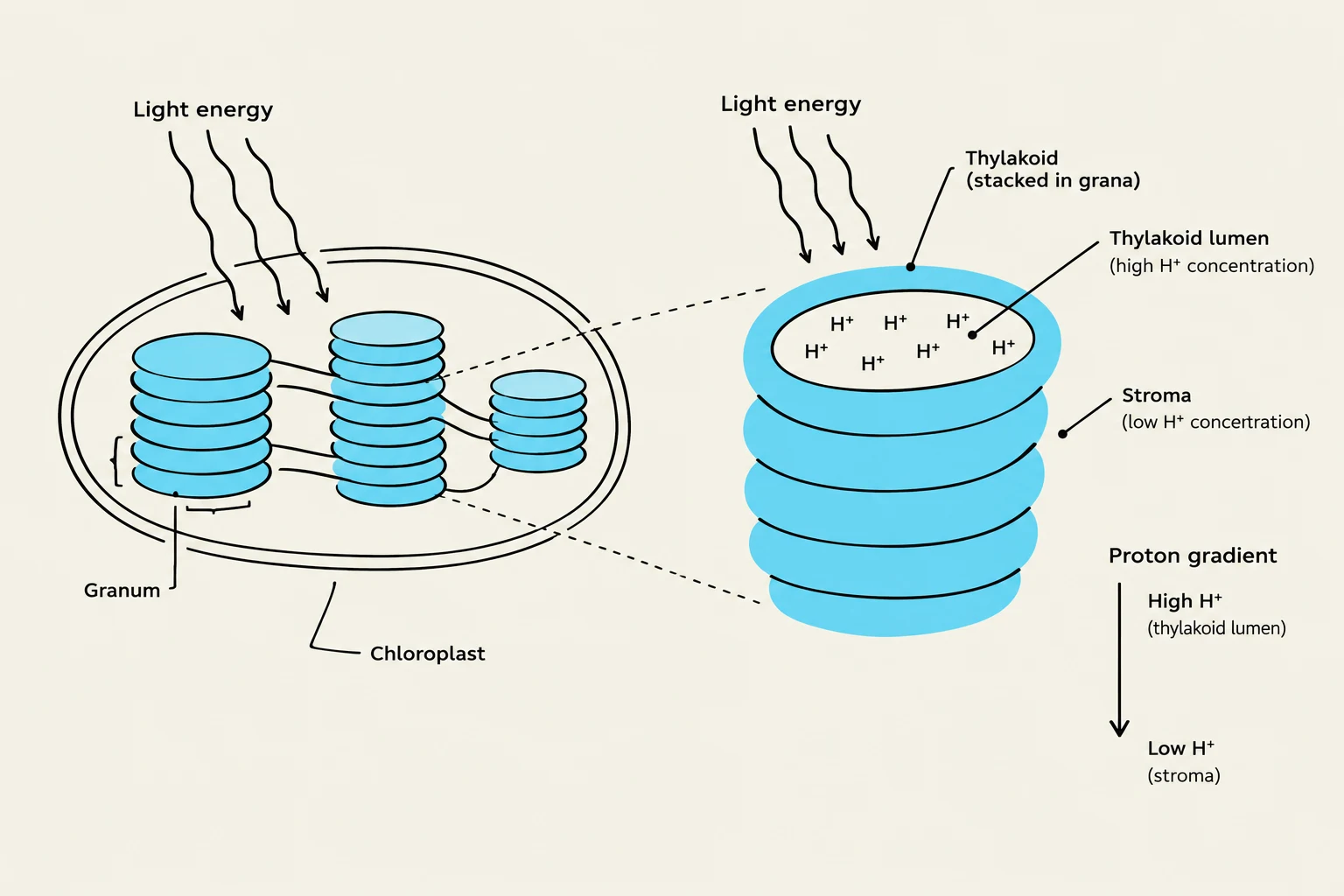
Diagram illustrating the structure of a chloroplast and the proton gradient formed during photosynthesis.
In plants and algae, the process of energy transformation begins with the capture of sunlight. Chloroplasts are the specialized organelles responsible for photosynthesis. They contain pigments like chlorophyll that absorb light energy and convert it into chemical energy stored in glucose.
Like mitochondria, chloroplasts rely on internal membrane structures—specifically the thylakoids—to create compartmentalized spaces. This allows for the establishment of proton gradients, which are essential for driving the synthesis of ATP during the light-dependent reactions of photosynthesis.
The Logic of Compartmentalization
Why go through the biological "expense" of building these membranes? The benefits can be summarized into three main advantages:
Chemical Isolation: Lysosomes, for example, contain digestive enzymes that function best at an acidic pH. By sequestering these enzymes inside a membrane, the cell can digest waste without accidentally digesting its own functional proteins and organelles.
Concentration of Reactants: By confining specific enzymes and substrates within a small volume (like the lumen of the ER), the cell increases the frequency of molecular collisions, thereby accelerating reaction rates.
Gradient Formation: Energy production relies on the ability to maintain different concentrations of ions (like $H^+$) on either side of a membrane. Without a physical barrier, these gradients would dissipate instantly, making ATP production impossible.
Organelle
Primary Function
System Category
Nucleus
Genetic storage & regulation
Endomembrane System
Rough ER
Protein synthesis & folding
Endomembrane System
Golgi Apparatus
Sorting & modification
Endomembrane System
Mitochondria
ATP production (Respiration)
Energy-Transforming
Chloroplast
Glucose production (Photosynthesis)
Energy-Transforming
Summary
The specialization of organelles is not merely a matter of organization; it is a fundamental requirement for eukaryotic life. Through the coordinated efforts of the endomembrane system and energy-transforming organelles, cells can manage complex metabolic pathways, protect their genetic information, and efficiently convert raw materials into the energy required for survival. Understanding these compartments is the key to understanding how life operates at its most basic, microscopic level.
Keep reading for free.
Create an account to finish this reading and make it part of your study routine.