


In the study of pathophysiology, understanding how cells respond to their environment is fundamental. Cells are not static; they are dynamic units that constantly strive to maintain homeostasis—the stable internal environment required for survival. When faced with environmental stressors, cells may undergo various changes to survive. These changes are known as cellular adaptations. However, if the stressor becomes too intense or persists too long, the cell's ability to adapt is overwhelmed, leading to cell damage and, potentially, cell death.
Cellular Adaptations
Cellular adaptations are reversible changes in the size, number, or type of cells in response to changes in the cellular environment. These processes allow tissues to function under new or changing conditions.
Changes in Size and Number
The most common adaptations involve changes in the physical dimensions or the population count of the cells within a tissue:
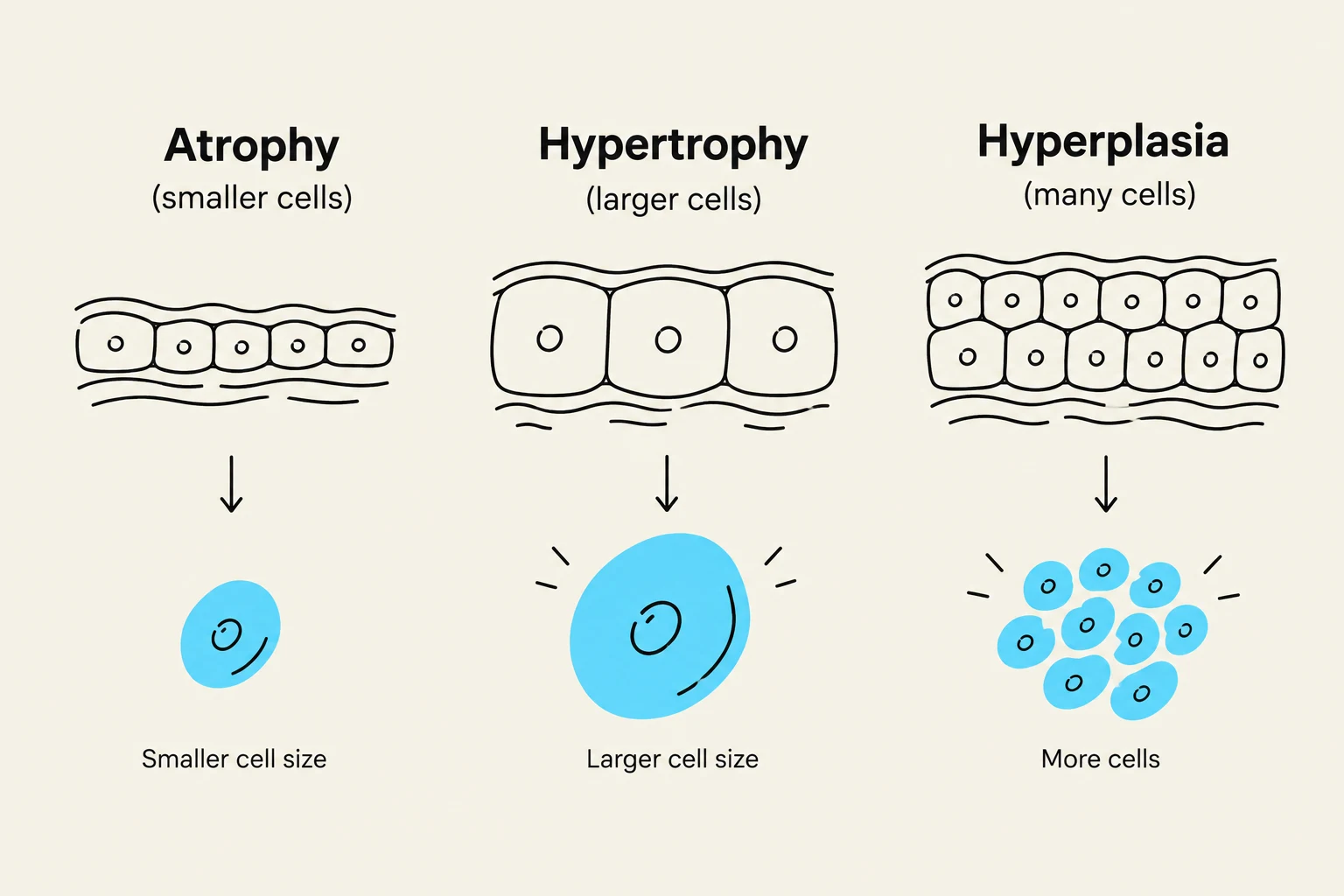
- Atrophy: This is a decrease in cell size, which ultimately leads to a reduction in the overall mass of the tissue. An example might be a muscle shrinking after being immobilized in a cast.
- Hypertrophy: Conversely, hypertrophy is an increase in the size of individual cells, which results in an enlarged tissue mass. This is often seen in cardiac muscle cells responding to high blood pressure.
- Hyperplasia: Unlike hypertrophy, which increases cell size, hyperplasia involves an increase in the total number of cells, which also results in an enlarged tissue mass.
Changes in Cell Type and Growth Patterns
Sometimes, cells adapt by changing their very identity or by growing in ways that deviate from normal physiological patterns:
Keep reading for free.
Create an account to finish this reading and make it part of your study routine.
Continue reading freeAlready have an account? Log in
Updated