Explores cellular adaptation mechanisms, the causes and consequences of cellular injury, and the biological basis of cancer, including neoplasia and metastasis.
All diseases begin with changes at the cellular level. To maintain life, cells must constantly strive for homeostasis—a stable internal environment. However, cells are frequently subjected to external and internal stressors. When faced with these challenges, cells can respond through various adaptive mechanisms to survive. If the stress exceeds the cell's ability to adapt, cellular injury occurs, which can lead to either controlled or uncontrolled cell death. When these regulatory mechanisms fail entirely, the result is neoplasia, or cancer.
Cellular Adaptation: The Search for Homeostasis
Cellular adaptation involves changes in cell size, number, type, or function to withstand adverse conditions. These changes are generally reversible if the stress is removed. Adaptation is categorized into two types: physiological adaptation, which is a normal and beneficial response to maintain homeostasis (such as muscle enlargement from exercise or the uterus shrinking after childbirth), and pathological adaptation, which is an abnormal and harmful response to disease or injury (such as the heart muscle thickening due to chronic high blood pressure).
Key Mechanisms of Adaptation
There are five primary ways cells adapt to stress:
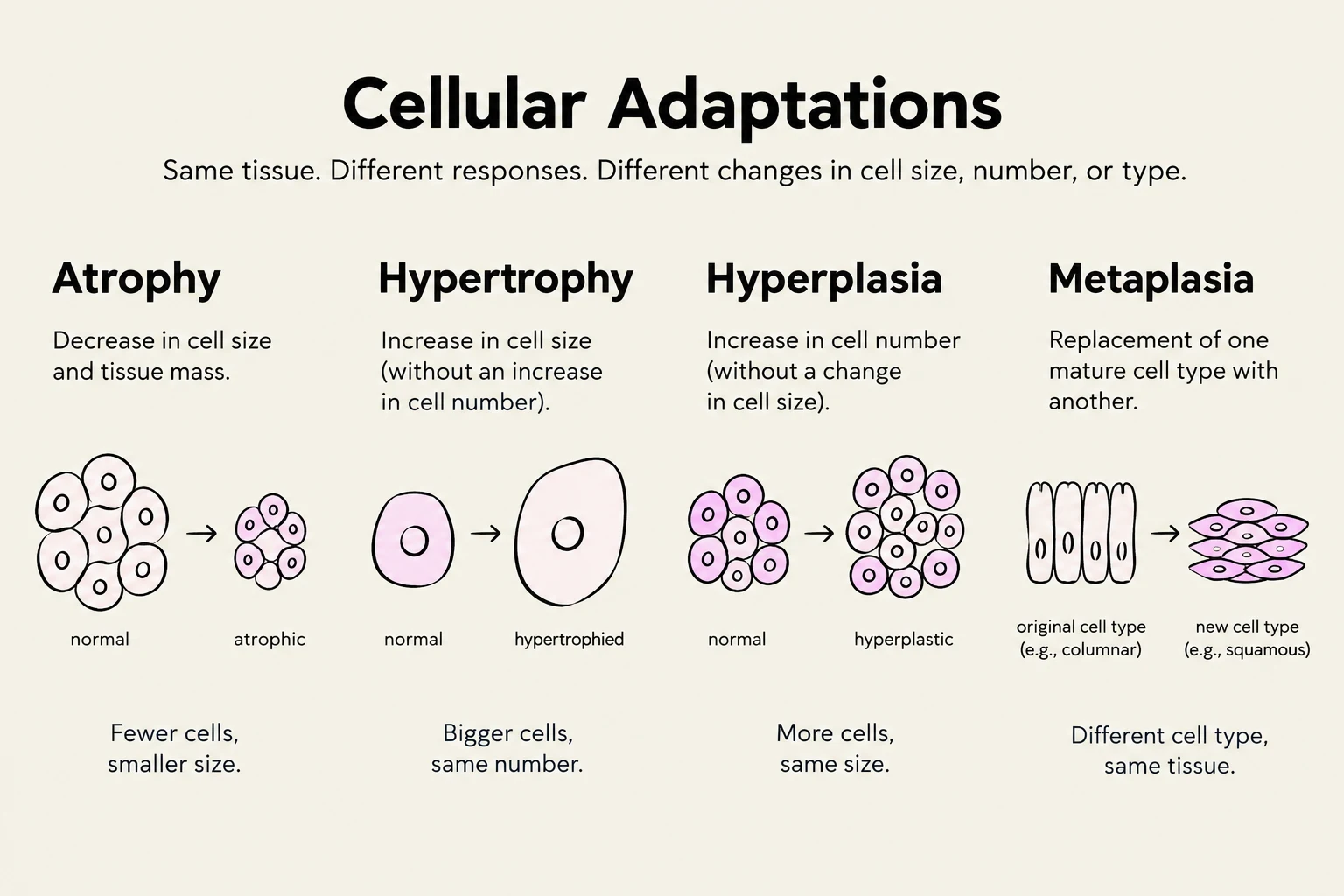
Atrophy: A decrease in cellular size that reduces the cell's function but saves energy. If many cells shrink, the entire organ becomes atrophic.
Hypertrophy: An increase in the size of individual cells, leading to an increase in the size of the organ or tissue. This is a way to increase workload capacity.
Hyperplasia: An increase in the number of cells through increased cell division. This often occurs alongside hypertrophy.
Metaplasia: A reversible change where one mature, specialized cell type is replaced by another cell type that is better suited to withstand a specific stress.
Dysplasia: Characterized by deranged or abnormal cellular growth. While not always cancer, dysplasia is often considered a precancerous change.
This diagram illustrates four types of cellular adaptations: atrophy (decrease in cell size and tissue mass), hypertrophy (increase in cell size without an increase in cell number), hyperplasia (increase in cell number without a change in cell size), and metaplasia (replacement of one mature cell type with another).
Exam Tip: When distinguishing between hypertrophy and hyperplasia, remember that hypertrophy is about the size of the individual cell (common in muscle), whereas hyperplasia is about the number of cells (common in epithelial tissues).
Cellular Injury and Death
When a cell is exposed to a stressor it cannot adapt to, cellular injury occurs. If the injury is mild or short-term, it may be reversible; however, if the stress is severe or prolonged, the injury becomes irreversible, leading to cell death.
Causes of Injury
Common triggers include hypoxia (lack of oxygen), which is the most common cause of cellular injury, chemical agents (toxins, drugs), physical trauma, infectious agents, immune reactions, genetic mutations, and nutritional imbalances.
Mechanisms of Death: Necrosis vs. Apoptosis
The way a cell dies is clinically significant for nursing assessment and understanding inflammation.
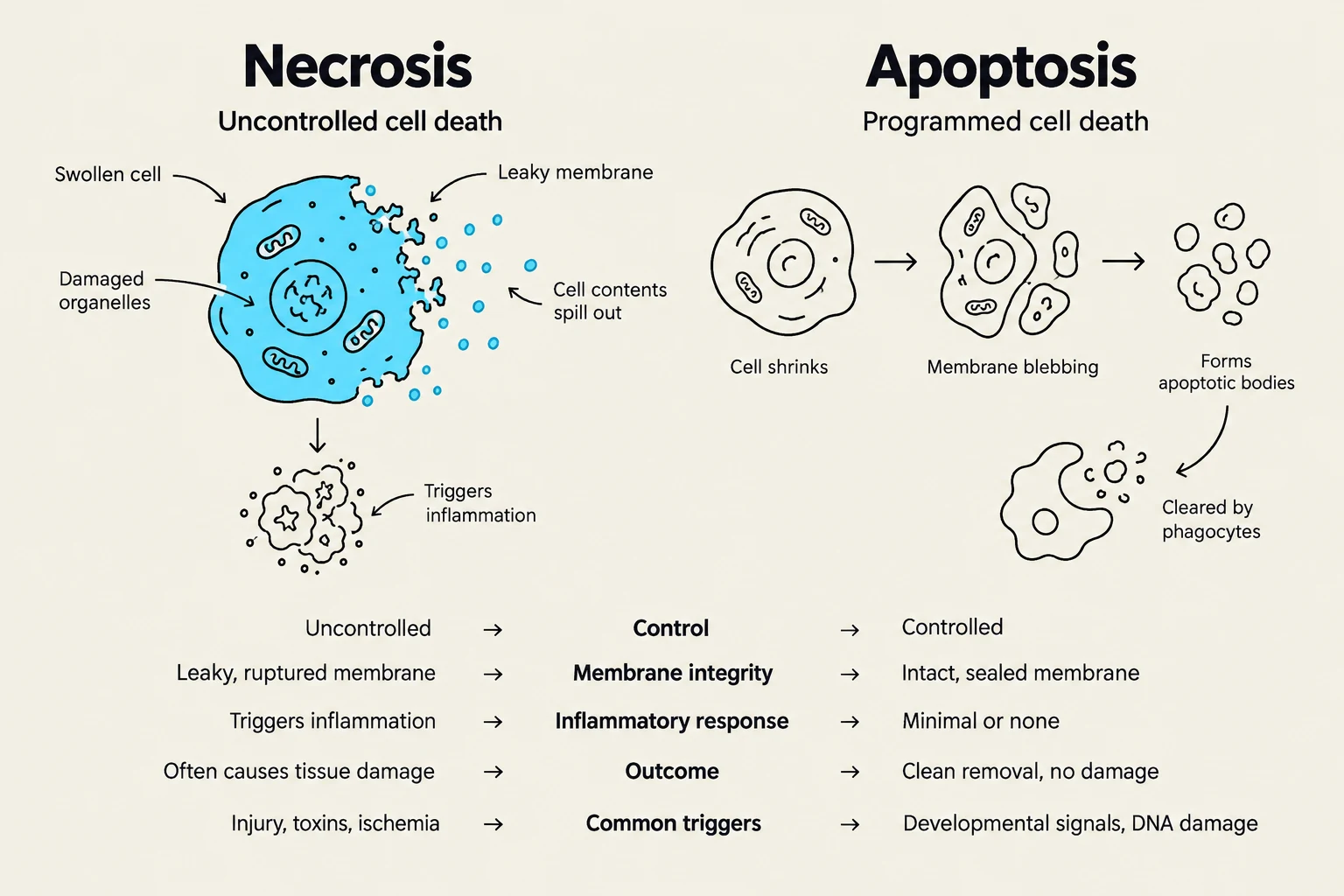
Necrosis: This is uncontrolled cell death resulting from severe stress. During necrosis, the cell membrane loses integrity, and the internal contents leak into the surrounding tissue. This leakage triggers an inflammatory response, which can cause pain, swelling, and redness. A severe form of necrosis is gangrene, which involves extensive tissue death often due to a loss of blood supply.
Apoptosis: This is "programmed cell death"—a highly controlled and tidy way to remove damaged or unnecessary cells without causing inflammation. It is essential for normal cell turnover and occurs when DNA is severely damaged.
This illustration compares necrosis (uncontrolled cell death) with apoptosis (programmed cell death), detailing their characteristics and outcomes.
Neoplasms: The Biology of Cancer
Cancer, or neoplasia, occurs when the normal control of cell growth and death is lost. This involves impaired cell cycle regulation, genetic mutations, and a failure of apoptosis.
Benign vs. Malignant Tumors
A tumor (neoplasm) is an abnormal new growth of tissue.
Benign Tumors: These are typically encapsulated by connective tissue and do not invade surrounding tissues. They grow slowly and are well-differentiated (look like normal tissue).
Malignant Tumors (Cancer): These are characterized by rapid growth, poor differentiation (abnormal appearance), and the ability to invade nearby tissues and blood vessels.
Molecular Drivers of Cancer
The development of cancer is driven by specific genetic changes:
Oncogenes: These are mutated versions of normal genes (proto-oncogenes) that are always "on," pushing the cell to divide uncontrollably.
Tumor Suppressor Genes: These act as the "brakes" of the cell, slowing growth or triggering apoptosis if something is wrong. When these genes are mutated or inactivated, the cell loses its ability to stop dividing.
Metastasis: The Spread of Disease
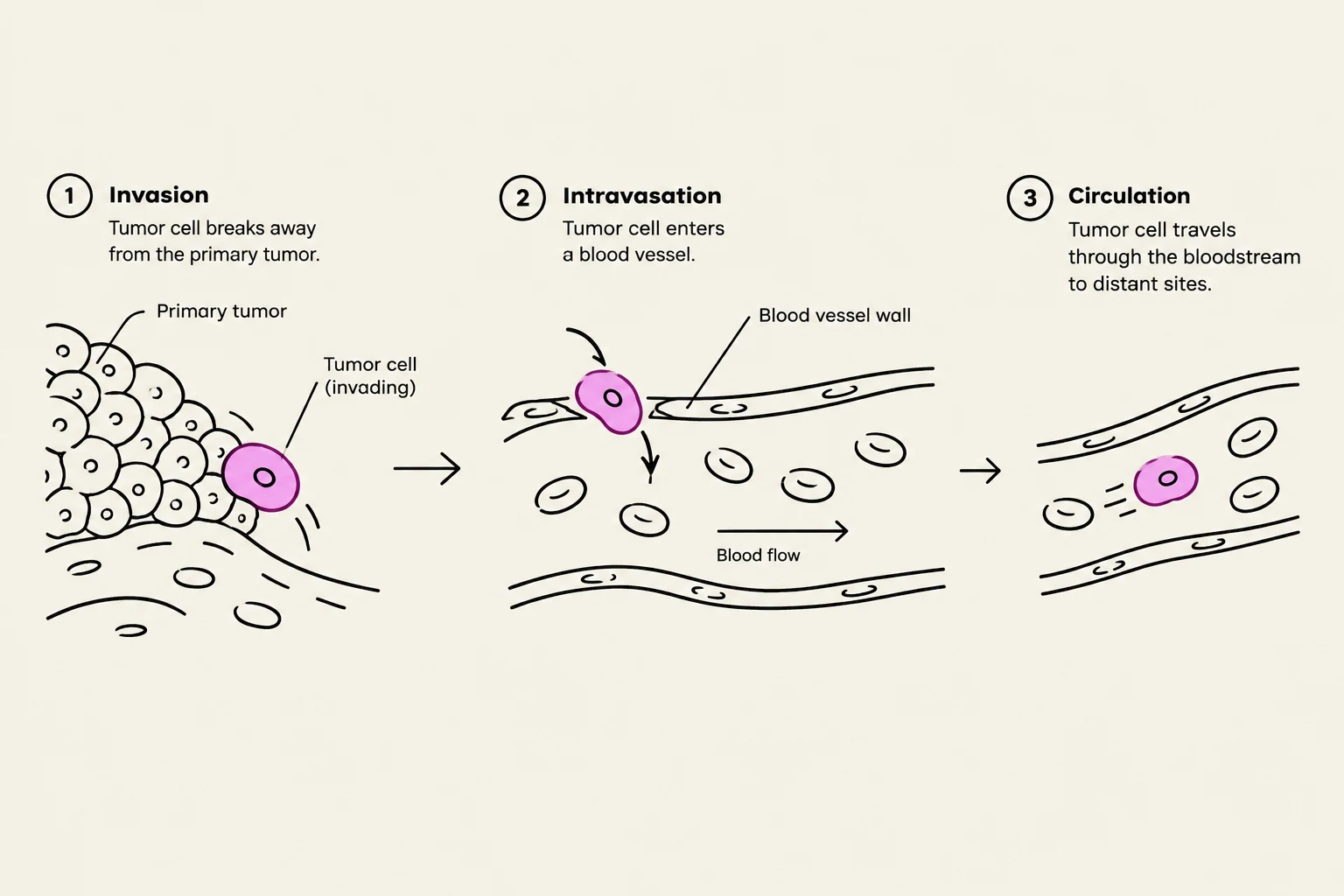
The defining and most dangerous feature of cancer is metastasis—the spread of cancer cells from the primary tumor to distant organs. This process is complex and involves several critical steps:
Local Invasion: Cancer cells lose their ability to stick to neighbors and release enzymes to break through the extracellular matrix.
Intravasation: The cells enter the bloodstream or lymphatic vessels.
Survival in Circulation: Most cells die in the blood, but some survive by forming clusters with platelets to hide from the immune system.
Extravasation: The cells exit the vessels in a new location.
Colonization: The cells adapt to the new environment and begin growing a secondary tumor.
This diagram illustrates the three stages of tumor metastasis: invasion, intravasation, and circulation.
Clinical Note: Metastasis is a major cause of cancer-related deaths because it makes treatment significantly more complex and reduces survival rates.
Summary of Clinical Manifestations
Nurses must recognize that cancer affects the whole body. While some symptoms are organ-specific (like a cough in lung cancer), others are systemic, such as cachexia (muscle wasting due to inflammation and altered metabolism), anemia (due to chronic bleeding or bone marrow involvement), and fatigue.
Keep reading for free.
Create an account to finish this reading and make it part of your study routine.