


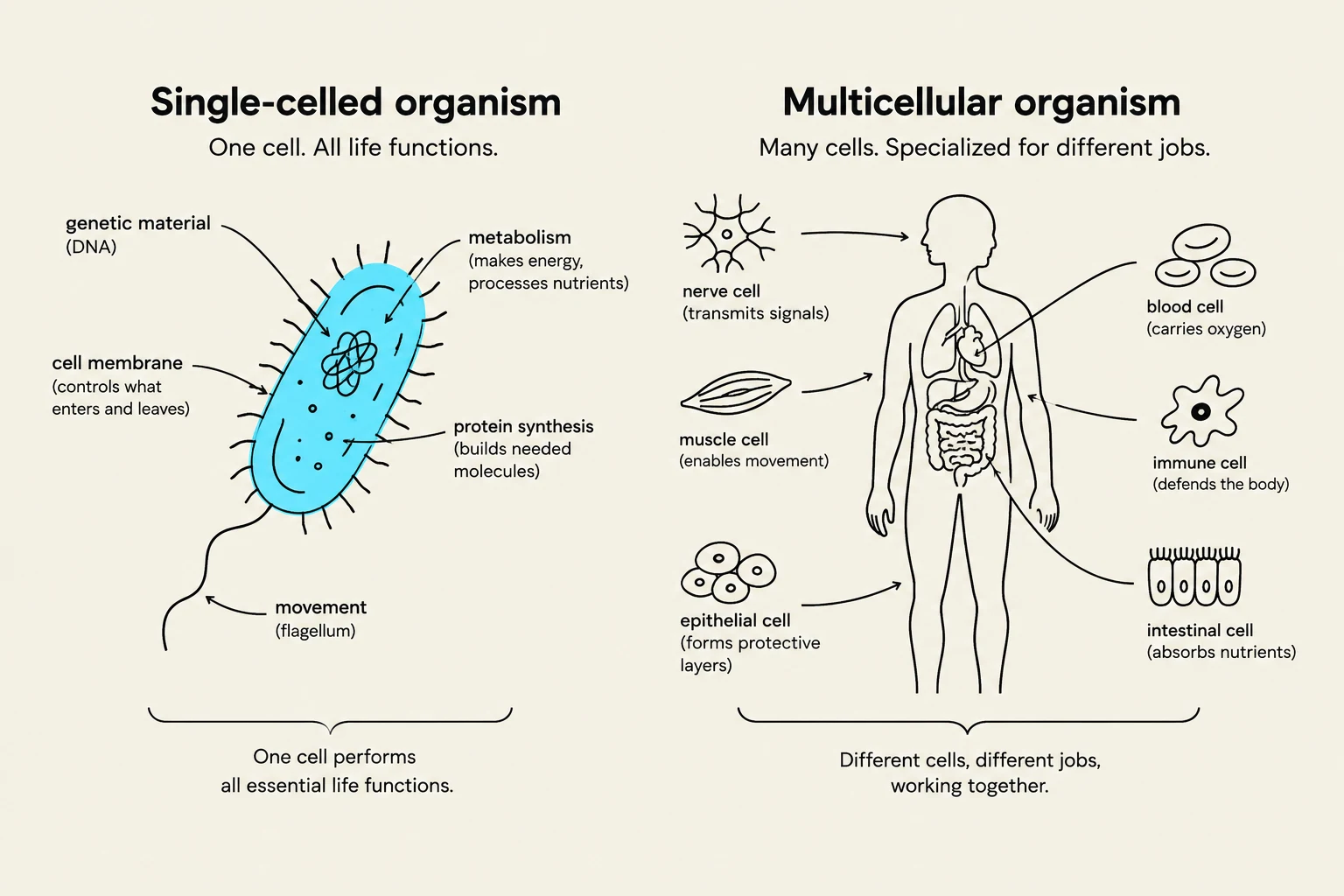
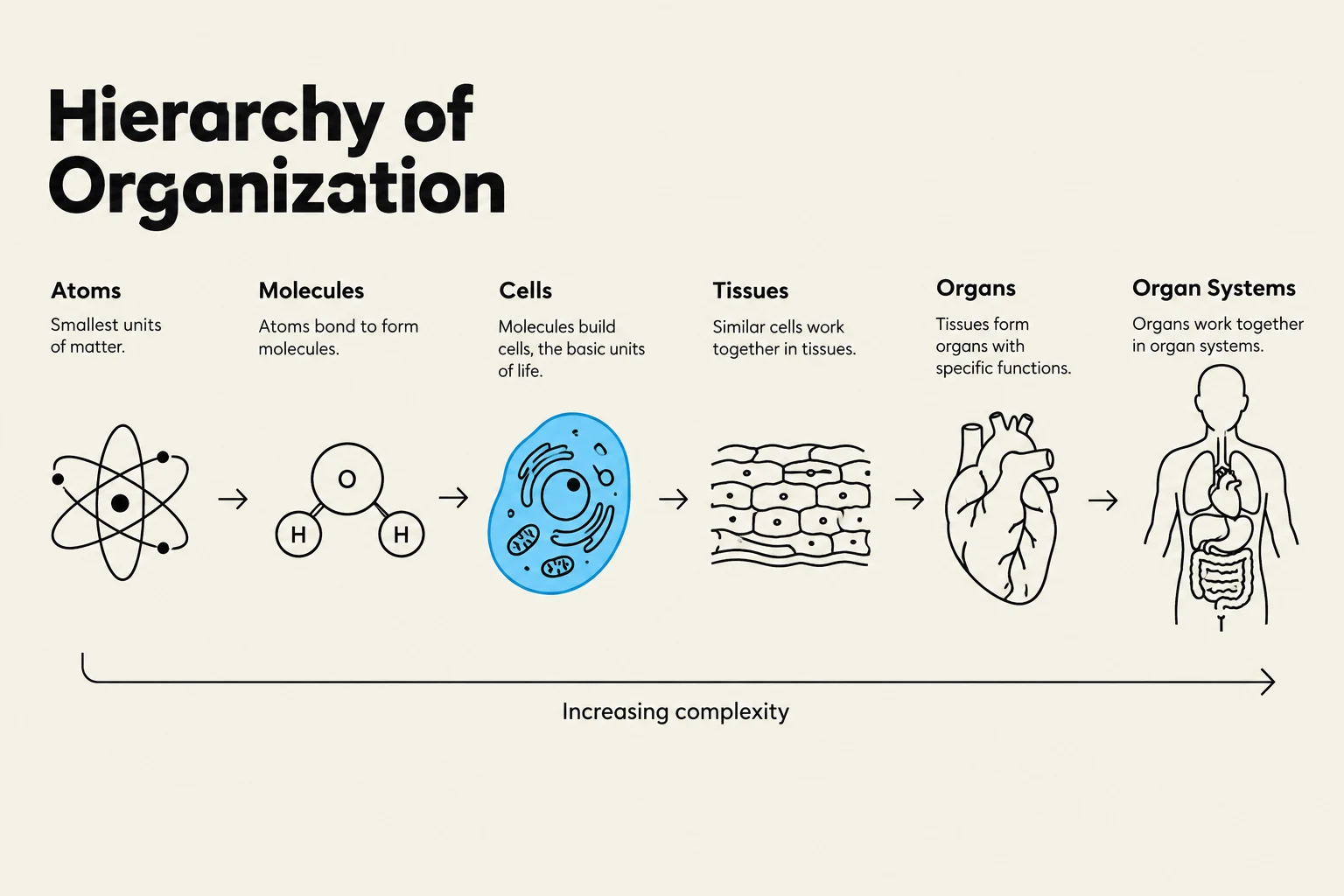
In the biological world, life is organized into a complex hierarchy of increasing sophistication. While a single-celled organism must perform every necessary life function—such as metabolism, sensing the environment, and reproduction—within one solitary cell, multicellular organisms have evolved a much more efficient strategy. By dividing labor among different types of cells, organisms like plants, fungi, and animals can achieve greater complexity and specialized performance. This division of labor is made possible through two fundamental processes: cell specialization and cell differentiation.
Unicellular vs. Multicellular Organization
To understand why specialization matters, we must first look at the two primary ways life is organized. Unicellular organisms are composed of a single cell that acts as a complete, self-contained unit. Every metabolic process, from taking in energy to maintaining homeostasis, happens within that one cell.
In contrast, multicellular organisms rely on a diverse toolkit of cells. Instead of one cell doing everything, different cells are assigned specific tasks. This allows for the creation of specialized structures that can perform complex functions more effectively than a single cell ever could.
The Mechanisms of Specialization: Differentiation and Development
How does a single fertilized egg eventually become a complex organism with a brain, muscles, and skin? The answer lies in the relationship between development, gene expression, and differentiation.
Development is defined as an organized sequence of changes in cells, organs, and the overall pattern of an organism. This entire process is driven by gene expression—the mechanism by which specific instructions in our DNA are "turned on" or "turned off" to produce functional proteins.
Keep reading for free.
Create an account to finish this reading and make it part of your study routine.
Continue reading freeAlready have an account? Log in
Updated