


Imagine you are getting ready for school in the morning. If your clothes, books, and toiletries were all thrown into one giant pile in the middle of your room, you would struggle to find anything. However, if you use closets, drawers, and shelves to organize your belongings, you can find exactly what you need quickly and efficiently.
Cells operate under a similar principle of organization. To improve efficiency, cells use compartmentalization to organize internal structures, known as organelles. The cell membrane (or plasma membrane) is the essential boundary that facilitates this organization while acting as a barrier between the cell's internal environment and the external world.
The Fluid Mosaic Model
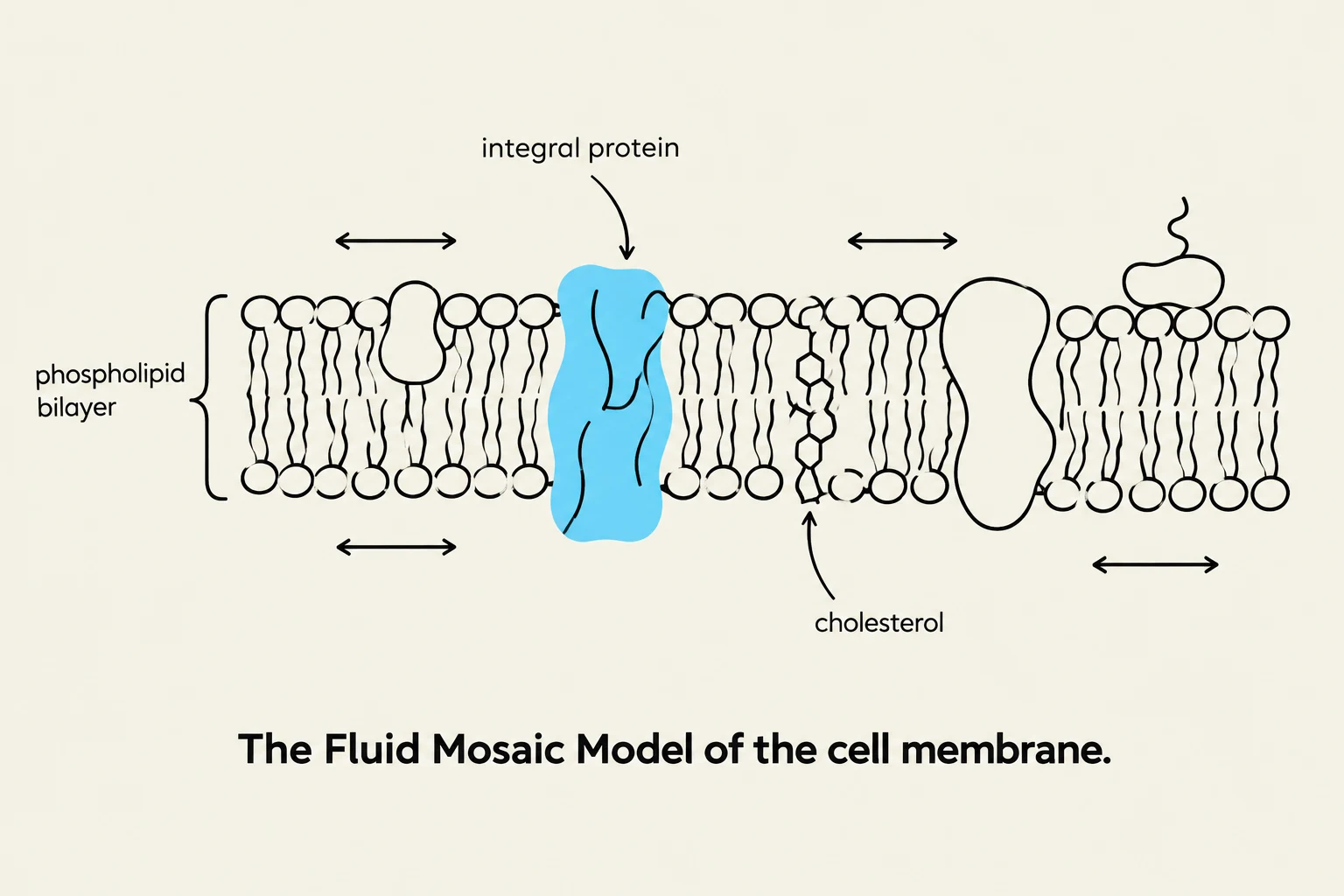
- Fluid: The components of the membrane are not fixed in a single location; they are constantly moving.
- Mosaic: The membrane is a diverse mixture of many different types of molecules, including phospholipids, proteins, carbohydrates, and cholesterol.
Because of this dynamic structure, the membrane is selectively permeable. This means it does not simply block everything; instead, it carefully regulates the passage of specific ions and molecules into and out of the cell.
The Foundation: Phospholipids
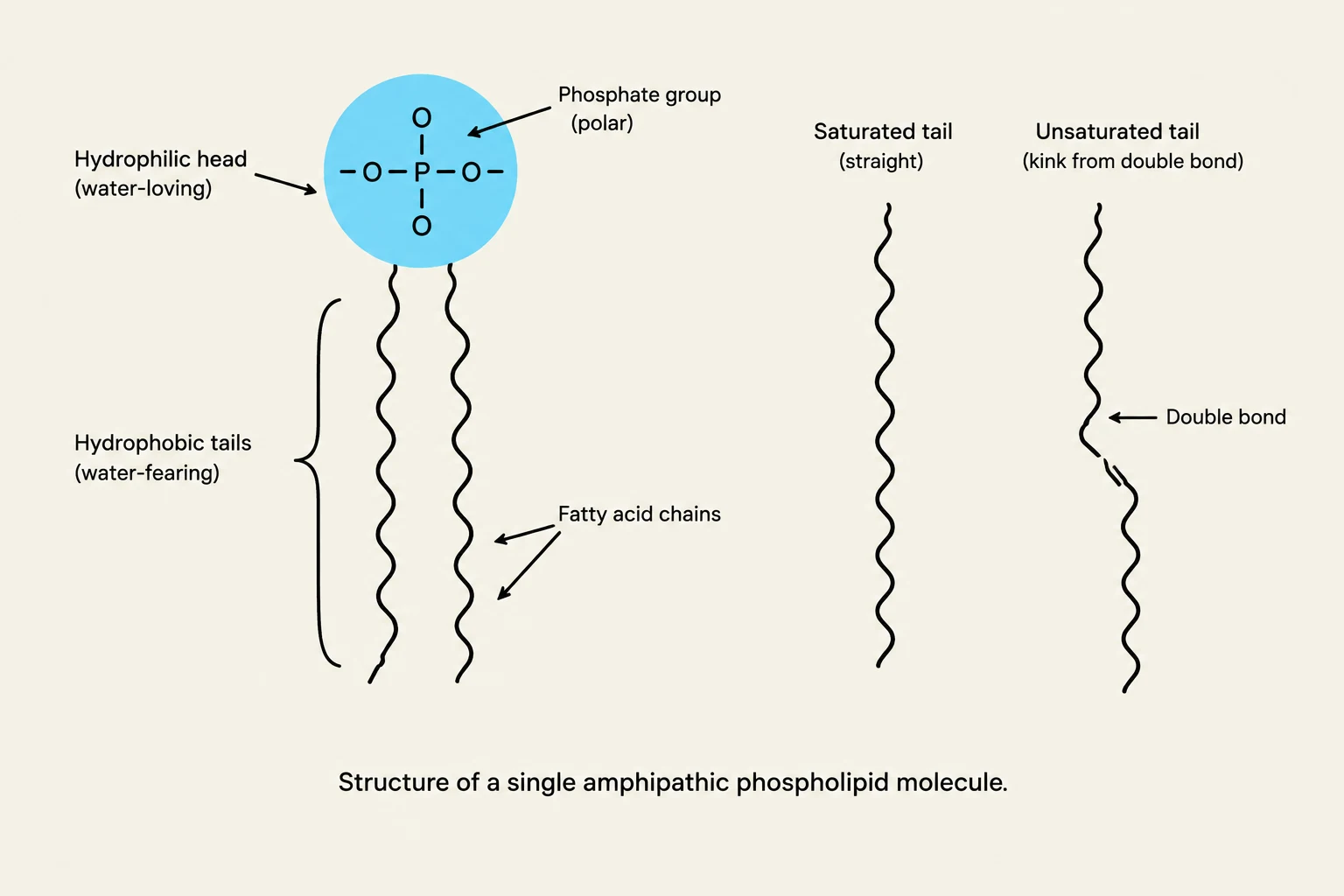
The primary structural component of the membrane is the phospholipid. Phospholipids are amphipathic molecules, meaning they possess both water-loving and water-fearing regions.
Keep reading for free.
Create an account to finish this reading and make it part of your study routine.
Continue reading freeAlready have an account? Log in
Updated