


At the heart of all biological life lies the ability of a cell to replicate itself and pass on genetic information. This process is not uniform; depending on whether a cell is meant to grow a body, repair a wound, or produce the next generation, it will utilize different mechanical pathways. To understand human development, one must first master the distinction between somatic cell division (mitosis) and the specialized production of reproductive cells (meiosis and gametogenesis).
The Foundation: Mitosis and Somatic Growth
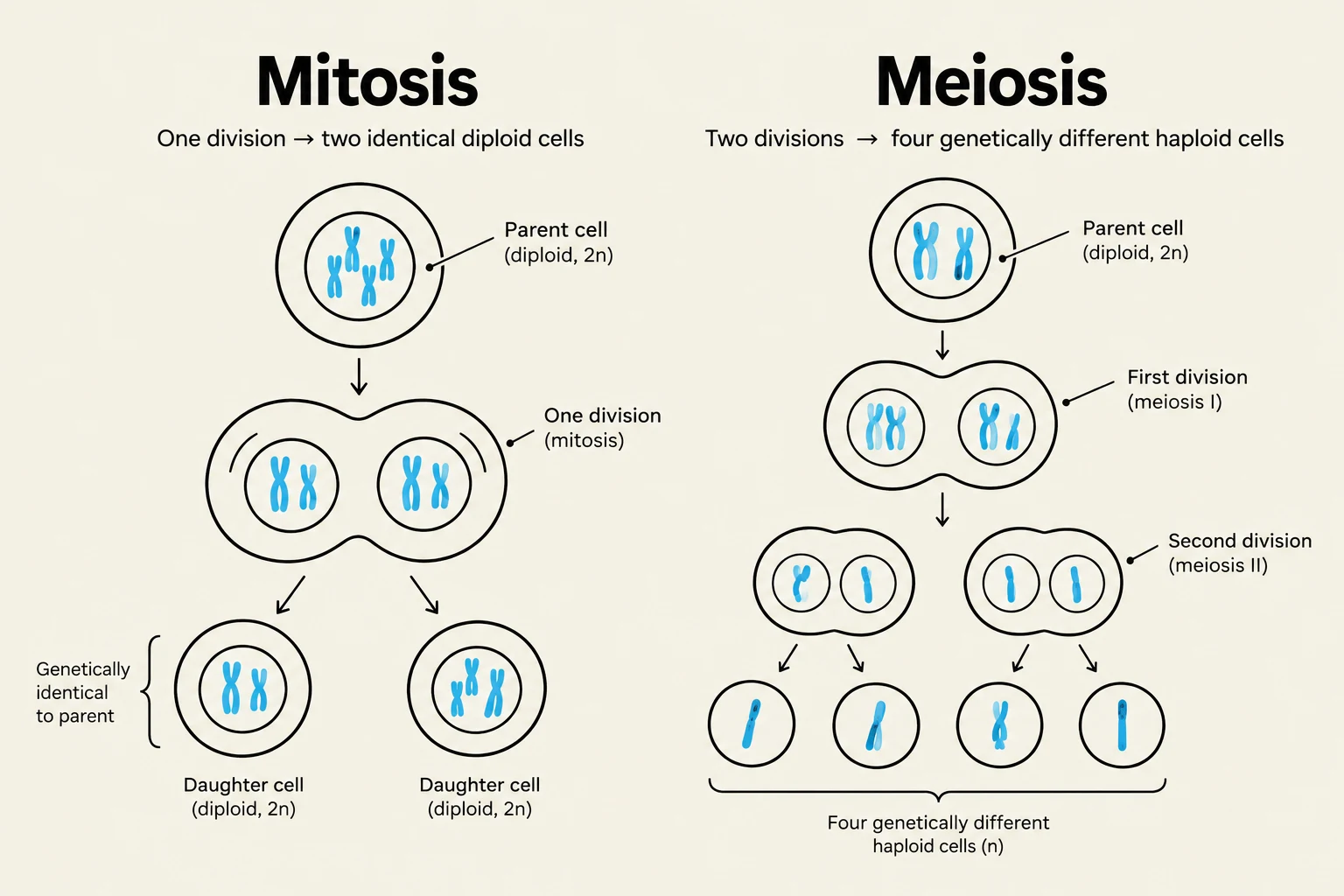
Mitosis is the process of cell division that results in two genetically identical daughter cells from a single parent cell. This type of division is responsible for growth, tissue repair, and asexual reproduction in many organisms. In humans, mitosis occurs in somatic cells—all cells of the body except for the sperm and egg.
The goal of mitosis is to maintain the diploid (2n) number of chromosomes. If a human skin cell has 46 chromosomes, after mitosis, both resulting daughter cells will also have 46 chromosomes. The process is typically divided into several distinct phases: prophase, metaphase, anaphase, and telophase.
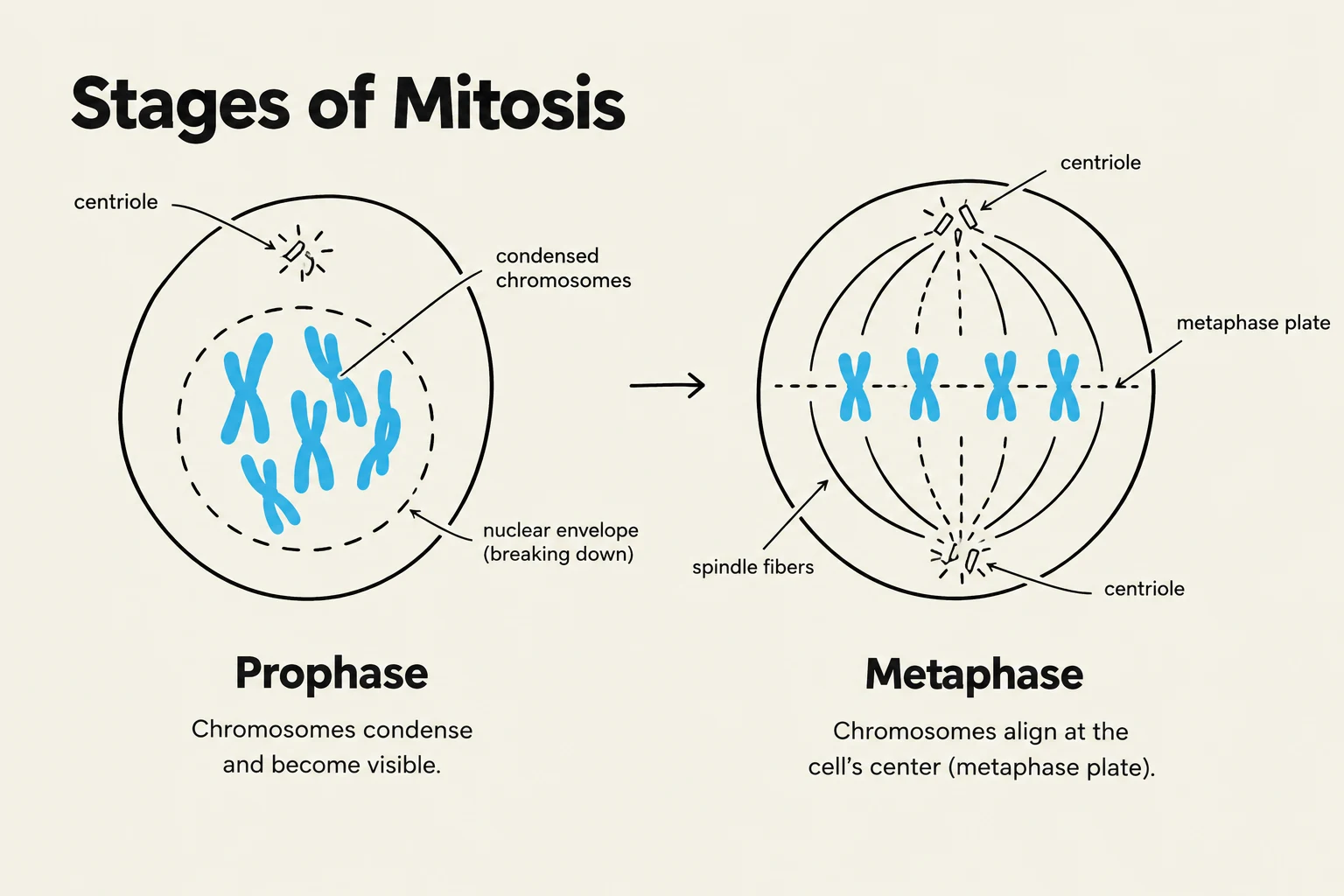
Exam Tip: Remember that mitosis is about consistency. If you see a question asking how a multicellular organism increases its size or heals a cut, the answer is almost always mitosis.
The Engine of Variation: Meiosis
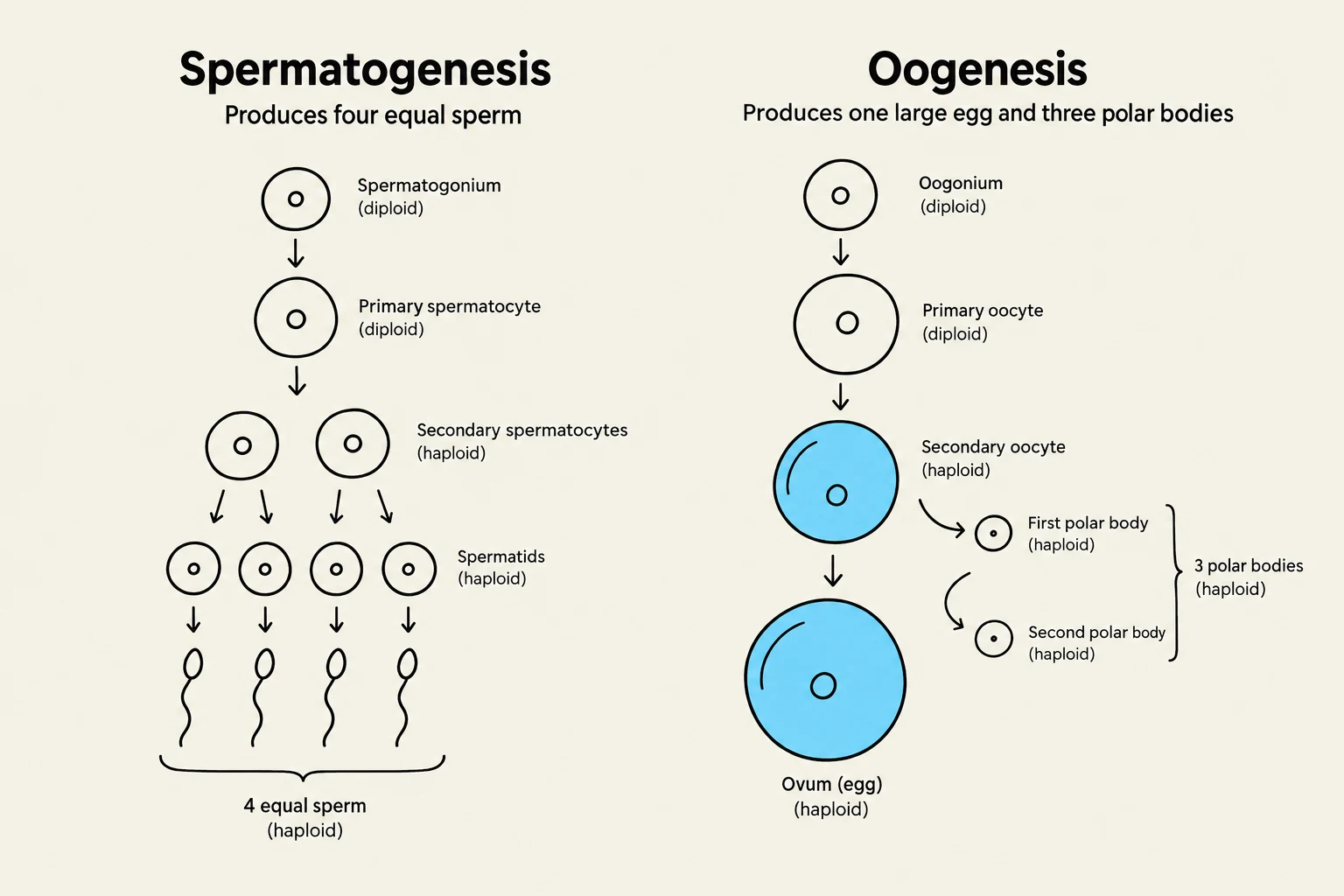
While mitosis maintains the status quo, meiosis is designed for change and reduction. Meiosis is a specialized form of cell division that occurs in the germ cells to produce gametes (sperm and eggs). Unlike mitosis, meiosis involves two successive rounds of division—Meiosis I and Meiosis II—but only one round of DNA replication.
Keep reading for free.
Create an account to finish this reading and make it part of your study routine.
Continue reading freeAlready have an account? Log in
Updated