Explores the cell cycle, including Interphase (G1, S, G2), mitosis, and meiosis. Discusses cell specialization through stem cells and differentiation, and disorders of cellular growth like tumors, as well as programmed cell death (apoptosis) and necrosis.
Cells are the fundamental building blocks of all living matter. While they vary significantly in size, shape, and specialized function, they all share the essential ability to grow, replicate, and maintain themselves through highly regulated processes. Understanding how cells divide and how they grow is central to understanding life itself, as well as the development of diseases like cancer.
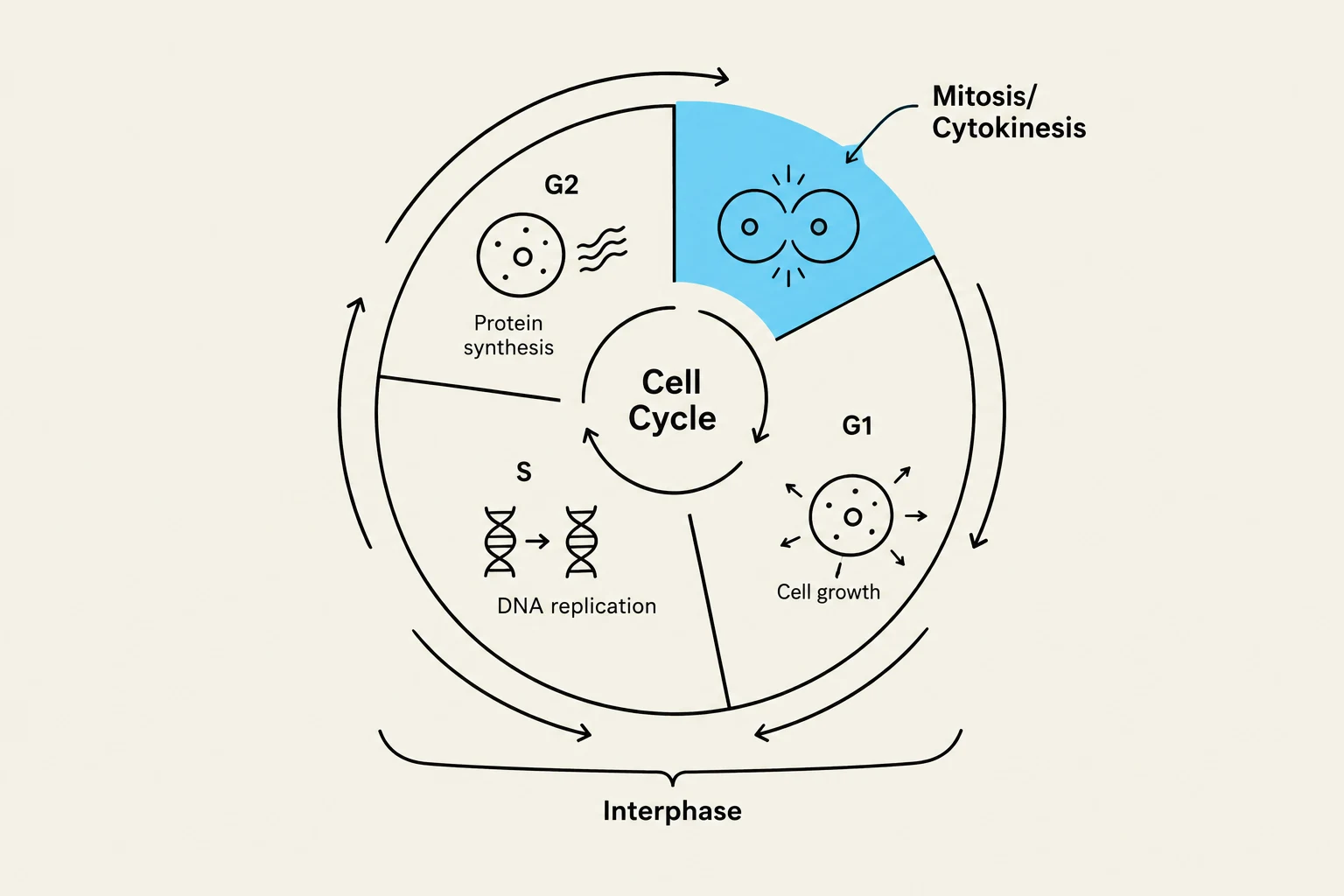
Diagram illustrating the stages of the cell cycle, including Interphase (G1, S, G2) and Mitosis/Cytokinesis.
The Cell Cycle: The Life of a Cell
A cell does not simply exist; it undergoes a continuous cycle of growth and division known as the cell cycle. This cycle is divided into two main stages: Interphase and the actual division process (Mitosis or Meiosis).
Interphase: Preparation and Growth
Before a cell can divide, it must prepare itself. Interphase is the period during which the cell grows and replicates its genetic material. It consists of three distinct phases:
G1 Phase (First Gap Phase): The cell undergoes intense metabolic activity and grows in size.
S Phase (Synthesis Phase): This is a critical period where the cell replicates its DNA, ensuring that when the cell eventually divides, each new cell will have a complete set of genetic instructions.
G2 Phase (Second Gap Phase): The cell continues to grow and prepares the necessary proteins and organelles required for division.
Study Tip: Think of Interphase as the "preparation" stage. Just as you wouldn't try to host a massive party without buying food and cleaning the house (G1/G2) and making sure you have enough invitations (S phase), a cell cannot divide without these preparatory steps.
Mitosis and Meiosis: Methods of Division
Depending on the type of cell and its purpose, division follows one of two primary pathways: mitosis or meiosis.
Mitosis: Somatic Cell Division
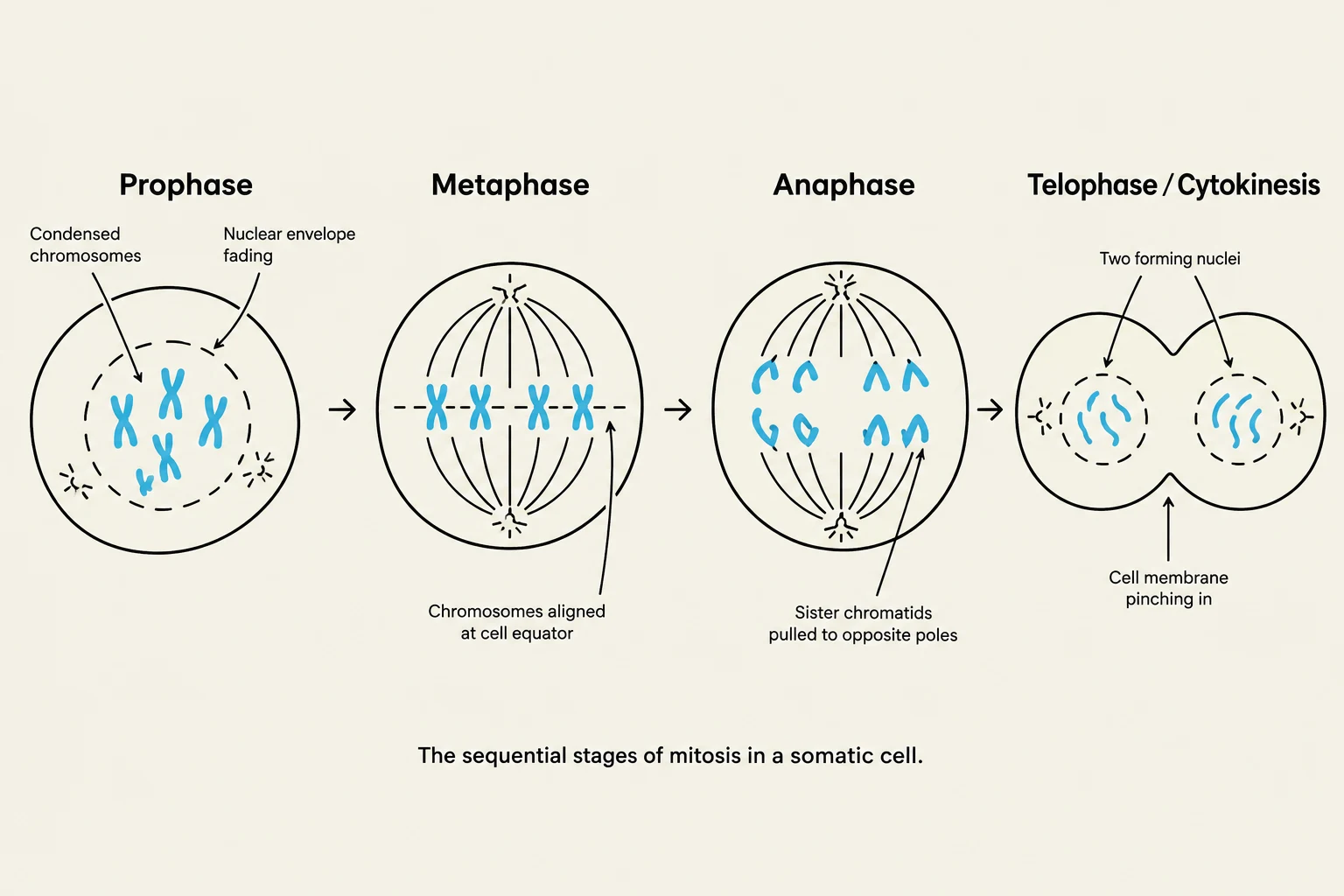
The sequential stages of mitosis in a somatic cell, illustrating Prophase, Metaphase, Anaphase, and Telophase/Cytokinesis.Mitosis is the process by which a single "mother" cell splits into two identical "daughter" cells. This is how our bodies grow and repair damaged tissues. Mitosis is broken down into four specific stages:
Prophase: The chromosomes become visible and the nuclear envelope begins to break down.
Metaphase: The chromosomes line up in the middle of the cell.
Anaphase: The identical halves of the chromosomes, known as chromatids, are pulled apart toward opposite sides of the cell.
Telophase: Two new nuclear envelopes form around the separated sets of chromatids.
The process concludes with cytokinesis, where the cell membrane pinches inward to physically divide the cytoplasm, resulting in two separate, identical cells.
Meiosis: Sexual Reproduction
Unlike mitosis, meiosis occurs only in sex cells (gametes). The goal of meiosis is not to create identical clones, but to produce cells with half the genetic material of the parent cell, ensuring that when fertilization occurs, the resulting offspring has the correct number of chromosomes.
Specialization: Stem Cells and Differentiation
Diagram illustrating stem cell self-renewal and differentiation into specialized cells like neurons and muscle cells.
Not all cells are created equal. While many cells have highly specific roles—such as a neuron sending signals or a muscle cell contracting—some cells retain the ability to become anything.
Stem Cells
Stem cells are relatively unspecialized cells. Their primary function is to produce additional unspecialized cells. The rate at which these cells divide depends heavily on the tissue type; for example, stem cells in the skin and bone marrow divide many times a day, whereas those in adult cartilage may remain inactive for years.
Cell Differentiation
As cells move away from the "blank slate" state of a stem cell, they undergo cell differentiation. This is the process where cells become specialized in structure and function to perform specific tasks within the body.
Disorders of Cellular Growth and Death
When the highly regulated cycle of cell division breaks down, the consequences can be severe.
Abnormal Growth: Tumors
Uncontrolled and disorganized cell growth can lead to the formation of tumors:
Benign Tumors: These are noncancerous growths. While they are not "cancer," they can still cause issues depending on their location and size.
Malignant Tumors: These are cancerous growths. Malignant cells are dangerous because they can extend into and invade surrounding healthy tissues.
Programmed vs. Uncontrolled Death
The body has mechanisms to manage cell death, but there is a vital distinction between healthy and unhealthy cell death:
Apoptosis: This is "programmed cell death". It is a highly regulated, beneficial process that helps the body rid itself of old, unnecessary, or unhealthy cells.
Necrosis: This refers to the death of cells or groups of cells that is typically unplanned and often results from injury or disease.
Exam Note: If a question asks about the difference between apoptosis and necrosis, remember: Apoptosis is a "clean," programmed suicide for the good of the organism, while Necrosis is an accidental, often messy death caused by external factors.
Keep reading for free.
Create an account to finish this reading and make it part of your study routine.