


In a healthy biological system, cell division is a highly regulated process designed to ensure that each daughter cell receives the correct amount of genetic material. However, errors can occur during meiosis, the specialized cell division that produces gametes (sperm and eggs). These errors often result in chromosomal abnormalities, where an individual has an incorrect number of chromosomes. Such aberrations are a major cause of spontaneous abortions and can lead to various genetic syndromes characterized by specific physical and developmental traits.
Understanding Nondisjunction
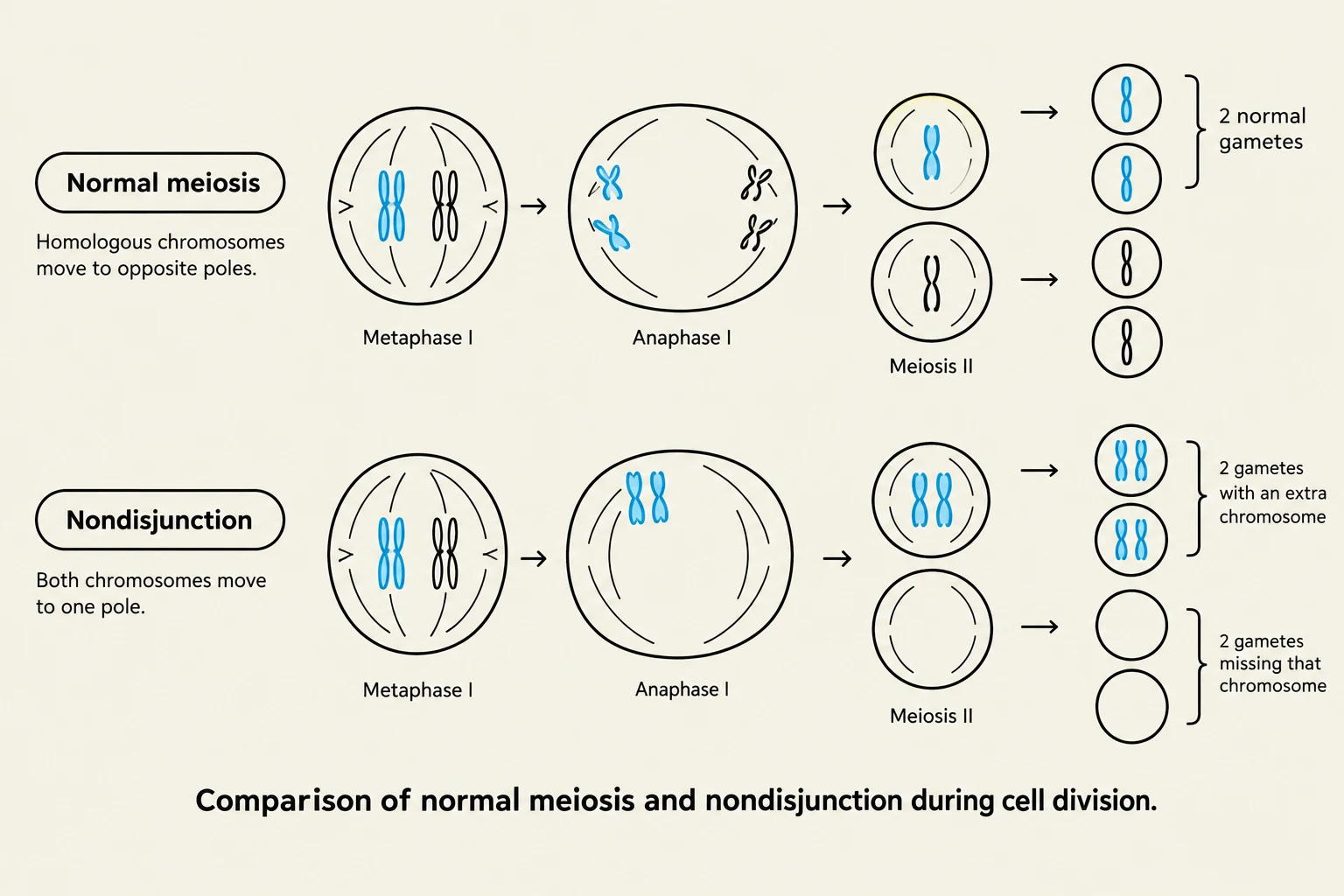
The timing of the error dictates the types of gametes produced:
- If nondisjunction occurs in Meiosis I: All four resulting gametes will be abnormal. Two gametes will have no copies of a specific chromosome, and two gametes will have two copies of that chromosome.
- If nondisjunction occurs in Meiosis II: Two gametes will be normal, one gamete will lack a copy of the chromosome, and one gamete will have two copies.
Aneuploidy vs. Euploidy
To understand these errors, we must distinguish between different chromosomal states:
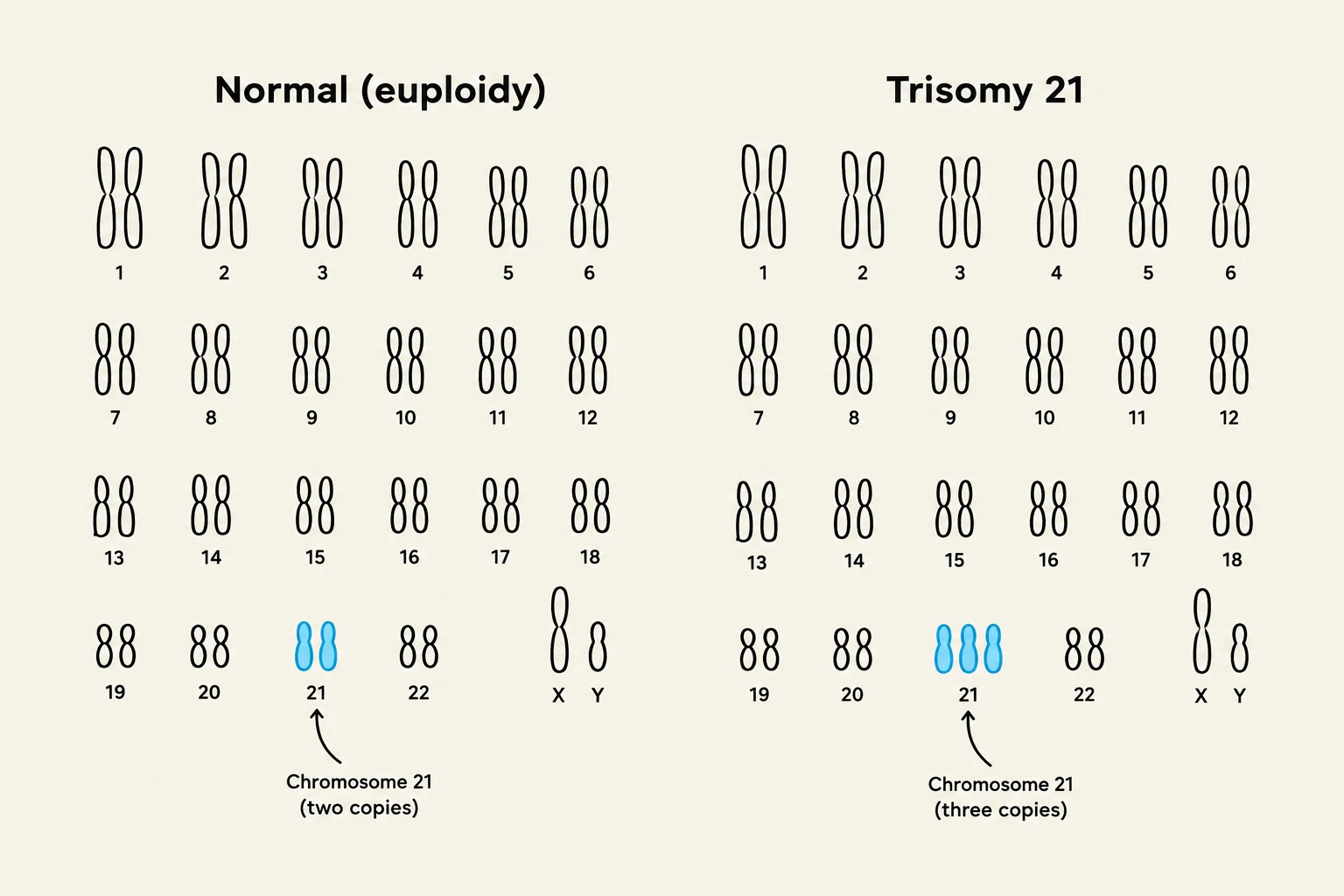
- Euploidy: The normal number of chromosomes for a species. In humans, this is 46 chromosomes (22 pairs of autosomes and 1 pair of sex chromosomes).
- Aneuploidy: A condition where an individual does not have the correct number of chromosomes.
- Monosomy: Having only one copy of a particular chromosome.
- Trisomy: Having three copies of a particular chromosome.
- Polyploidy: Having extra entire sets of chromosomes (e.g., $3n$ or $4n$). While common in plants, this is not the standard state for humans.
Keep reading for free.
Create an account to finish this reading and make it part of your study routine.
Continue reading freeAlready have an account? Log in
Updated