


Since the dawn of humanity, the night sky has served as more than just a beautiful backdrop; it has been a fundamental tool for survival, navigation, and timekeeping. By observing the movements of the Moon and the Sun, ancient civilizations developed sophisticated ways to track time, predict seasons, and understand their place in the universe. Today, this relationship has evolved from spiritual and practical observation into a high-tech pursuit that drives the development of cutting-edge digital technology and massive data processing systems.
The Moon and Sun as Celestial Calendars
Lunar Cycles
The Moon is a primary driver of timekeeping for many cultures, including Polynesian and various Asian civilizations. Because the Moon orbits the Earth, we observe changing Moon phases. These cycles provided a reliable, short-term method for tracking months and planning activities.
Solar Cycles and the Zodiac
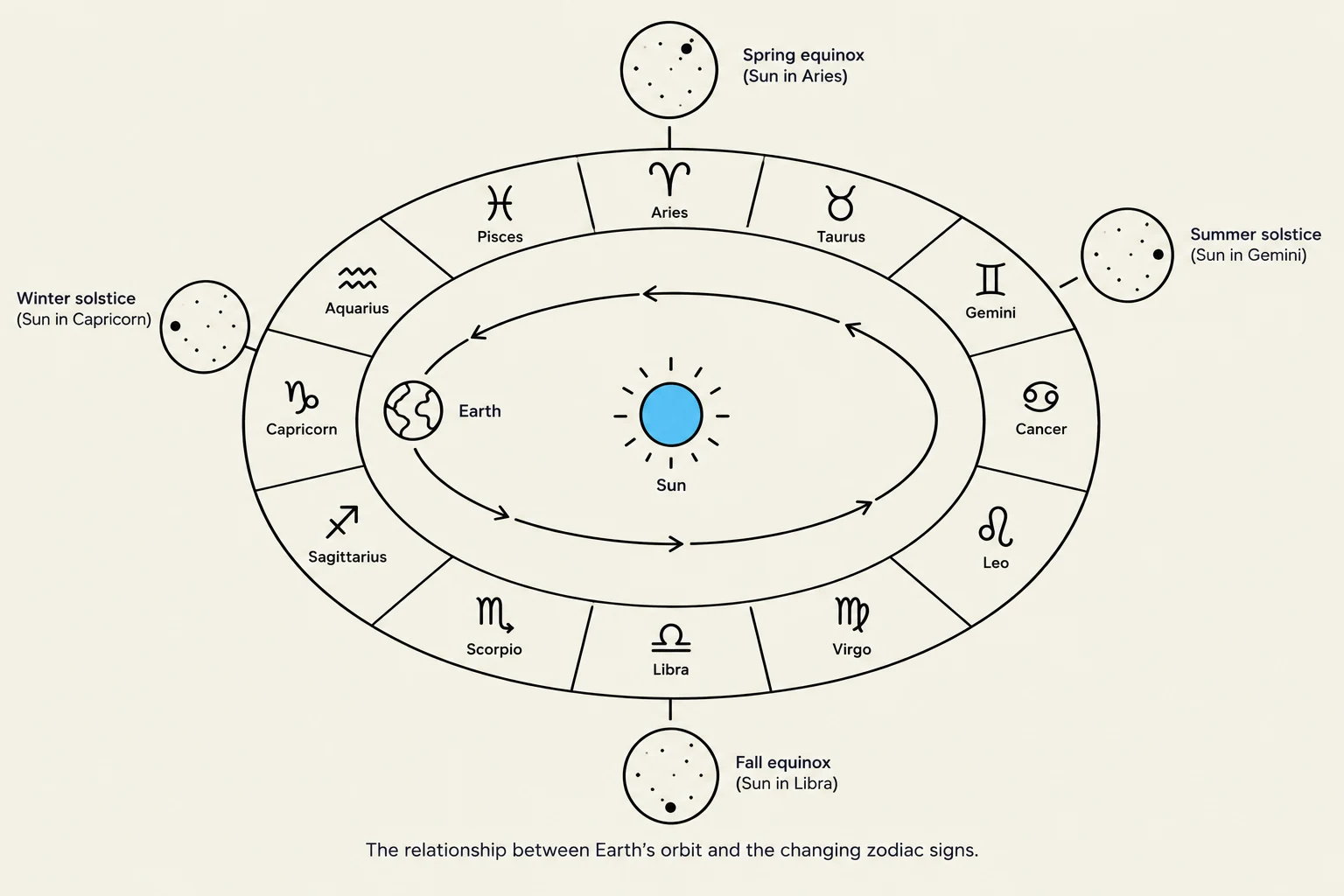
While the Moon tracks shorter intervals, the Sun provides the framework for much larger cycles. As the Earth orbits the Sun, the "night sky" appears to change every day. This movement, combined with the position of the Sun relative to the stars, leads to the establishment of zodiac signs.
Our modern way of life is deeply rooted in these solar observations. For instance, the Roman calendar used today is fundamentally based on the Earth's orbit around the Sun. Other civilizations, such as the Maya, developed even more complex systems. The Mayan calendar incorporated solar components to track significant astronomical events, including the orbit of Venus and solar eclipses.

Keep reading for free.
Create an account to finish this reading and make it part of your study routine.
Continue reading freeAlready have an account? Log in
Updated