Cardiovascular System: Angina and Myocardial Infarction
This content explains the pathophysiology of angina and myocardial infarction, differentiating between temporary ischemia and permanent tissue damage. It covers risk factors, therapeutic goals, and pharmacological treatments including nitrates, beta-blockers, and calcium channel blockers.
Understanding the complexities of the cardiovascular system requires a clear distinction between temporary oxygen deprivation and permanent tissue damage. When the heart muscle does not receive enough oxygen-rich blood, it enters a state of ischemia. Depending on the duration and severity of this lack of blood flow, the clinical outcome can range from manageable discomfort to life-threatening tissue death.
Pathophysiology: From Atherosclerosis to Infarction
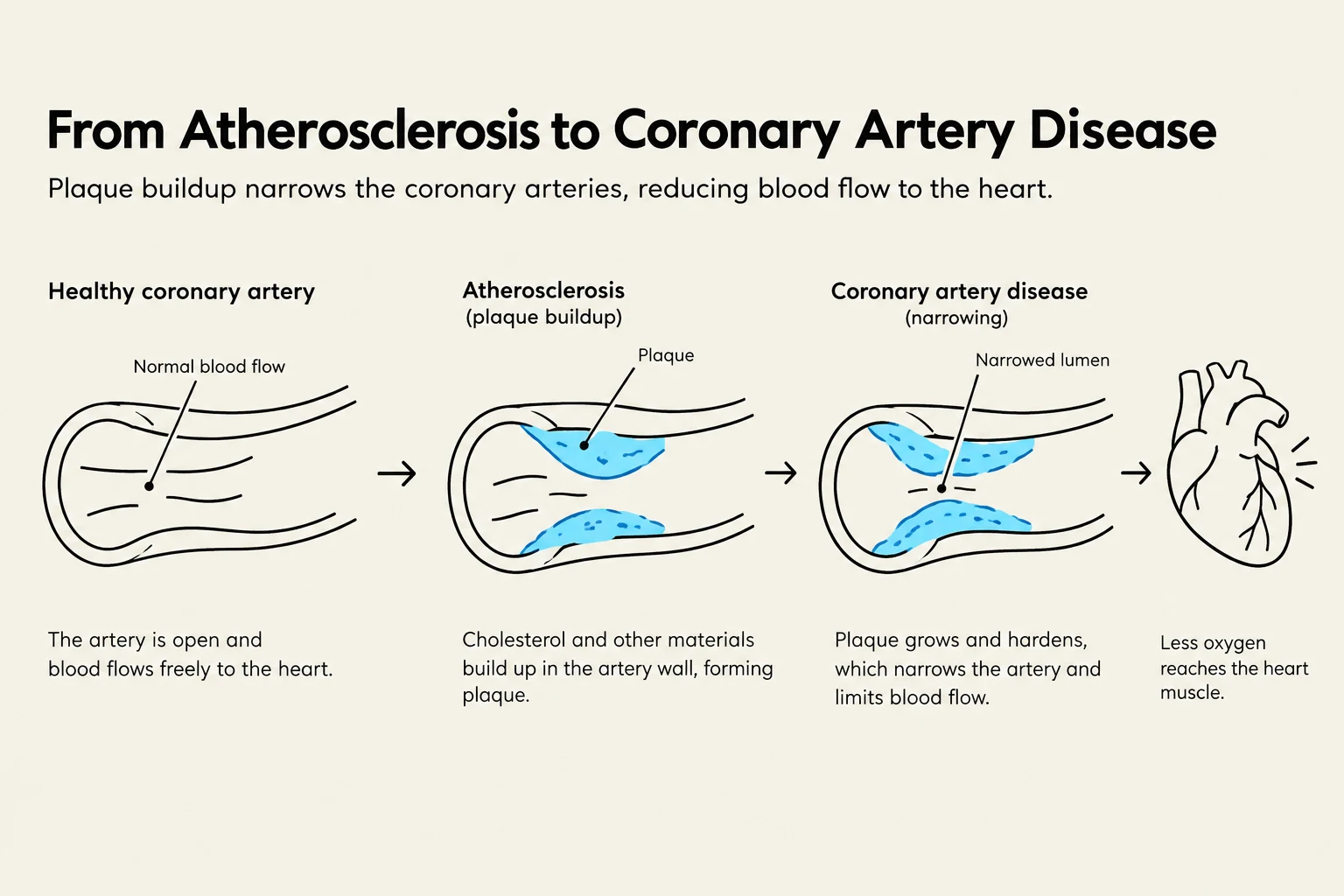
The root of many cardiovascular issues lies in atherosclerosis, which is the buildup of plaque within the arterial walls. As this plaque accumulates, it leads to Coronary Artery Disease (CAD), characterized by the narrowing or blockage of the coronary arteries that supply the heart muscle. This process results in Ischemic Heart Disease, a general term for any condition where the blood supply to the heart is reduced.
The clinical progression of ischemic heart disease is best understood by comparing angina and myocardial infarction (MI):
Angina: This is a manifestation of temporary ischemia. It is characterized by predictable chest discomfort, often triggered by physical exertion, and typically lasts only a few minutes. Crucially, angina does not result in tissue necrosis (cell death) and is often relieved by rest or the administration of nitroglycerin.
Myocardial Infarction (MI): This occurs when ischemia becomes prolonged, often due to a complete arterial blockage caused by a thrombus or a plaque rupture. This leads to infarction, which is the permanent death (necrosis) of the heart tissue. Unlike angina, the pain of an MI is often severe, crushing, or burning, may radiate to the arm, neck, or jaw, and is not relieved by rest or nitroglycerin.
This illustration depicts the progression from healthy coronary arteries to atherosclerosis and finally to coronary artery disease, showing how plaque buildup narrows the arteries and reduces blood flow to the heart.
Clinical Pearl: If a patient experiences chest pain that is not relieved by rest or the first dose of nitroglycerin, they must be evaluated for a potential myocardial infarction.
Demographics and Risk Factors
Epidemiological data shows that angina does not affect all populations equally. Angina occurs more frequently in females than in males. Furthermore, there are significant disparities among racial-ethnic groups; the incidence is highest among Indigenous peoples and people of African descent. Notably, females of African descent face a risk of angina that is twice as high as their male counterparts.
Therapeutic Goals and Pharmacotherapy
The primary objectives of treating angina are to minimize the frequency, duration, and intensity of attacks, improve the patient's functional capacity, and prevent the progression to a myocardial infarction.
To achieve these goals, pharmacological intervention focuses on balancing the relationship between oxygen supply and demand. The mathematical relationship can be viewed as:
Therapy aims to either increase the supply or, more commonly, decrease the myocardial oxygen demand.
Nitrates: The First Line of Defense
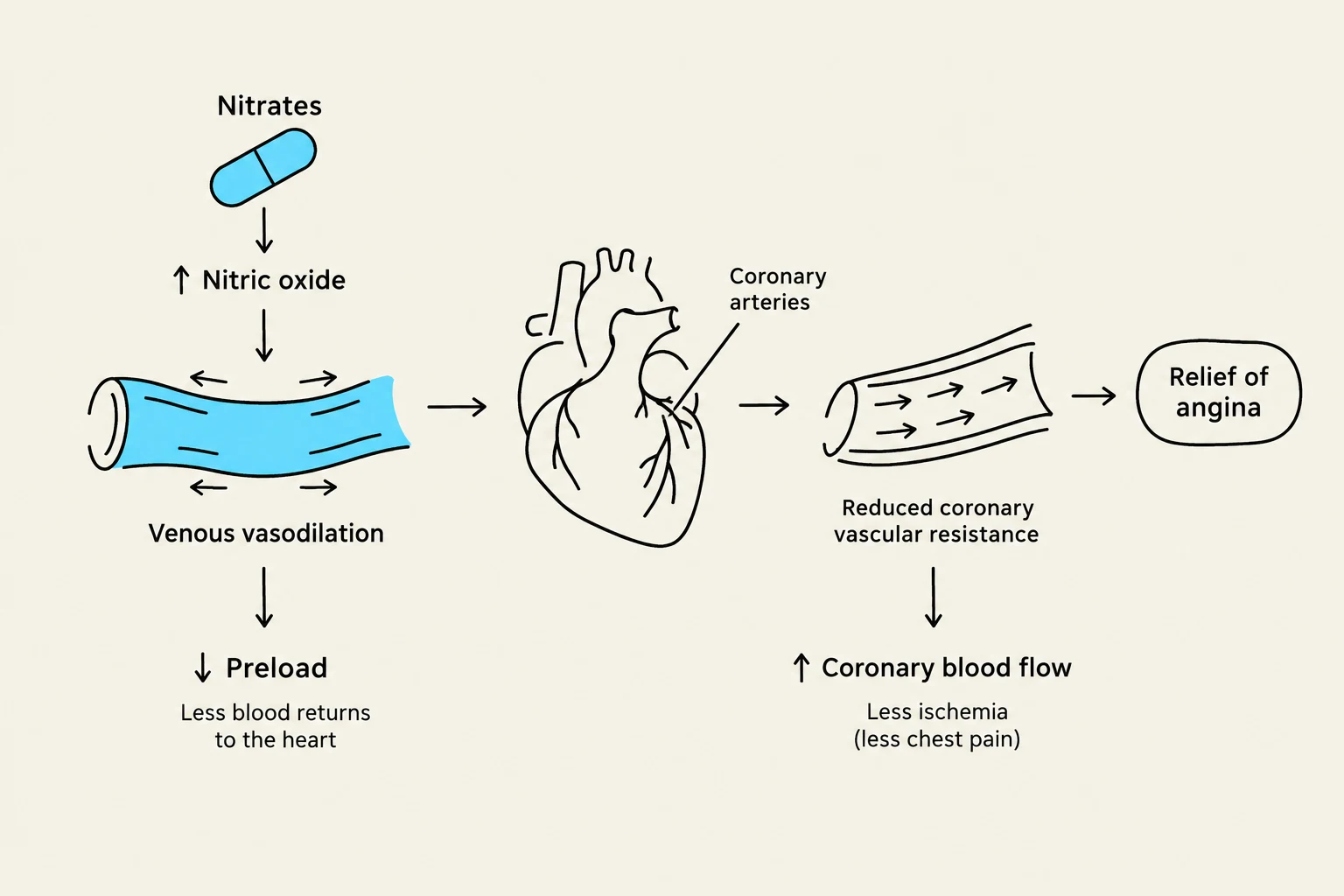
Nitrates, such as nitroglycerin, are the mainstay for both acute treatment of an attack and long-term prophylaxis. They work by inducing vasodilation through the relaxation of smooth muscles. This results in two primary beneficial effects:
Venous Vasodilation: This reduces preload, which is the volume of blood returning to the heart. By reducing preload, the heart does not have to work as hard to pump blood.
Coronary Artery Dilation: This directly increases oxygen delivery to the ischemic myocardial tissue.
Diagram illustrating the mechanism of action of nitrates in relieving angina by increasing nitric oxide, causing venous vasodilation, reducing preload, decreasing coronary vascular resistance, and increasing coronary blood flow.
Administration and Metabolism:
Nitrates are available in many forms, including sublingual tablets, translingual sprays, intravenous solutions, and transdermal patches. It is vital to note that sublingual, translingual, and intravenous forms bypass the first-pass effect of the liver, allowing for rapid action.
Adverse Effects and Tolerance:
Common side effects include headaches, dizziness, postural hypotension, and reflex tachycardia. Patients may also develop tolerance if they take nitrates around the clock. To prevent this, clinicians recommend a "nitrate-free period." For example, a patient using a transdermal patch might be instructed to remove it at bedtime for 8 hours to allow enzyme pathways to replenish.
β-Blockers and Calcium Channel Blockers
When fast-acting nitrates are insufficient for frequent or severe episodes, prophylactic treatments like β-blockers or calcium channel blockers are used.
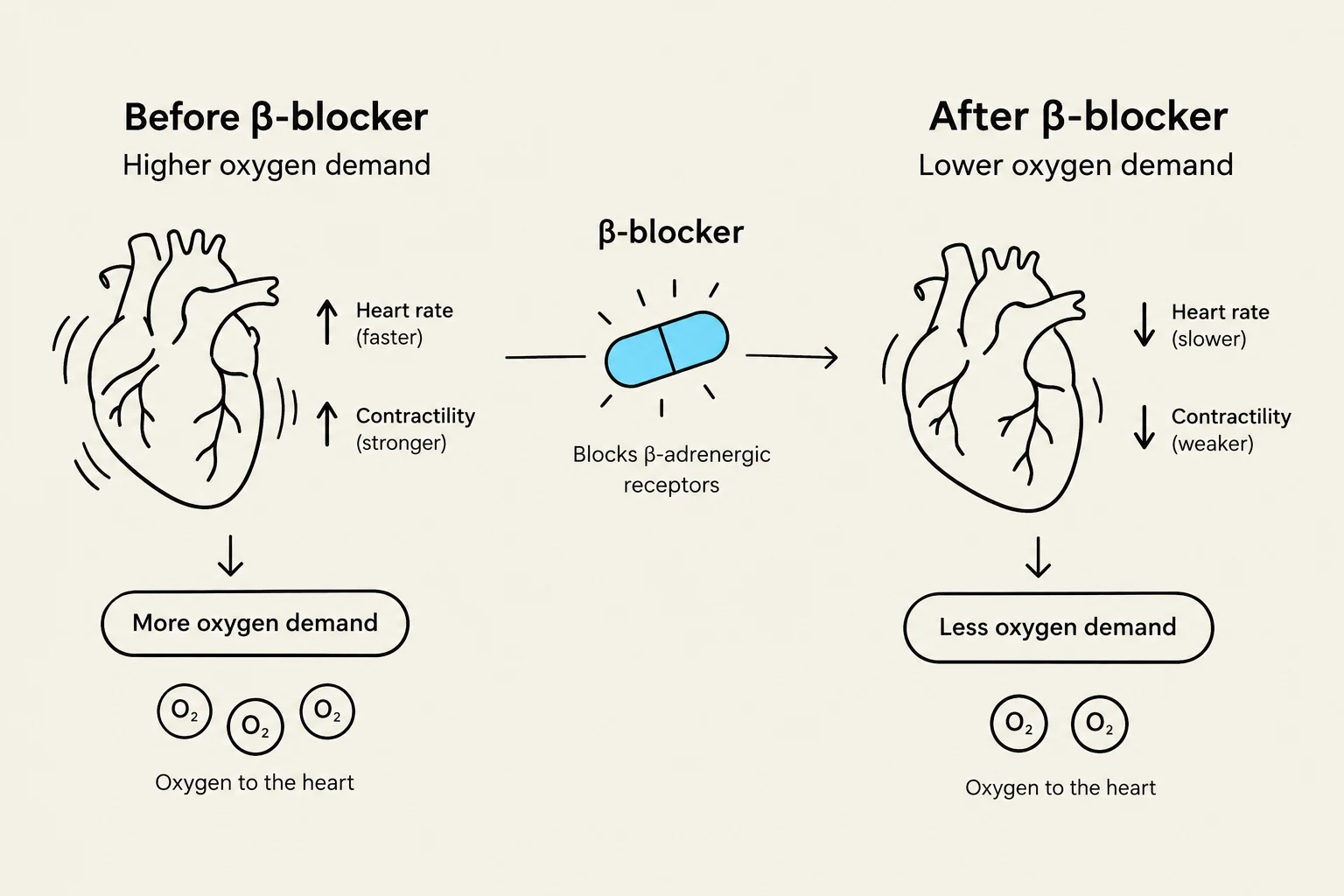
β-Blockers (e.g., Metoprolol, Atenolol): These drugs block β1-receptors on the heart. This action decreases both the heart rate and myocardial contractility. By slowing the heart and reducing the force of contraction, the drug significantly decreases myocardial oxygen demand.
Calcium Channel Blockers (e.g., Diltiazem): These agents promote both coronary and peripheral arterial vasodilation. This reduces systemic vascular resistance, which in turn reduces the workload of the heart and decreases myocardial oxygen demand.
Diagram illustrating the effect of beta-blockers on heart oxygen demand. Before beta-blocker administration, the heart has higher oxygen demand due to increased heart rate and contractility. After beta-blocker administration, which blocks beta-adrenergic receptors, the heart rate and contractility decrease, leading to lower oxygen demand.
Clinical Application: Practice Scenarios
To ensure safety and efficacy, patients must be educated on when to use their medication and when to seek emergency help.
Scenario 1: Immediate Action
A person mowing the lawn on a hot afternoon begins to notice chest pain. What should this person's first action be?
Correct Action: Stop mowing and sit or lie down. Reducing physical activity immediately lowers myocardial oxygen demand.
Scenario 2: When to Call 911
A patient with stable angina experiences chest pain while sitting down. They take a sublingual nitroglycerin tablet, but the pain persists. When should they call 911?
Correct Guidance: The patient should call 911 if the pain is not relieved after taking three sublingual tablets, spaced 5 minutes apart.
Exam Tip: Always remember that nitrates can cause postural hypotension. Instruct patients to rise slowly from a sitting or lying position to prevent dizziness and falls.
Keep reading for free.
Create an account to finish this reading and make it part of your study routine.