


The cardiovascular system is a sophisticated network designed to transport oxygen, nutrients, and hormones while removing metabolic waste. When the structural integrity of the vessels or the electrical and mechanical functions of the heart are compromised, life-threatening conditions can arise. Understanding the distinction between acute electrical failures, mechanical obstructions, and progressive structural diseases is fundamental to mastering cardiovascular pathophysiology.
Acute Cardiac Events: Heart Attack vs. Cardiac Arrest
In clinical settings, it is vital to distinguish between a heart attack and cardiac arrest, as their underlying mechanisms and required interventions differ significantly.
A heart attack (myocardial infarction) is primarily a blood-supply problem. It occurs when a coronary artery becomes blocked—often due to atherosclerosis or a sudden blood clot—preventing oxygenated blood from reaching the myocardium (heart muscle). This lack of oxygen leads to myocardial injury or death.
In contrast, cardiac arrest is an electrical malfunction of the heart's conduction system. During an arrest, the heart's electrical signals become disorganized (such as in ventricular fibrillation), causing the heart to stop pumping effectively. This leads to an immediate loss of effective circulation and requires urgent defibrillation to restore a normal rhythm.
Vascular Abnormalities: Aneurysms and Dissections
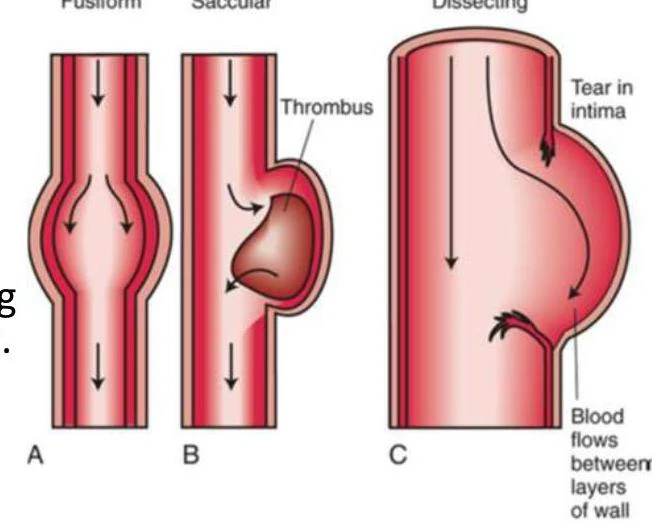
An aneurysm is a localized, abnormal dilatation and weakening of an arterial wall. These can take several forms depending on their shape and the nature of the vessel damage:
- Fusiform Aneurysm: A uniform, balloon-like widening that affects the entire circumference of the artery.
- Saccular (Berry) Aneurysm: A small, pouch-like bulge that protrudes from only one side of the vessel wall.
- Arterial Dissection: A critical condition where a tear occurs in the inner layer (intima) of the arterial wall. This allows blood to enter between the layers of the vessel wall, creating a "false lumen" and potentially obstructing blood flow or causing a rupture.


Keep reading for free.
Create an account to finish this reading and make it part of your study routine.
Continue reading freeAlready have an account? Log in
Updated