Cardiovascular Health: Heart Failure, Hypertension, and Shock
An overview of the cardiovascular system, focusing on conditions like Rheumatic Heart Disease, Congestive Heart Failure (CHF), Hypertension, and Shock. It details their causes, clinical presentations, diagnostic methods, and treatment approaches, including pharmacological management.
The cardiovascular system is a complex network responsible for transporting oxygen, nutrients, and hormones to tissues while removing metabolic waste. When this system fails—whether due to structural damage, electrical disturbances, or pressure imbalances—the results can be life-threatening. Understanding the nuances between different types of heart failure, the mechanics of hypertension, and the critical state of shock is essential for clinical mastery.
Rheumatic Heart Disease and Autoimmune Responses
One significant cause of cardiovascular damage is Rheumatic Heart Disease (RHD), which arises from an inflammatory autoimmune response following a Group A Streptococcus infection. When the body produces antibodies to fight the bacteria, these antibodies mistakenly react with the connective tissue (collagen) in the heart, joints, skin, and brain.
This inflammation can affect any layer of the heart, including the endocardium, myocardium, or pericardium. Over time, the heart attempts to heal by producing scar tissue, leading to sclerosis and calcification, which causes muscle stiffness and impaired function.
Clinical Presentation and Diagnosis
Patients with RHD often present with a variety of systemic symptoms:
General: Fever, leukocytosis (increased white blood cell count), malaise, anorexia, and fatigue.
Cardiovascular: Tachycardia (even at rest) and the presence of a heart murmur, which indicates valve dysfunction.
Dermatological/Musculoskeletal:Migratory arthritis (pain moving between large joints) and erythema marginatum (a specific rash with red margins and white centers).
Neurological: Involuntary jerky movements of the face or limbs.
Diagnosis is typically achieved through testing for elevated serum antibody levels, performing an ECG to monitor electrical activity, and conducting heart function tests. Treatment may involve antibiotics (such as penicillin) to address the underlying infection and surgical interventions like valve repairing if the damage is structural.
Congestive Heart Failure (CHF)
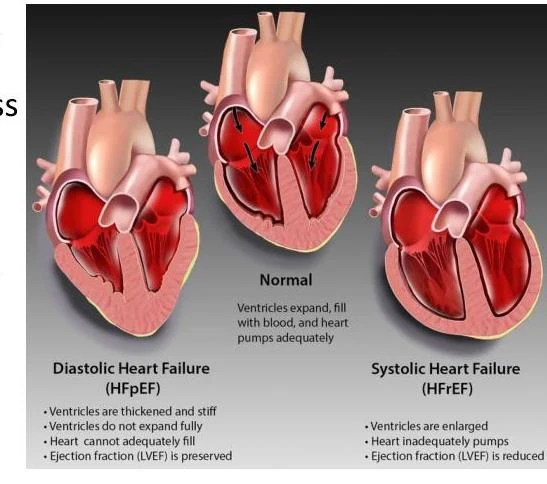
Congestive Heart Failure occurs when the heart cannot maintain an adequate cardiac output to meet the metabolic demands of the body. This can result from the cardiac muscles becoming too weak (systolic dysfunction) or too stiff (diastolic dysfunction).
Diagram illustrating normal heart function and the differences in diastolic and systolic heart failure.
Classification of Heart Failure
Heart failure is categorized based on which ventricle is primarily affected:
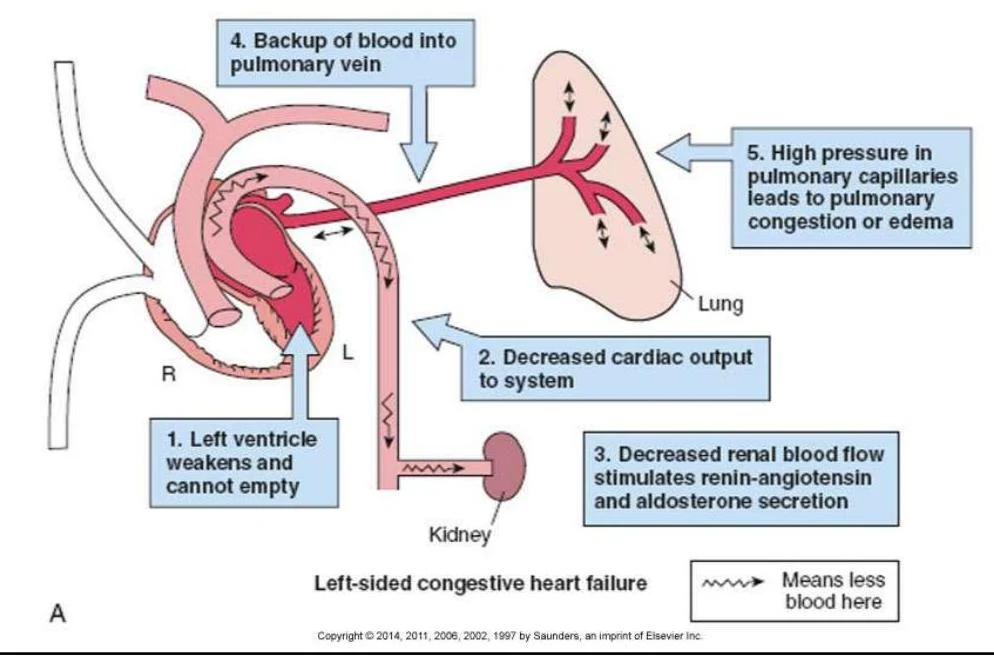
Left-Sided Heart Failure: The left ventricle fails to pump blood effectively into systemic circulation, causing blood to back up into the pulmonary circulation. This leads to pulmonary congestion and edema.
Diagram illustrating the physiological consequences of left-sided congestive heart failure, showing the impact on the heart, lungs, and kidneys.
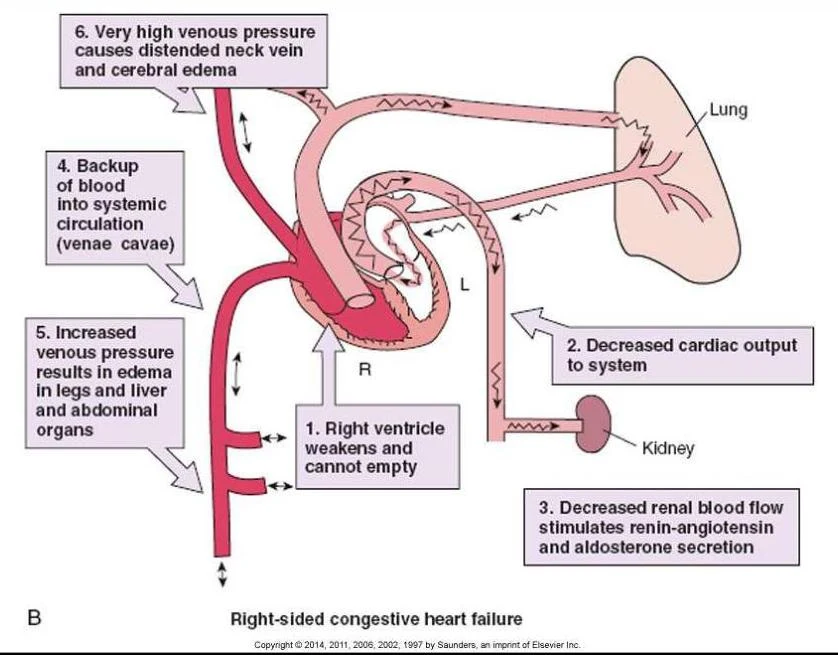
Right-Sided Heart Failure: The right ventricle cannot pump blood effectively to the lungs, causing blood to accumulate in the systemic venous system. This results in edema in the legs, ankles, or abdominal region (ascites).
Diagram illustrating the pathophysiology of right-sided congestive heart failure, detailing the sequence of events from right ventricular weakness to systemic edema.
Biventricular Heart Failure: Both the left and right ventricles are impacted, presenting symptoms of both pulmonary and systemic edema.
Exam Tip: Ejection Fraction (EF)
Ejection fraction measures how efficiently the heart is pumping. It is calculated as:
EF=End Diastolic VolumeStroke Volume×100
A normal EF is approximately $55%to70%$. Reduced EF (<40%) is associated with systolic heart failure.
Hypertension: The Silent Killer
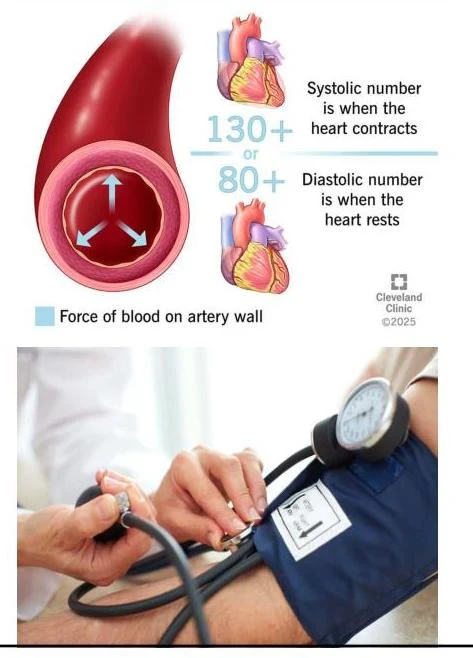
Hypertension is an abnormal increase in blood pressure, defined as a reading consistently above the normal 120/80 mmHg. It is a major risk factor for stroke, kidney failure, and retinal damage.
This illustration explains systolic and diastolic blood pressure readings. The systolic number, typically around 130 or higher, indicates the pressure when the heart contracts. The diastolic number, around 80 or higher, represents the pressure when the heart rests. The diagram also shows the force of blood on the artery wall.
Types of Hypertension
Primary (Essential) Hypertension: An idiopathic condition where blood pressure is consistently above 140/90 mmHg. It involves increased arteriolar vasoconstriction, which can lead to ischemia and tissue necrosis.
Secondary Hypertension: Caused by an underlying medical issue, such as nephrosclerosis (renal origin) or hyperaldosteronism. Treating the root cause is necessary to manage the pressure.
Malignant (Resistant) Hypertension: A severe, rapidly progressive form characterized by extremely high diastolic pressure and a $90%$ mortality rate if uncontrolled.
Pharmacological Management
Treatment involves lifestyle changes (reducing sodium and stress) and several classes of medication:
ACE Inhibitors (e.g., Lisinopril): Reduce the formation of Angiotensin II to lower vasoconstriction.
ARBs (e.g., Losartan): Block Angiotensin II receptors.
Diuretics (e.g., Chlorthalidone): Increase the excretion of sodium and water.
Beta Blockers (e.g., Metoprolol): Reduce heart rate and sympathetic nervous system effects.
Shock and Circulatory Failure
Shock is a life-threatening state of circulatory failure where tissue perfusion is inadequate, leading to hypoxia (oxygen deprivation). While circulation in larger vessels may appear preserved, capillary blood flow is reduced, effectively bypassing vital tissues.
Hypovolemic Shock
One common type is hypovolemic shock, caused by the loss of blood or plasma through hemorrhage, burns, dehydration, or pancreatitis.
Clinical Presentation and Compensation
As the body detects falling perfusion, it initiates compensatory mechanisms to maintain homeostasis: