


Cardiomyopathy refers to a group of diseases that affect the myocardium—the muscular tissue of the heart. These abnormalities impair the heart's ability to function effectively, leading to either an inability to pump blood efficiently (systolic dysfunction) or an inability to fill with blood properly (diastolic dysfunction). Because the heart is the central engine of the cardiovascular system, cardiomyopathy can lead to severe complications, including heart failure, life-threatening arrhythmias, and sudden cardiac arrest.
Understanding Cardiac Function and Dysfunction
To understand cardiomyopathy, one must first understand the mechanics of cardiac output. Cardiac output is the volume of blood ejected by the left ventricle in one minute. It is determined by two primary factors:
- Heart Rate (HR): The number of beats per minute.
- Stroke Volume (SV): The amount of blood ejected by the heart per beat.
The relationship can be expressed by the formula:
Stroke volume itself is influenced by preload (the stretch of the heart muscle), contractility (the strength of the contraction), and afterload (the resistance the heart must pump against). In cardiomyopathy, these mechanics are disrupted. Depending on the type of disease, the patient may experience systolic dysfunction, where the heart muscle is too weak to squeeze effectively, or diastolic dysfunction, where the heart muscle is too stiff to relax and fill with blood.
Primary Types of Cardiomyopathy
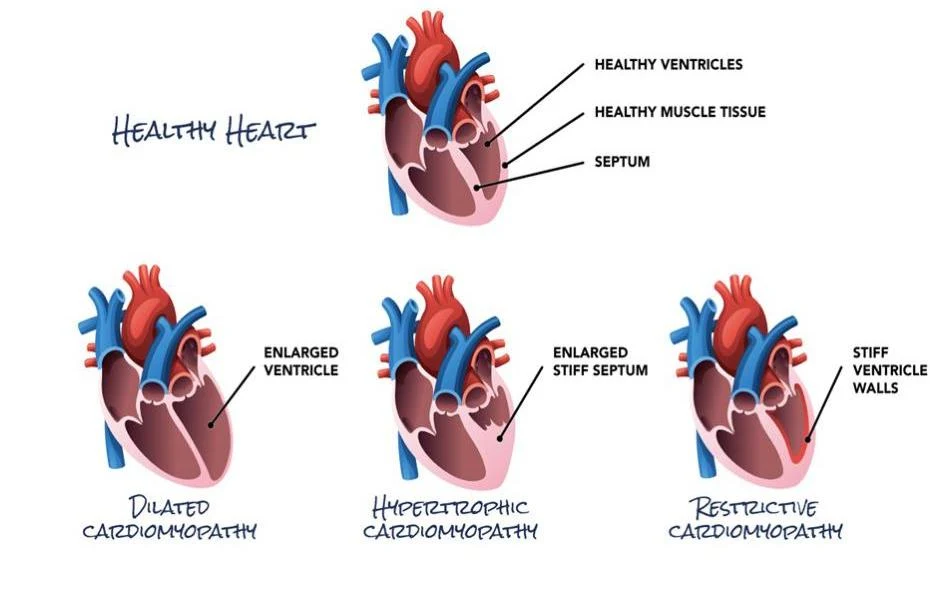
Cardiomyopathies are generally classified into three main types based on how they alter the structure and function of the heart.
Keep reading for free.
Create an account to finish this reading and make it part of your study routine.
Continue reading freeAlready have an account? Log in
Updated