


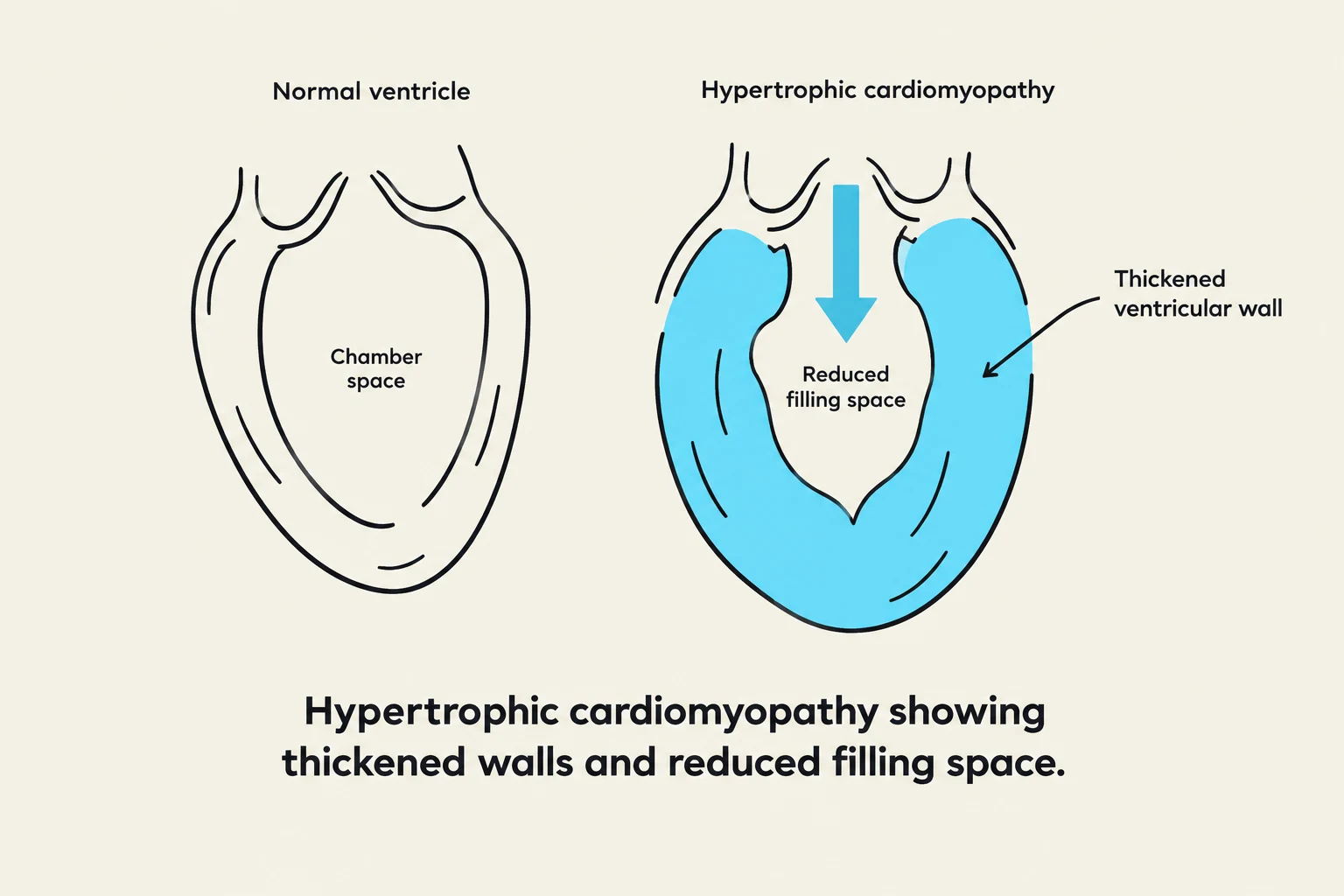
Cardiomyopathy refers to a group of diseases that affect the heart muscle, leading to structural changes that impair the heart's ability to pump blood effectively. These diseases are generally categorized by the specific way they alter the heart's anatomy and its functional performance—specifically whether the issue lies in the heart's ability to contract (systolic function) or its ability to relax and fill (diastolic function). Understanding the distinction between dilated, restrictive, and hypertrophic cardiomyopathies is essential for clinical diagnosis and management.
Dilated Cardiomyopathy (DCM) and Systolic Dysfunction
Dilated cardiomyopathy is one of the most common forms of heart disease. It is characterized by ventricular enlargement, where the chambers of the heart (particularly the left ventricle) become stretched and thin-walled.
This structural change leads directly to systolic dysfunction. In a healthy heart, the myocardium contracts forcefully to eject blood into circulation. However, in DCM, the dilated muscle fibers become overstretched, which significantly impairs their ability to contract. This results in:
- Impaired contractility: The muscle fibers lose their mechanical strength.
- Reduced ejection fraction (EF): Because the heart cannot squeeze effectively, the percentage of blood pumped out of the ventricle with each beat decreases.

Keep reading for free.
Create an account to finish this reading and make it part of your study routine.
Continue reading freeAlready have an account? Log in
Updated