Cardiac Medications: Mechanisms, Side Effects, and Nursing Priorities
A comprehensive review of common cardiac medications, including beta blockers, ACE inhibitors, ARBs, calcium channel blockers, and antianginals. It details their mechanisms of action, significant adverse effects, and essential nursing considerations for safe patient care.
Success in pharmacology exams requires more than just memorizing drug names; it requires a systematic understanding of drug classes, their mechanisms of action, and the critical nursing responsibilities associated with them. This review focuses on the highest-priority topic for your upcoming exam: Cardiac Medications.
As you study, keep this "Golden Rule" in mind: Know the drug class → know what it does → know what can kill the patient → know what the nurse checks first.
Beta Blockers
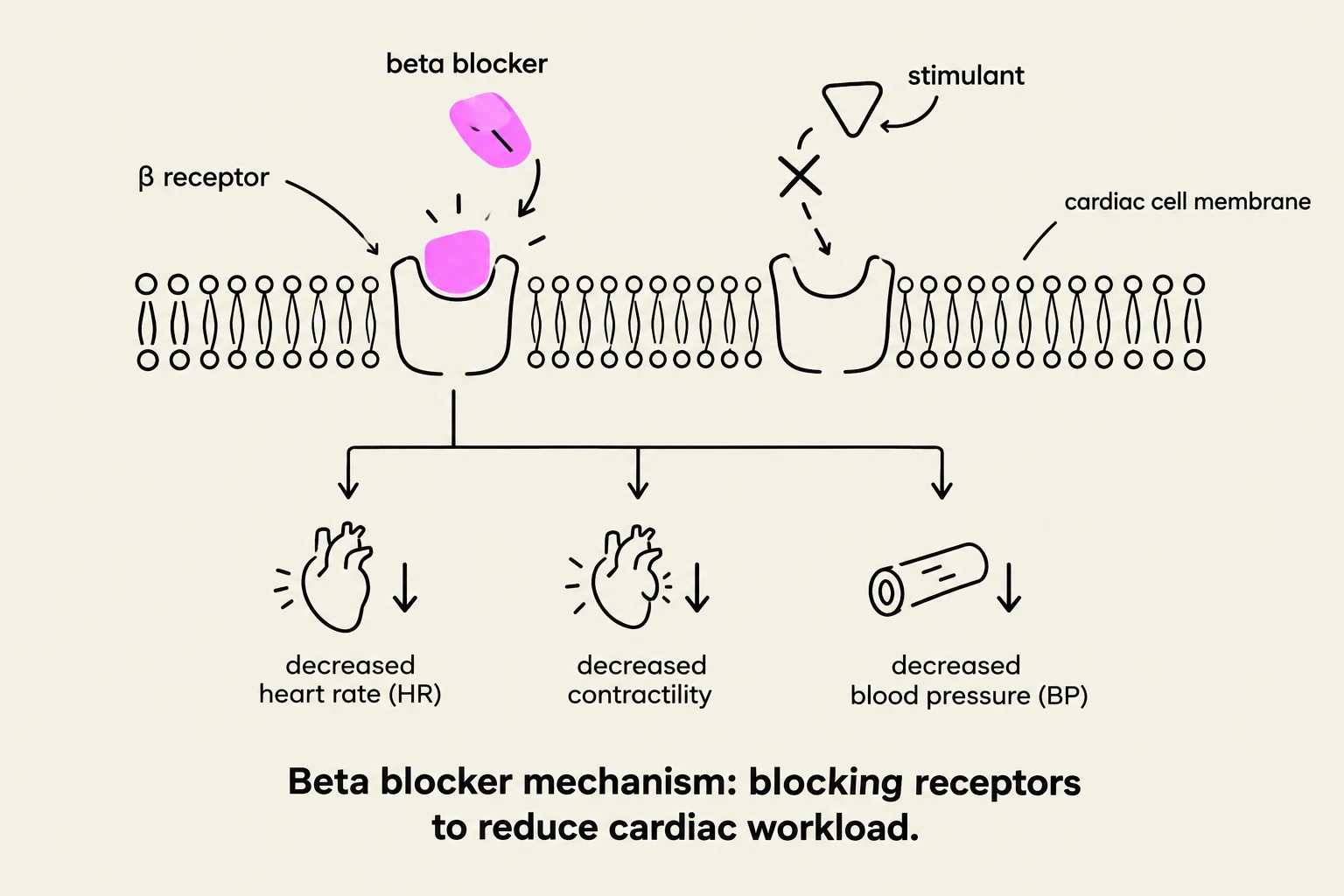
Diagram illustrating the mechanism of beta blockers in blocking receptors to reduce cardiac workload, leading to decreased heart rate, contractility, and blood pressure.
Beta blockers are a cornerstone of cardiovascular therapy, used for hypertension, angina, heart failure, and various dysrhythmias.
Mechanism of Action and Examples
Beta blockers work by blocking beta receptors, which results in a slowed heart rate (HR), decreased myocardial contractility, decreased oxygen demand, and lower blood pressure (BP).
Metoprolol: A common beta blocker used for various cardiac conditions.
Carvedilol: This agent is unique because it acts as both an alpha and beta blocker, which allows it to lower heart rate and blood pressure more broadly.
Adverse Effects and Nursing Priorities
Because these drugs "slow the roll," the most common adverse effects include bradycardia and hypotension. Additionally, because they can cause bronchospasm, nurses must use extreme caution when administering these to patients with asthma or COPD.
Nursing Alert: Always assess the patient's BP and HR before administration. Hold the medication if the HR is too low or if the patient is experiencing symptomatic hypotension.
Patient Teaching: Patients must be warned never to discontinue beta blockers abruptly, as this can lead to rebound hypertension, tachycardia, or angina.
ACE Inhibitors and ARBs
These two classes are often grouped together because they both target the Renin-Angiotensin-Aldosterone System (RAAS) to manage blood pressure and protect the kidneys.
ACE Inhibitors (e.g., Lisinopril)
ACE inhibitors block the conversion of angiotensin I to angiotensin II. This results in vasodilation and decreased aldosterone secretion, which reduces sodium and water retention. They are particularly useful for kidney protection in diabetic patients with hypertension.
The "Classic NCLEX Trap": ACE inhibitors are famously associated with three specific adverse effects:
Dry cough
Hyperkalemia (high potassium)
Angioedema (life-threatening swelling)
Angiotensin II Receptor Blockers (ARBs) (e.g., Losartan)
ARBs work by blocking the angiotensin II receptors directly. While they provide similar benefits to ACE inhibitors (vasodilation and decreased afterload), they are often better tolerated because they are less likely to cause a dry cough or hyperkalemia.
Safety Warning: Both ACE inhibitors and ARBs are contraindicated in pregnancy due to fetal toxicity.
Nursing Interventions for both classes: Monitor blood pressure, renal function, and potassium levels. Advise patients to avoid potassium supplements and salt substitutes.
Calcium Channel Blockers (e.g., Amlodipine)
Calcium channel blockers prevent calcium from entering the smooth muscle cells of the heart and blood vessels. This causes vasodilation, which reduces blood pressure and myocardial workload.
Common Uses: Hypertension, angina, and coronary artery spasms.
Adverse Effects: Hypotension, peripheral edema, headache, constipation, and flushing.
Patient Teaching: A critical interaction to remember is that patients should avoid grapefruit juice, as it can interfere with the metabolism of these drugs.
Antianginals (e.g., Nitroglycerin)
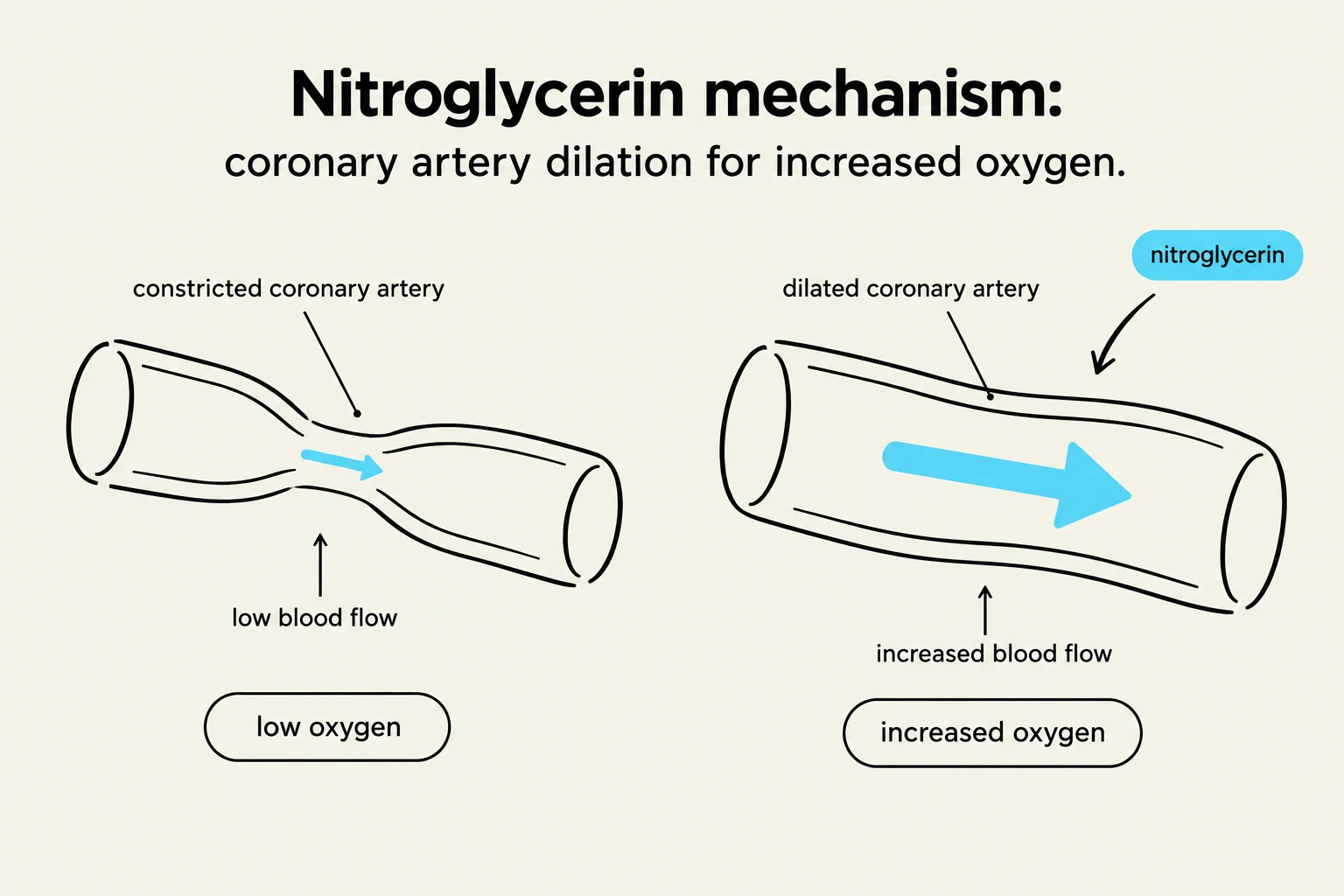
Diagram illustrating how nitroglycerin causes coronary artery dilation, leading to increased blood flow and oxygen supply.
Nitroglycerin is used for the treatment and prevention of angina by dilating coronary blood vessels. This increases blood flow and oxygen delivery to the ischemic myocardium.
Administration and Safety
Nitroglycerin is typically administered sublingually. Patients should be taught not to chew or swallow the tablet. It should be stored in its original dark glass bottle to protect it from light.
CRITICAL SAFETY WARNING: Nitroglycerin must NEVER be administered to a patient who has taken erectile dysfunction medications (such as sildenafil). This combination can cause severe, life-threatening hypotension.
Nursing Priorities:
Monitor for headache and hypotension (common side effects).
If chest pain is not relieved after the first dose, the patient requires emergency medical evaluation.
Per standard guidelines, doses can typically be repeated every 5 minutes for up to 3 doses.
Summary Table of Cardiac High-Yield Concepts
Medication Class
Example
Key Mechanism
Major Adverse Effect
Nursing Priority
Beta Blocker
Metoprolol
Slows HR/BP
Bradycardia, Bronchospasm
Check HR/BP; don't stop abruptly
ACE Inhibitor
Lisinopril
Vasodilation
Dry cough, Angioedema, ↑K+
Monitor K+ and renal function
ARB
Losartan
Receptor Block
Hyperkalemia
Monitor BP and K+
Calcium Channel Blocker
Amlodipine
Vasodilation
Peripheral edema
Avoid grapefruit juice
Antianginal
Nitroglycerin
Coronary dilation
Hypotension, Headache
NO sildenafil; sublingual only
This study review is designed for rapid review. For full coverage, ensure you also review Respiratory, CNS, and Coagulation medications as outlined in your blueprint.
Keep reading for free.
Create an account to finish this reading and make it part of your study routine.