A comprehensive guide to cardiac medications, their mechanisms of action, and essential nursing considerations. Covers hemodynamics, RAAS modulators, calcium channel blockers, adrenergic agents, diuretics, vasodilators, and inotropes.
Understanding cardiac pharmacology requires a solid foundation in hemodynamics. To manage heart failure, hypertension, and arrhythmias effectively, clinicians must manipulate specific physiological variables to optimize how the heart pumps and how blood moves through the body. This guide breaks down the essential medication classes, their mechanisms of action, and the critical safety considerations necessary for nursing practice.
Foundations of Cardiac Hemodynamics
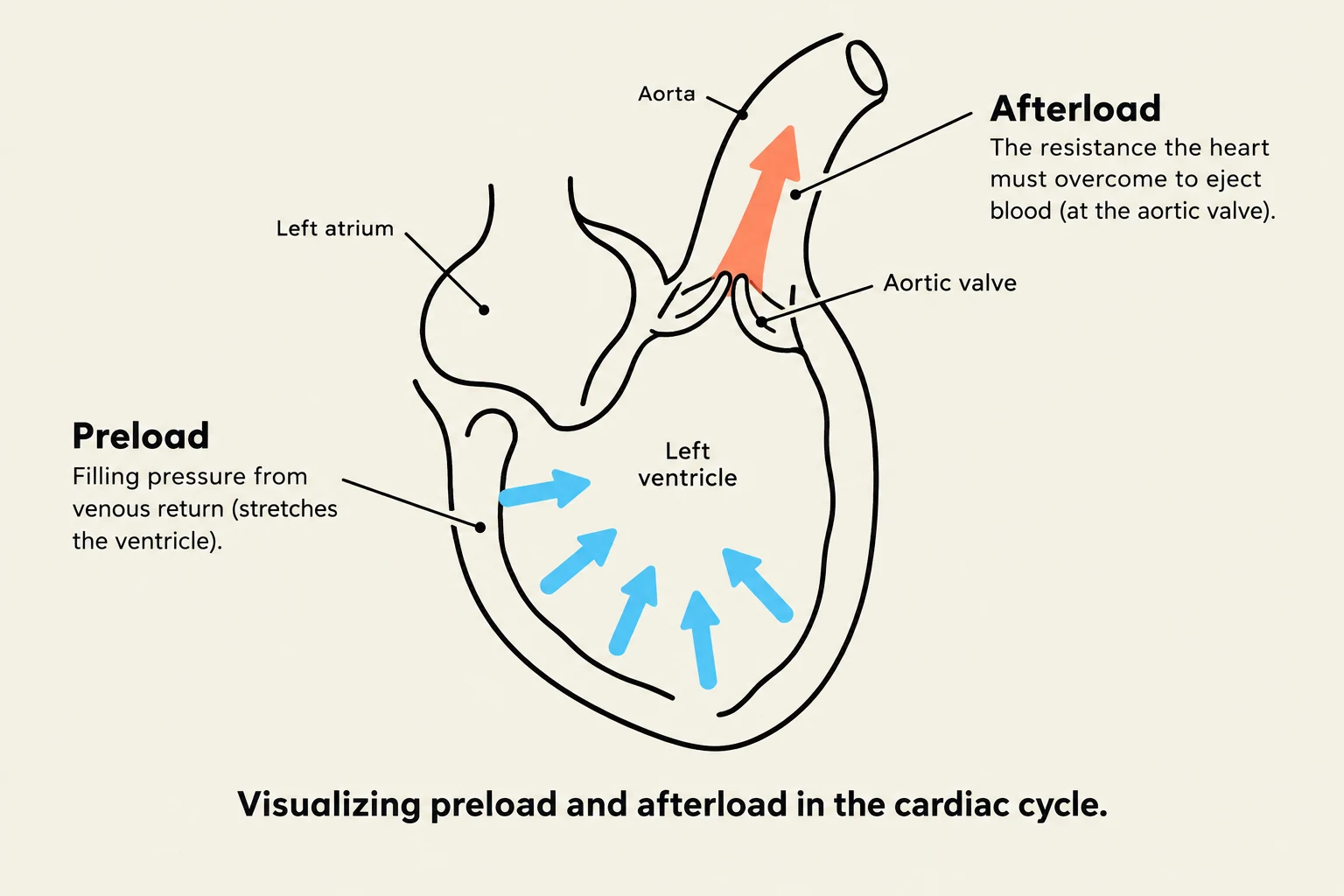
Visualizing preload and afterload in the cardiac cycle.
Before diving into specific drugs, you must master the terminology used to describe how the cardiovascular system functions. These variables are the "targets" that most cardiac medications aim to influence.
Preload: This is the force that stretches the cardiac muscle fibers just before they contract. Think of it as the "filling pressure" in the ventricles.
Afterload: This is the resistance or force against which the heart must contract to eject blood out of the chambers. High afterload makes it harder for the heart to pump.
Cardiac Output (CO): This represents the total volume of blood pumped by the heart per minute. It is calculated using the following formula:
CO=Heart Rate×Stroke Volume
Peripheral Resistance: This is the resistance encountered by blood as it moves through the circulatory system. Narrow or "thick" blood vessels increase resistance, which in turn raises blood pressure.
Vasodilation: This is the widening of blood vessels. When vessels dilate, peripheral resistance decreases, which subsequently lowers blood pressure.
The Renin-Angiotensin-Aldosterone System (RAAS) Modulators
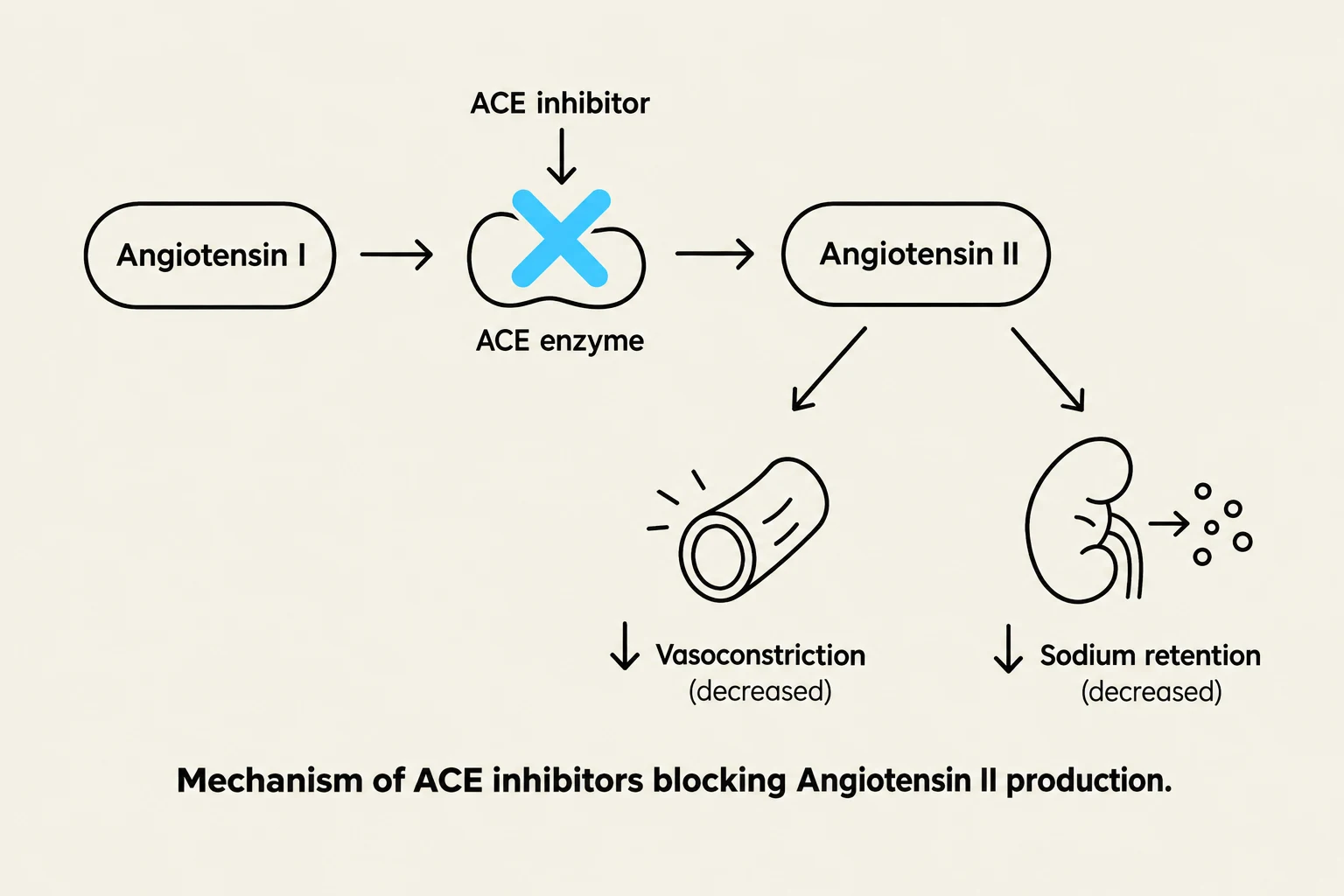
Mechanism of ACE inhibitors blocking Angiotensin II production, leading to decreased vasoconstriction and sodium retention.
The body uses a hormonal cascade to regulate blood pressure. One key player is Angiotensin II, a potent vasoconstrictor that also signals the kidneys to retain sodium and fluid, increasing blood volume. By interfering with this process, we can lower blood pressure and reduce the heart's workload.
ACE (Angiotensin-Converting Enzyme) inhibitors work by blocking the conversion of Angiotensin I into Angiotensin II. Without Angiotensin II, the body experiences vasodilation and decreased sodium/fluid retention.
Clinical Considerations:
Side Effects: Patients may experience a persistent dry cough, hyperkalemia (high potassium), and dizziness.
Safety Alert: Watch for angioedema, which is rapid swelling of the eyes and lips; this is a medical emergency.
Orthostatic Hypotension: Patients may experience a drop in blood pressure when moving from sitting to standing, especially with the first dose.
Angiotensin II Receptor Blockers (ARBs)
Examples: Valsartan, Losartan
Unlike ACE inhibitors, which stop the production of Angiotensin II, ARBs block the action of Angiotensin II directly at the receptor site. This results in vasodilation.
Clinical Considerations: Common side effects include hypotension (low blood pressure), dizziness, and hyperkalemia.
CCBs prevent calcium from entering the smooth muscle cells of the blood vessels. Since calcium is required for muscle contraction, blocking these channels leads to vasodilation of the vessels and muscles.
Clinical Considerations:
Side Effects: Peripheral edema (swelling in the extremities) and orthostatic hypotension are common.
Dietary Interaction: Patients should avoid grapefruit, as it can increase the effectiveness of the medication to dangerous levels.
Adrenergic Blockers and Agonists
These medications target the Sympathetic Nervous System (SNS), which is the body's "fight or flight" response. When the SNS is activated, heart rate and blood pressure increase.
These drugs block the effects of the SNS, which reduces both the heart rate and the overall cardiac output.
Nursing Tip: The Asthma Connection
Always check for a history of asthma. Beta-1 selective agents (like Metoprolol) are preferred for these patients. Non-selective beta blockers can cause bronchoconstriction (narrowing of the airways), which is contraindicated in patients with asthma.
Alpha Adrenergic Blockers
Example: Doxazosin
These cause vasodilation, which decreases both peripheral resistance and afterload. Because they lower blood pressure, patients must be monitored for dizziness and orthostatic hypotension.
Alpha 2 Agonists
Examples: Clonidine, Methyldopa
These medications work by decreasing sympathetic activity centrally. This leads to decreased peripheral resistance and vasodilation, ultimately causing a decrease in cardiac output. Common side effects include drowsiness and dizziness.
Diuretics: Managing Fluid Volume
Diuretics are used to decrease preload by promoting the excretion of fluid through urine.
Loop and Thiazide Diuretics: (e.g., Furosemide/Lasix, HCTZ, Bumetanide) These are potent and can lead to hypokalemia (low potassium), weakness, and leg cramps.
Potassium-Sparing Diuretics: (e.g., Spironolactone) These are used when the goal is to retain potassium in the body while still excreting fluid.
Vasodilators and Inotropes
Vasodilators
Example: Hydralazine
These act directly on the smooth muscles to decrease peripheral resistance. While effective, they can cause side effects such as headache, flushing, and reflex tachycardia (where the heart beats faster to compensate for the sudden drop in blood pressure).
Inotropes
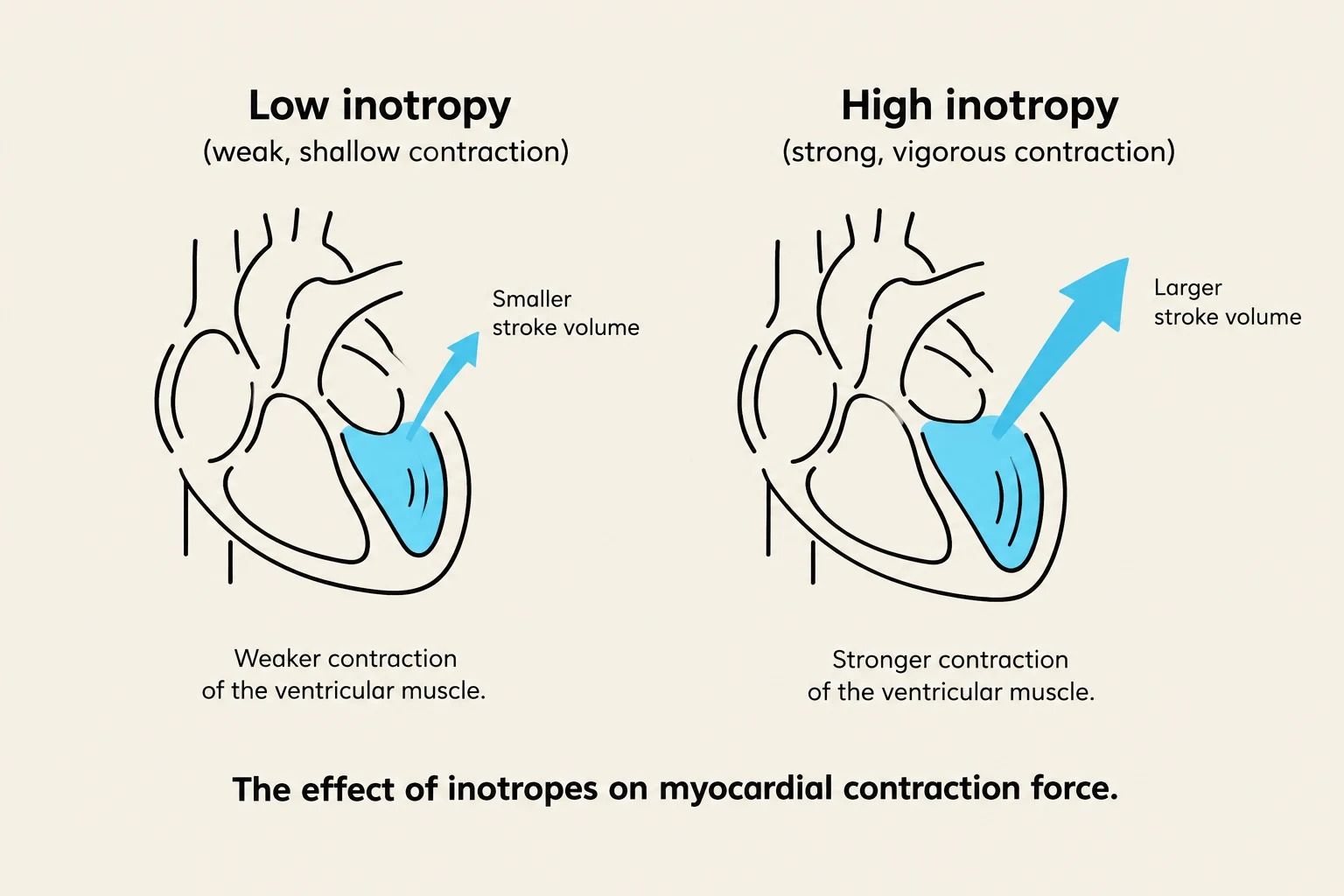
The effect of inotropes on myocardial contraction force, illustrating how low inotropy leads to weaker ventricular contraction and smaller stroke volume, while high inotropy results in stronger contraction and larger stroke volume.Example: Digoxin
Inotropes are unique because they do not necessarily lower blood pressure; instead, they increase the force of contraction, which improves cardiac output.
Nursing Assessment & Safety:
Apical Pulse: Always check the apical heart rate before administration; hold the dose if the heart rate is too low (bradycardia).
Electrolytes: Monitor potassium levels closely, as low potassium increases the risk of toxicity.
Toxicity Warning: Instruct patients to report yellow visual disturbances immediately, as this is a classic sign of digoxin toxicity.
Summary of Critical Nursing Concepts
Concept
Clinical Significance
Orthostatic Hypotension
A drop in BP when changing positions (e.g., sitting to standing). Common with many cardiac meds.
Rebound Hypertension
A dangerous spike in BP that occurs if a patient abruptly stops taking their medication.
Reflex Tachycardia
An increase in heart rate that occurs as a compensatory mechanism when blood pressure drops too quickly.
Keep reading for free.
Create an account to finish this reading and make it part of your study routine.