


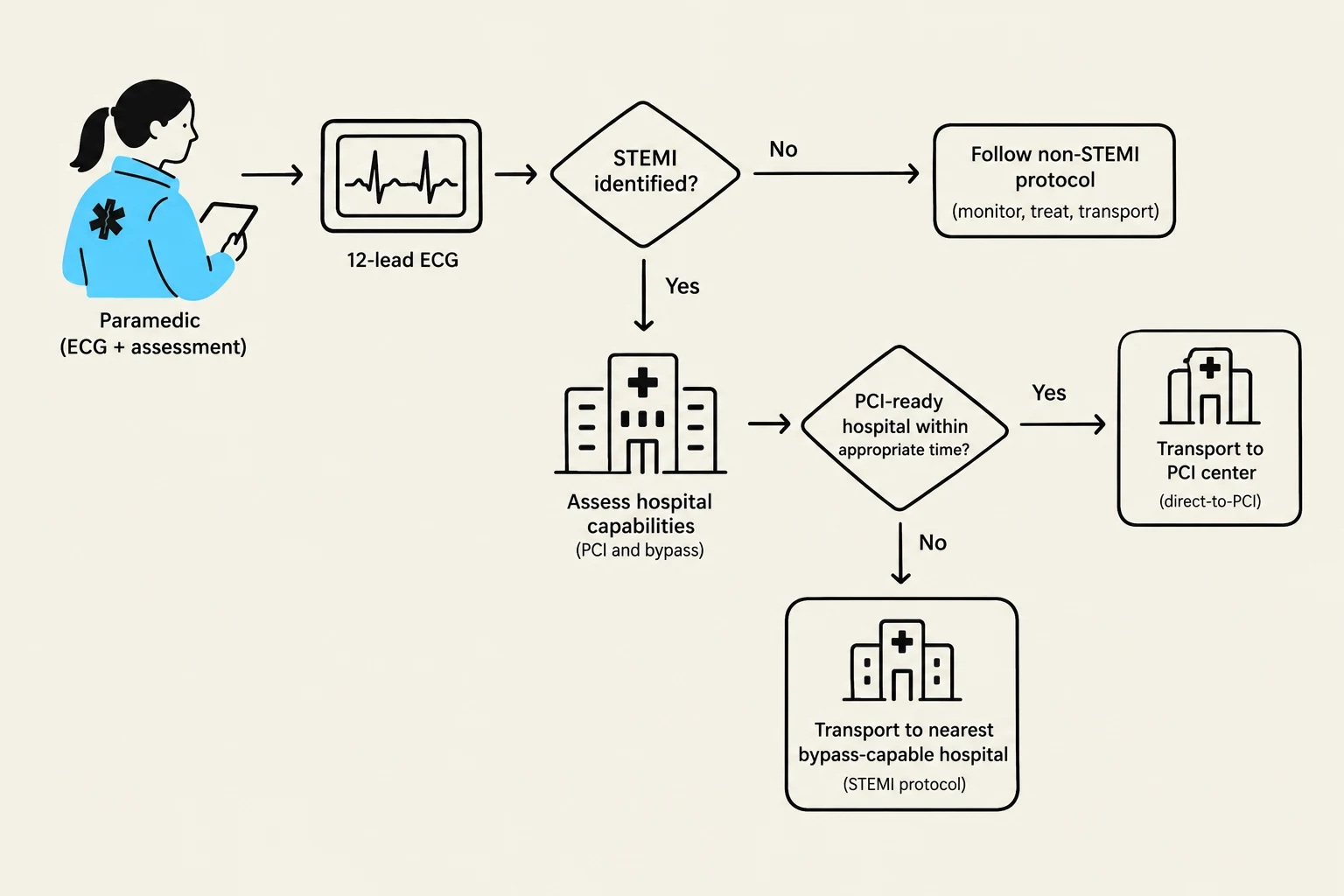
In the field of emergency cardiovascular care, time is the most critical variable. When a patient experiences a myocardial infarction, the myocardium (heart muscle) begins to die within minutes of blood flow cessation. For paramedics and emergency clinicians, the ability to rapidly distinguish between general cardiac ischemia and a ST-Segment Elevation Myocardial Infarction (STEMI) is the difference between a successful recovery and permanent cardiac damage or death.
Understanding Cardiac Ischemia
Cardiac ischemia occurs when blood flow to the myocardium is reduced, preventing the heart muscle from receiving adequate oxygen. This is often caused by a narrowing or blockage in the coronary arteries. It is important to note that ischemia is a spectrum; it can be transient (stable angina) or a precursor to a full infarction (unstable angina).
The primary clinical indicator of ischemia is the patient's presentation, often characterized by chest pain, pressure, or discomfort, which may radiate to the jaw, neck, or left arm. However, clinicians must remain vigilant for "atypical" presentations, such as shortness of breath, nausea, or diaphoresis, which are common in elderly patients and women.
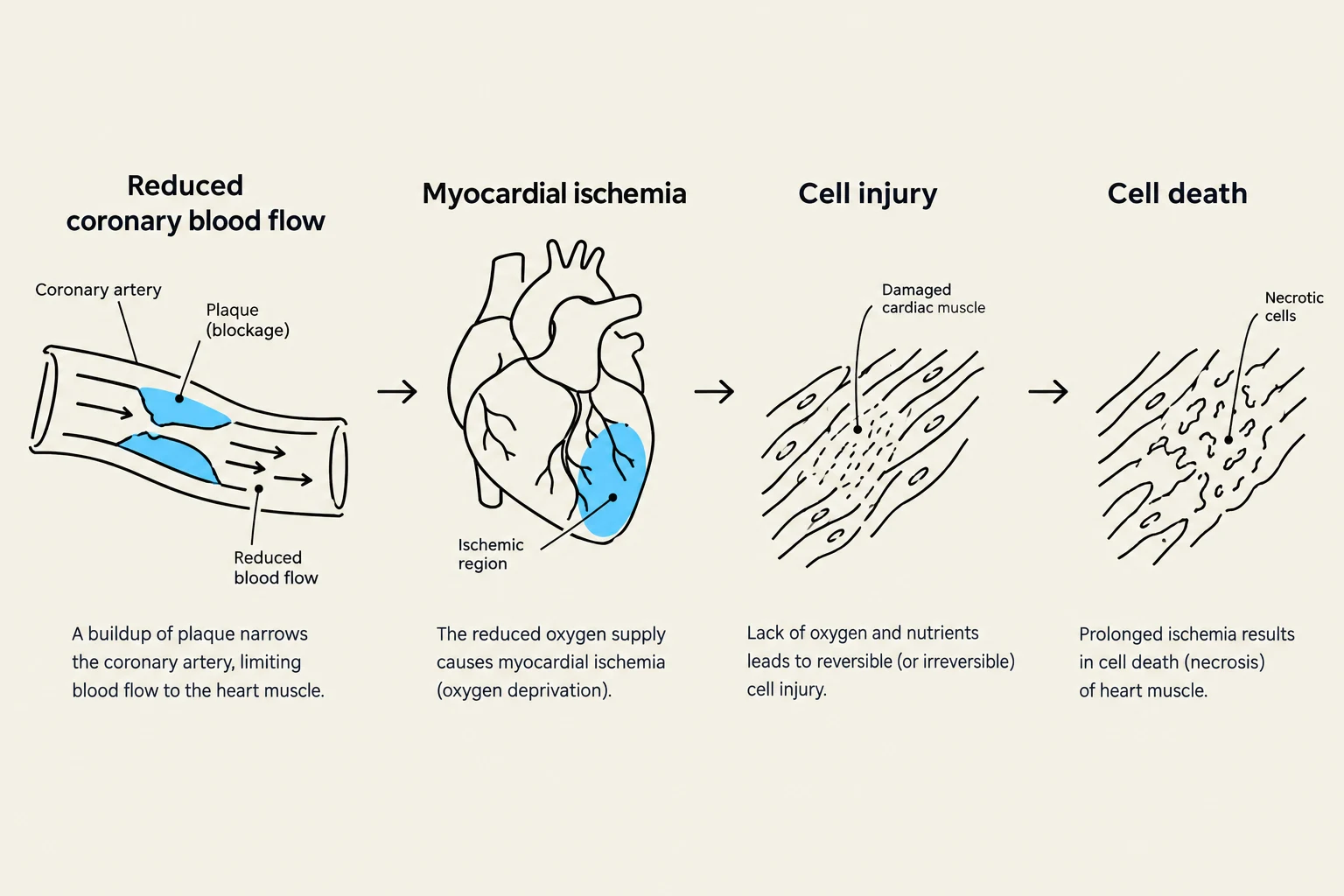
Exam Tip: Always remember that "ischemia" refers to the lack of oxygenated blood flow, whereas "infarction" refers to the actual death of the tissue. All infarctions are caused by ischemia, but not all ischemia results in an immediate infarction.
Identifying STEMI via ECG
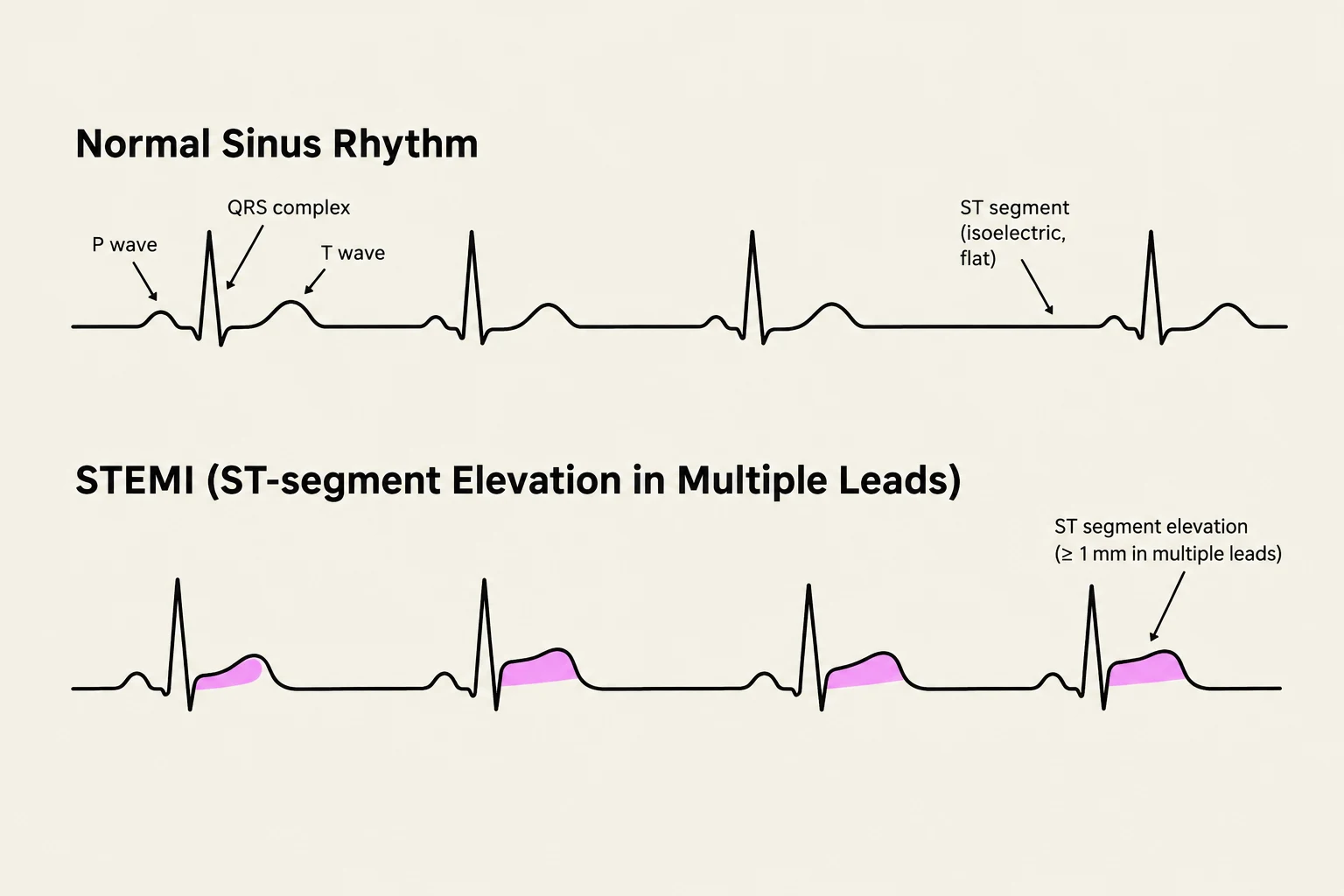
While ischemia can be subtle on an Electrocardiogram (ECG), a STEMI is a specific, life-threatening event characterized by a complete occlusion of a coronary artery. The hallmark of a STEMI is the elevation of the ST segment above the baseline in two or more contiguous leads.
Keep reading for free.
Create an account to finish this reading and make it part of your study routine.
Continue reading freeAlready have an account? Log in
Updated