


Understanding the cardiovascular system requires a clear distinction between electrical malfunctions and mechanical blockages. While both can lead to life-threatening emergencies, their underlying pathophysiology, symptoms, and clinical management differ significantly. This article explores the critical distinctions between cardiac arrest and heart attacks, the mechanics of arrhythmias, the complexities of cardiomyopathy, and the structural dangers of aneurysms.
Electrical vs. Circulatory Emergencies
Cardiac emergencies are generally categorized by whether the issue is an electrical failure or a circulatory blockage.
Cardiac Arrest: The Electrical Malfunction
Cardiac arrest is an electrical malfunction in the heart's conduction system that causes the heart to stop pumping blood. Unlike a heart attack, which is a plumbing issue, cardiac arrest is a "short circuit." This can manifest on an ECG as a flat line or as highly irregular, rapid rhythms known as tachycardia.
Two dangerous forms of tachycardia include:
- Ventricular Fibrillation: A state where the ventricles quiver uselessly instead of contracting, often due to a "reiterative circuit" of electrical impulses.
- Atrial Fibrillation: Irregular rhythms originating in the atria.
Contributing factors to these electrical disruptions include potassium imbalance (which impairs ion channels), excessive vagal nerve stimulation, and drug toxicity.
Heart Attack: The Circulatory Blockage
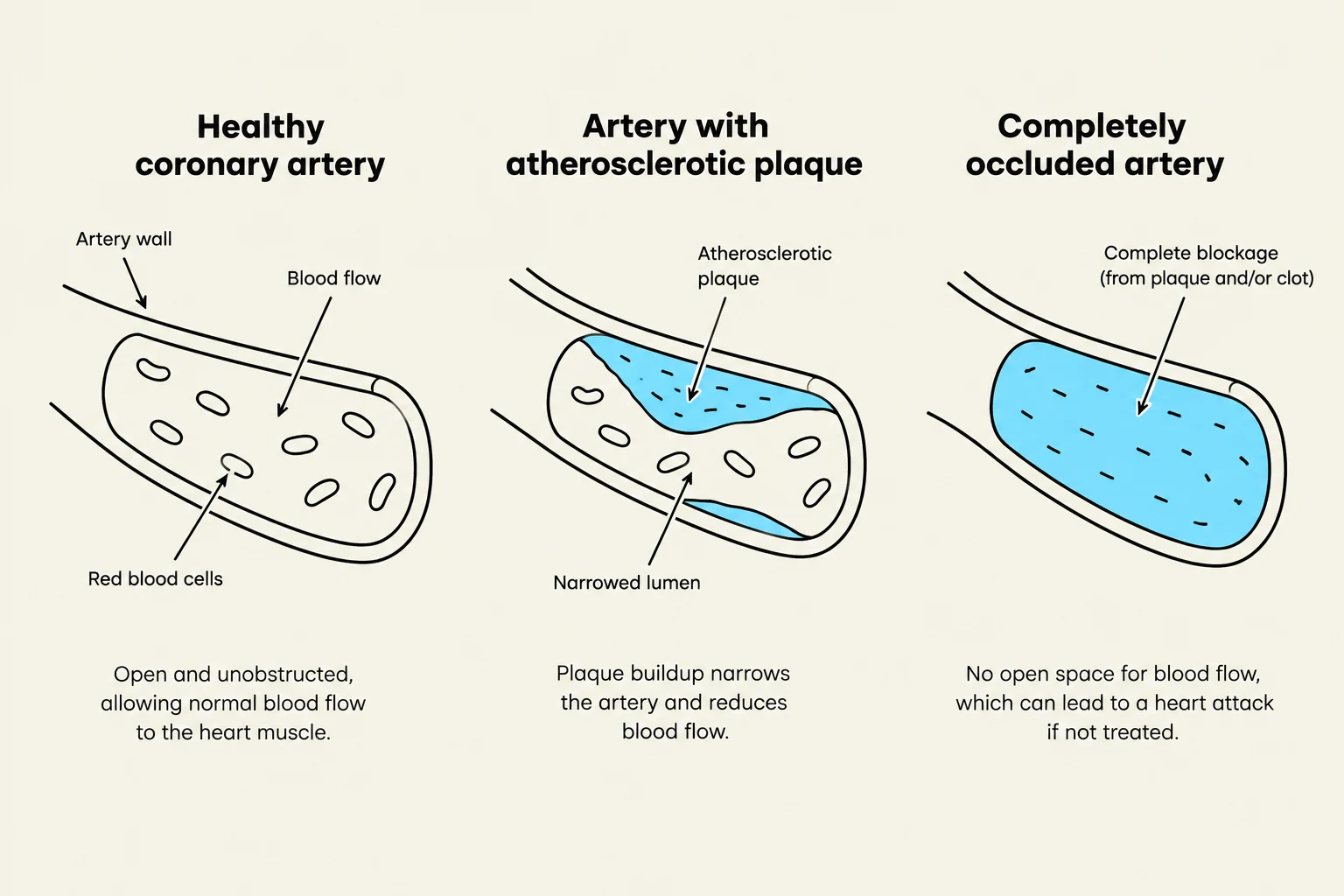
A heart attack, or Myocardial Infarction, is a consequence of coronary artery disease, typically driven by atherosclerosis (the buildup of plaque). When a plaque ruptures, it can trigger a coagulation cascade that completely occludes the vessel, leading to cardiac ischemia—a lack of oxygen and nutrients to the muscle.
Clinical Note: Angina vs. Infarction It is vital to distinguish between stable and unstable angina. Stable angina is typically triggered by exertion and relieved by rest. Unstable angina is much more dangerous; it involves a high risk of plaque rupture and is often accompanied by the release of troponin, a specific biomarker indicating cardiac muscle damage.
Keep reading for free.
Create an account to finish this reading and make it part of your study routine.
Continue reading freeAlready have an account? Log in
Updated