Carbohydrates, Enzymes, and Fermentation in Brewing
Explains the biochemical processes in brewing, focusing on carbohydrate breakdown by enzymes like alpha-amylase and beta-amylase, yeast fermentation into ethanol and CO2, and the use of spectrophotometry to measure sugar concentration.
Brewing is a complex biochemical process that transforms simple raw materials into a sophisticated beverage through the precise manipulation of molecules. At its core, brewing relies on the conversion of complex carbohydrates stored in grains into simple, fermentable sugars that yeast can consume. Understanding the relationship between starch structure, enzymatic activity, and the resulting fermentation chemistry is essential for controlling the flavor, alcohol content, and body of the final beer.
The Chemistry of Carbohydrates
Carbohydrates are biomolecules composed of carbon, hydrogen, and oxygen. In the context of brewing, they serve as the primary energy source for yeast. These molecules are categorized based on their size and complexity:
Monosaccharides: The simplest form of sugar, consisting of a single molecule, such as glucose.
Disaccharides: Molecules composed of two sugar units linked together, such as maltose.
Polysaccharides: Large, complex chains of many sugar molecules.
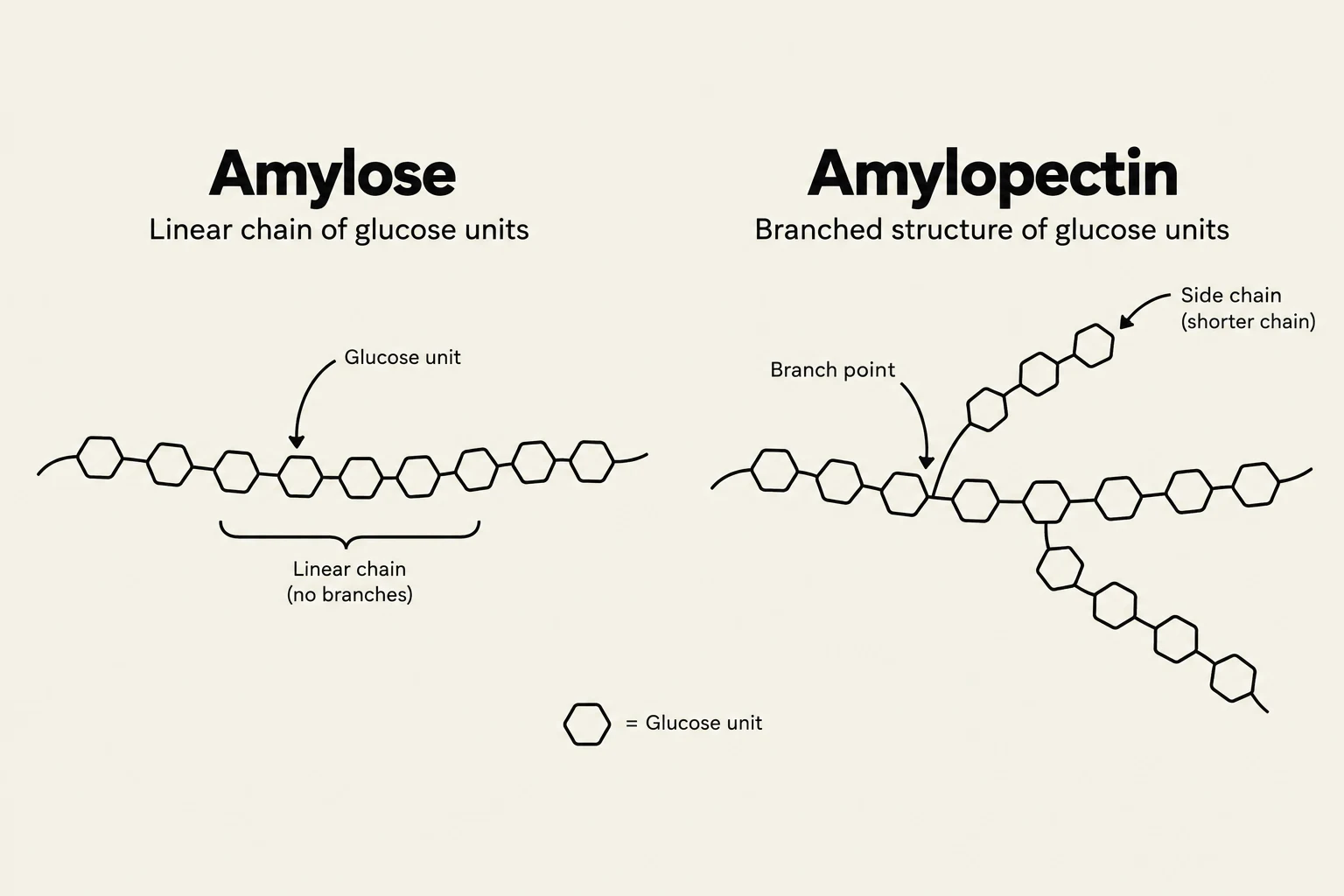
In brewing, the most critical polysaccharides are found in barley, the primary source of fermentable sugars. These starches consist of two main types: amylose and amylopectin. Amylose typically forms long, linear chains, whereas amylopectin features a highly branched structure.
Diagrams illustrating the linear structure of amylose and the branched structure of amylopectin, both composed of glucose units.
The way these chains are connected determines how easily they can be broken down. The sugar units are held together by glycosidic bonds. The most common type is the 1-4 glycosidic bond, which forms the main backbone of both amylose and amylopectin. However, amylopectin also contains 1-6 glycosidic bonds, which create the branch points in its structure. These 1-6 bonds are more resistant to enzymatic breakdown, which plays a significant role in determining the final fermentability of the wort.
Enzymatic Starch Breakdown
To make the starch in barley useful to yeast, brewers must use enzymes to perform "starch breakdown". This process, often called saccharification, relies on two primary enzymes: alpha-amylase and beta-amylase.
Alpha-Amylase
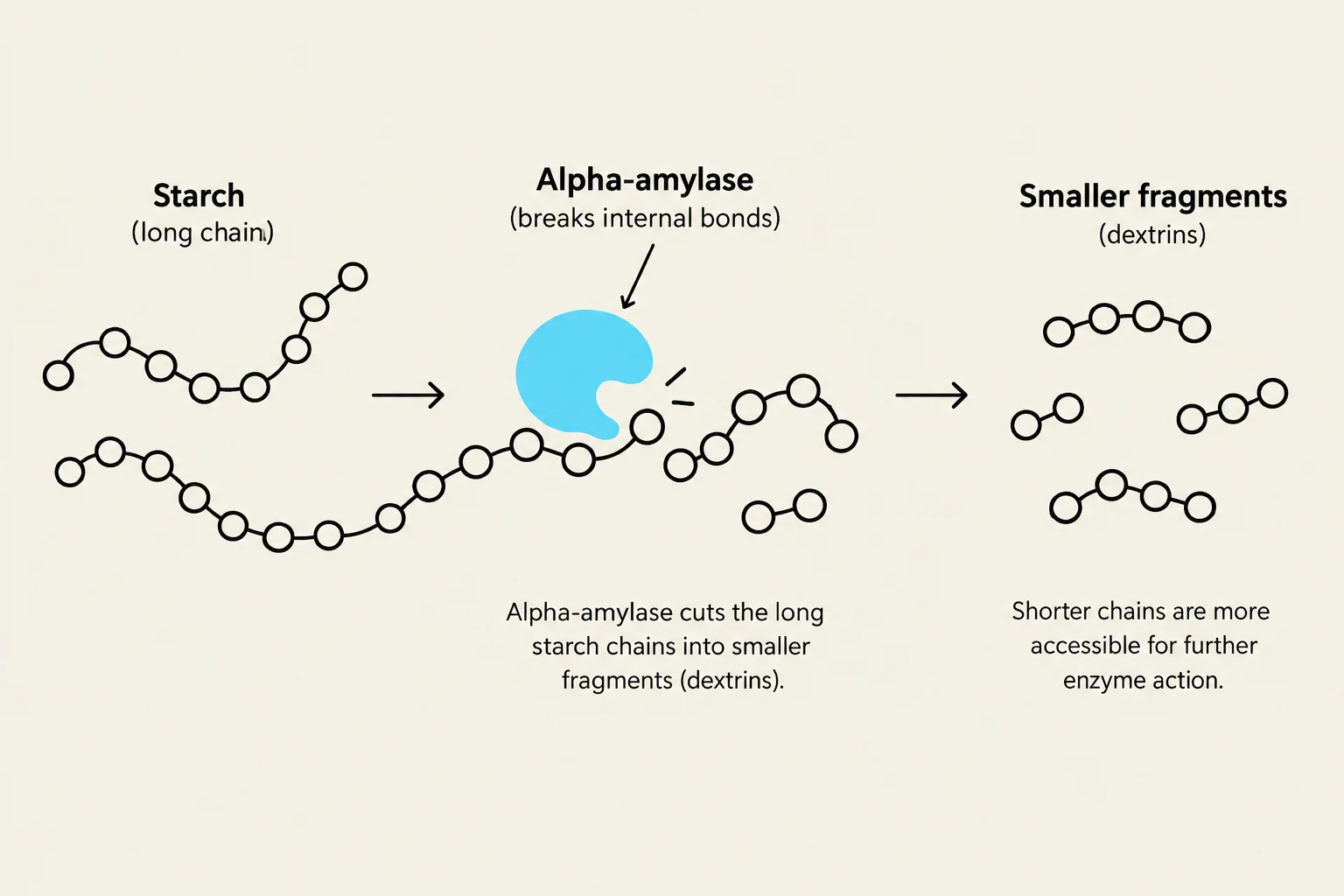
Alpha-amylase acts as an "endo-enzyme," meaning it attacks the internal parts of the starch polysaccharide. Specifically, it targets the 1-4 glycosidic bonds within the amylose and amylopectin chains. By breaking these bonds randomly, alpha-amylase rapidly reduces the size of large polysaccharides into smaller, more manageable carbohydrates.
Beta-Amylase
Beta-amylase acts as an "exo-enzyme," working from the ends of the carbohydrate chains. It systematically clips off units of maltose (a disaccharide) from the ends of the chains. Because beta-amylase produces maltose, it is directly responsible for increasing the concentration of fermentable sugars in the liquid.
Exam Tip: Remember that the activity of these enzymes is critical. If amylase enzymes are not sufficiently active during the mash, the total extract (the amount of dissolved solids) and the fermentability (the ability of yeast to turn those solids into alcohol) will both be negatively affected.
Diagram illustrating the enzymatic breakdown of starch by alpha-amylase into smaller dextrin fragments.
Yeast Fermentation and Ethanol Yield
Once the enzymes have converted the complex starches into fermentable sugars like glucose and maltose, the brewer introduces yeast fermentation. Brewer's yeast is highly efficient at metabolizing simple sugars, but it cannot ferment complex carbohydrates like cellulose.
During fermentation, yeast consumes the sugars and converts them into two primary metabolic products: ethanol (alcohol) and carbon dioxide (CO2). The chemistry of glucose fermentation can be summarized by the following relationship:
The specific structure of the original starch affects the ethanol yield. Because amylopectin is branched via 1-6 glycosidic bonds, it creates a different pattern of sugar release compared to the linear amylose, which ultimately influences how much sugar is available for the yeast to convert into alcohol.
Measuring Success: Spectrophotometry
In a laboratory or brewing science setting, it is vital to quantify exactly how much sugar is present in a solution. This is often achieved using spectrophotometry.
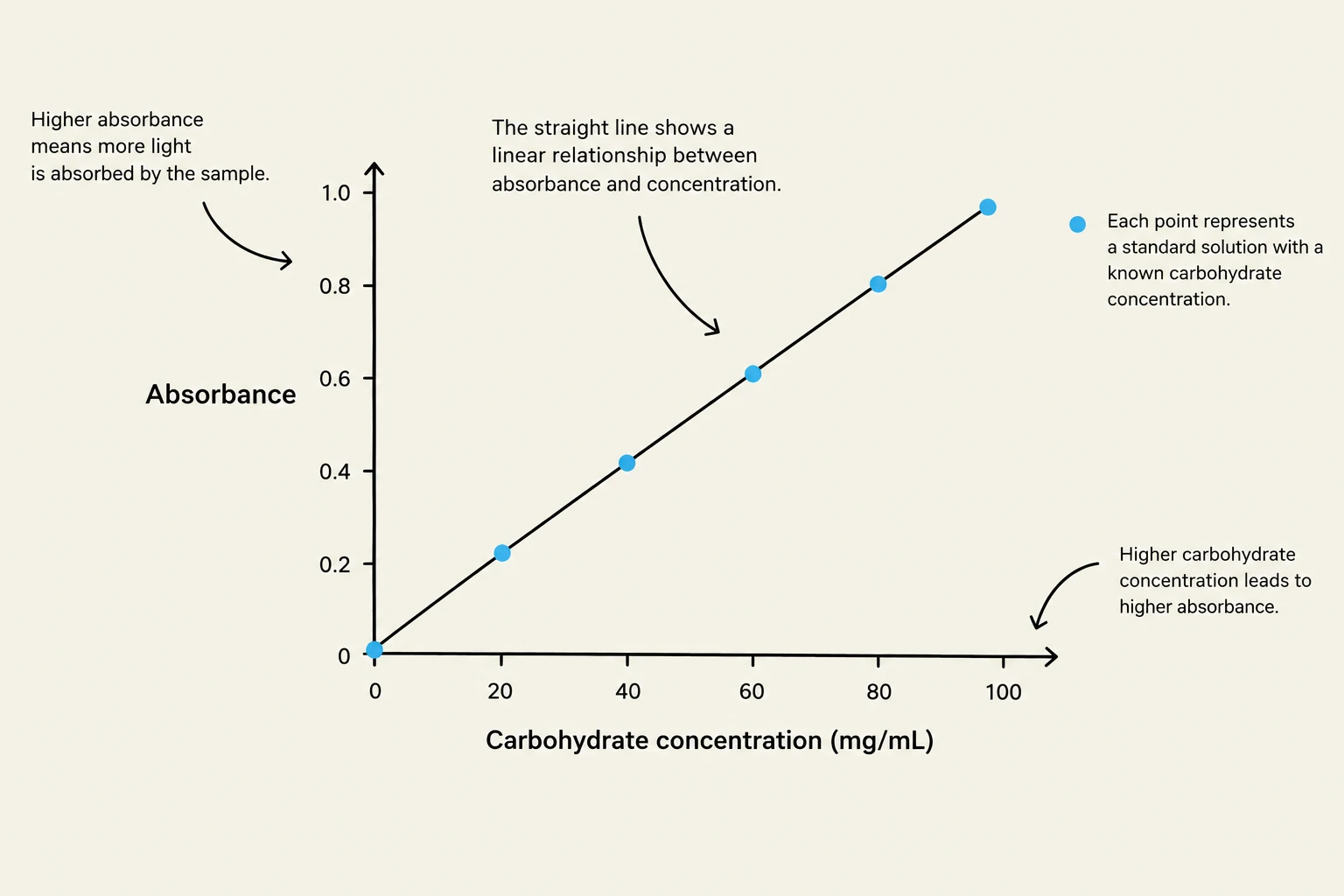
A spectrophotometer measures absorbance, which is the amount of light absorbed by a sample at a specific wavelength. In brewing science, the concentration of carbohydrates in a solution is directly related to its absorbance. This relationship allows scientists to determine the carbohydrate concentration without needing to evaporate the liquid.
To estimate the concentration of reducing carbohydrates, brewers use a specific mathematical relationship:
mM carbohydrates=10⋅absorbance of sample
A graph illustrating the linear relationship between absorbance and carbohydrate concentration, where higher concentrations lead to higher absorbance.
Worked Example:
If a student measures a sample in the lab and finds that the absorbance is 0.45, they can quickly estimate the concentration using the formula provided in the study guide:
Concentration=10⋅0.45=4.5 mM carbohydrates
By mastering these enzymatic and chemical principles, brewers can precisely control the transition from grain to glass, ensuring consistent alcohol levels and flavor profiles in every batch.
Keep reading for free.
Create an account to finish this reading and make it part of your study routine.