


Carbohydrates serve as the primary energy source for the human body, particularly for the brain. They exist in a wide variety of chemical structures, ranging from simple single-unit sugars to massive, complex chains. Understanding how our bodies break these structures down—and how certain types of carbohydrates, like fibre, behave differently—is essential for managing metabolic health and preventing diseases such as diabetes and heart disease.
The Chemistry of Carbohydrates
To understand digestion, we must first understand the building blocks of carbohydrates. These are categorized based on the number of sugar units they contain.
Simple Carbohydrates: Monosaccharides and Disaccharides
The most basic unit of a carbohydrate is a single sugar molecule called a monosaccharide. The three most common dietary monosaccharides are:
- Glucose: Often called "blood sugar," it is the most critical fuel for the body.
- Galactose
- Fructose
When two monosaccharides are linked together through a chemical process called a condensation reaction, they form a disaccharide. Common examples include:
- Sucrose (table sugar): Glucose + Fructose.
- Lactose (milk sugar): Glucose + Galactose.
- Maltose: Glucose + Glucose.
The reverse process, where a water molecule is used to break the bond between these sugars, is known as a hydrolysis reaction.
Complex Carbohydrates: Oligosaccharides and Polysaccharides
Complex carbohydrates consist of long chains of monosaccharides.
- Oligosaccharides: Short chains consisting of fewer than ten monosaccharides.
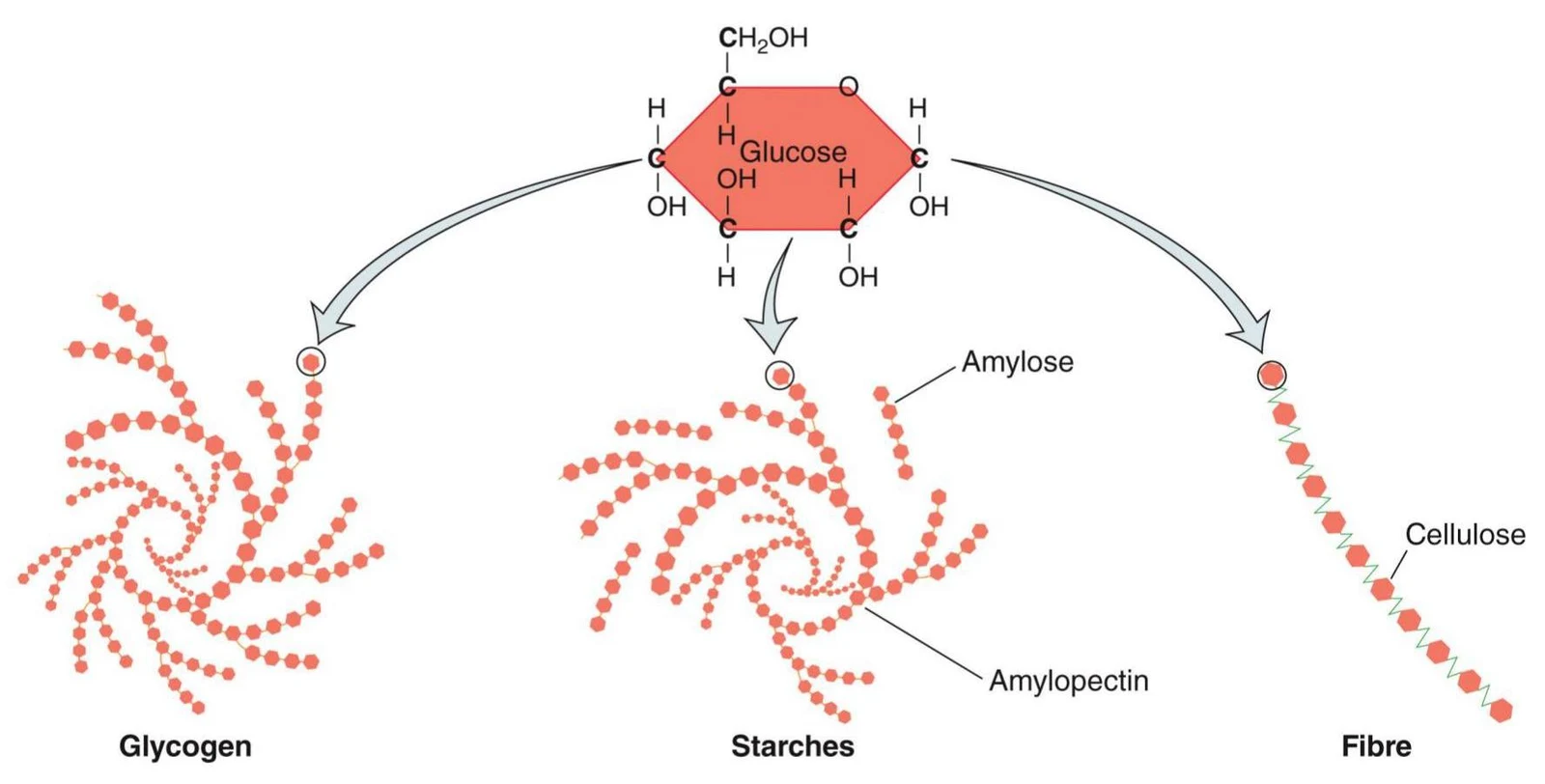
- Polysaccharides: Long, complex chains. In plants, these include starch (energy storage) and fibre (structural support). In animals, the primary polysaccharide is glycogen (energy storage).

Keep reading for free.
Create an account to finish this reading and make it part of your study routine.
Continue reading freeAlready have an account? Log in
Updated