An overview of the canine estrous cycle, including puberty, the four stages (proestrus, estrus, diestrus, anestrus), and factors influencing the inter-estrus period. It also covers clinical tools like vaginal cytology for tracking these stages.
Understanding the reproductive timeline of the domestic dog is essential for breeders, veterinarians, and pet owners alike. Unlike many other mammals, the canine reproductive cycle is characterized by a unique pattern of hormonal shifts and physiological changes that can be complex to interpret. By mastering the stages of the estrous cycle and the timing of puberty, one can better manage breeding programs and monitor reproductive health.
The Onset of Puberty
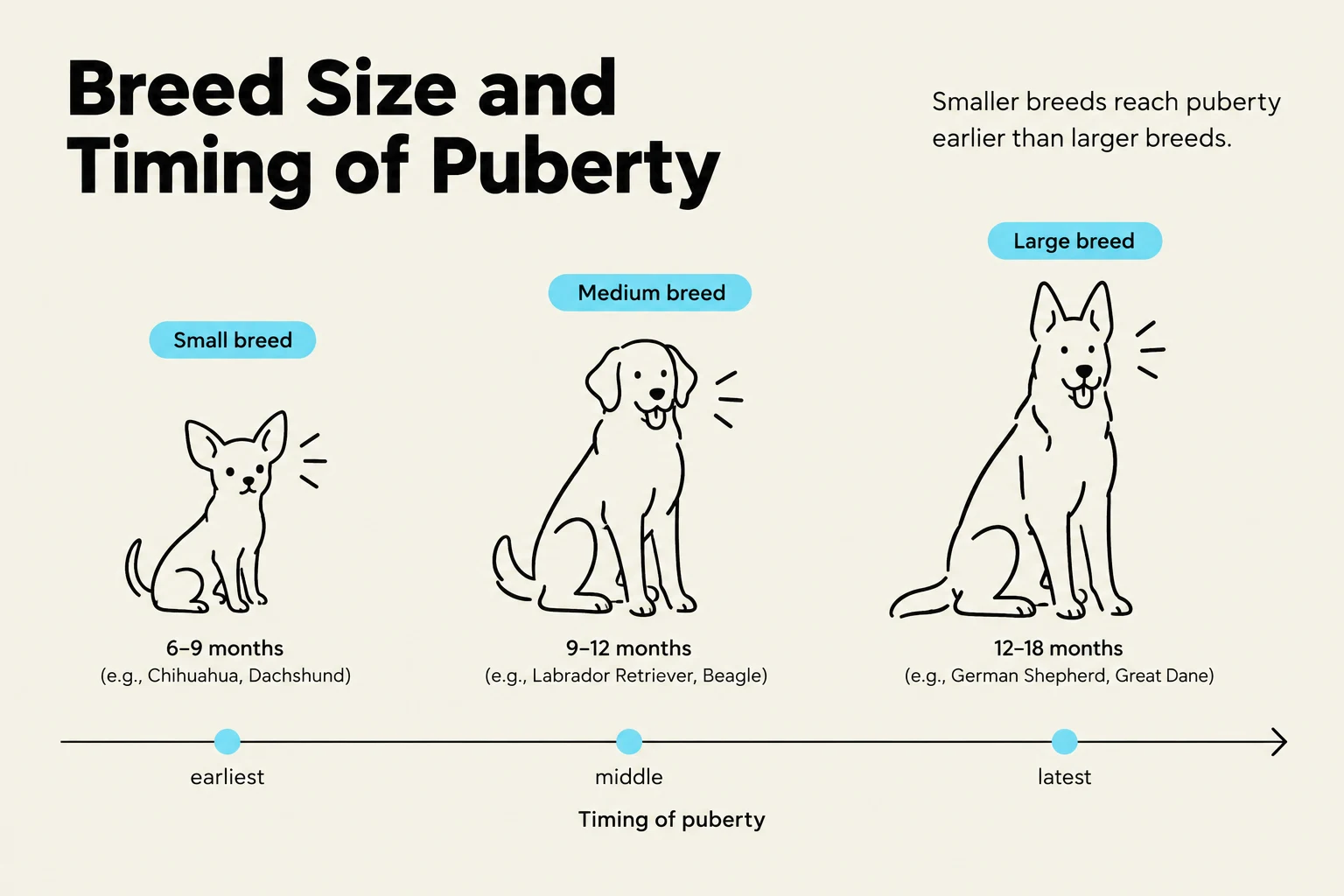
Puberty in the bitch is defined as the point at which reproductive capability is attained. This timing is closely linked to the animal reaching a specific plateau in its physical growth. However, because growth rates vary significantly between breeds, there is no single "correct" age for puberty.
Small breeds, such as the Corgi, may reach puberty as early as 6 to 12 months. In contrast, giant breeds like the Great Dane may not reach puberty until nearly 2 years of age. Some breeds, such as the English Setter, show even wider variability, ranging from 7 to 20 months. It is important to note that maximum reproductive capability may not be fully realized until the second, third, or even fourth estrus, or approximately 3 years of life.
Clinical Note: Be cautious with pubertal bitches. They are more likely to experience "silent heats" (ovulation without obvious signs), split heats, or false heats where they show bleeding (proestrus) but do not enter estrus immediately.
This illustration shows the relationship between dog breed size and the timing of puberty, indicating that smaller breeds reach puberty earlier than larger breeds.
The Monestrous Cycle
The bitch is considered monestrous, meaning she typically undergoes one to two estrous cycles per year, though some may have up to four. While the cycle is generally non-seasonal, environmental factors can cause a peak in cycles during late winter and spring (February to May).
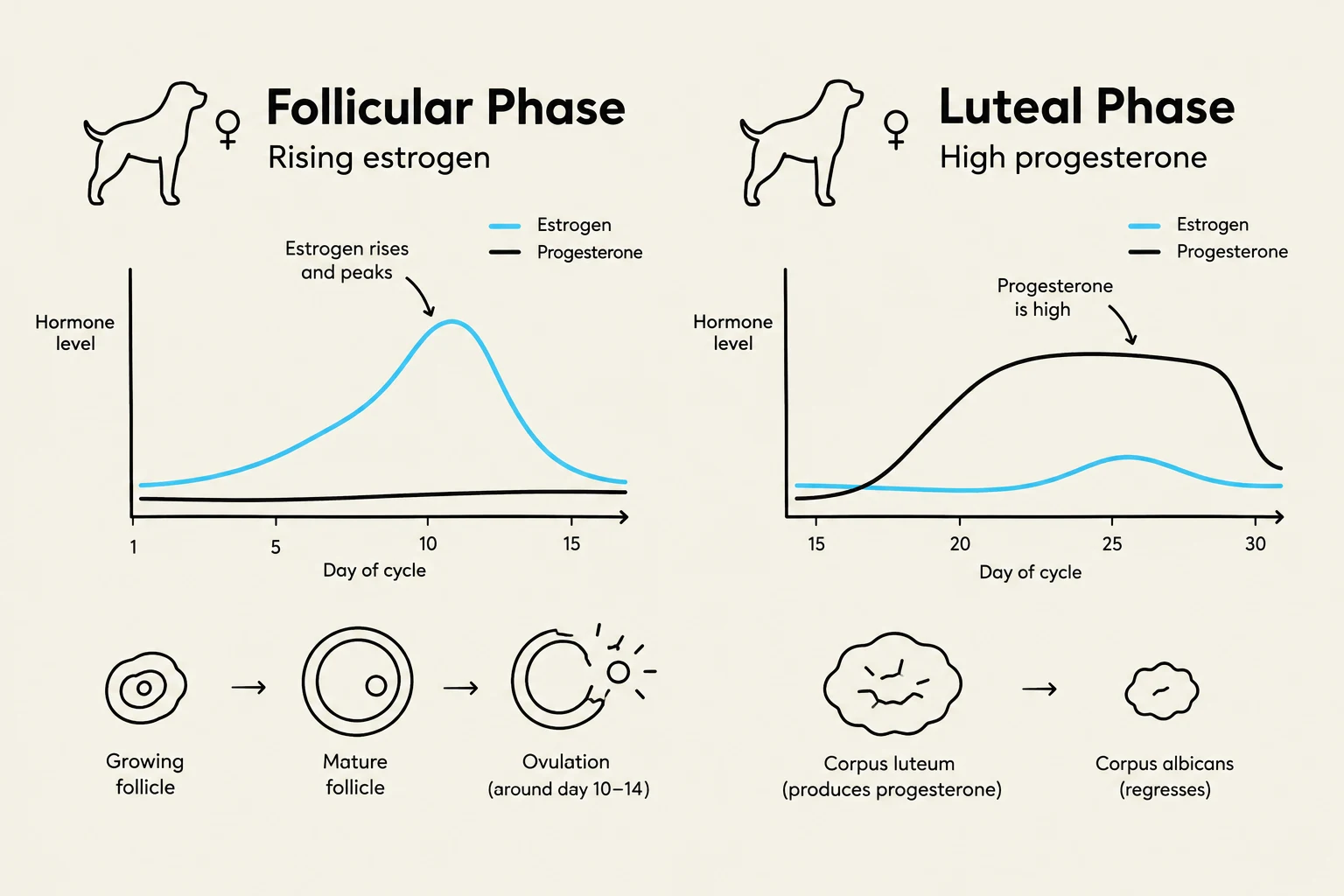
The cycle is divided into two main phases: the Follicular Phase (comprising Proestrus and Estrus) and the Luteal Phase (comprising Diestrus and Anestrus).
1. Proestrus: The Initiation Phase
Proestrus is the stage where overt activity begins. Physically, the bitch will exhibit a turgid, swollen vulva and a hemorrhagic (bloody) vaginal discharge caused by the diapedesis of red blood cells through uterine vessels.
Behaviorally, the bitch may attract males but will typically not accept them, often responding with aggression, growling, or snapping. Hormonally, this phase is dominated by estrogen, while progesterone remains low (<1 ng/ml).
2. Estrus: The Breeding Phase
Estrus is the period when the bitch is receptive to mating. Physical signs include a softening of the vulvar swelling and a decrease in bloody discharge. The hallmark behavioral sign is "standing to be mounted," often accompanied by tail deviation and stiffening of the hind legs.
Hormonally, estrogen levels begin to fall while progesterone begins to rise due to the luteinization of follicles. This rise in progesterone is coincident with the Luteinizing Hormone (LH) peak.
Diagram illustrating the hormonal changes and ovarian events during the follicular and luteal phases of the estrous cycle in dogs.
3. Diestrus: The Luteal Phase
Diestrus begins when the bitch no longer accepts the male. This stage is dominated by progesterone and can last approximately 60 days (ranging from 45 to 90 days). During this time, the bitch may be pregnant or experiencing pseudopregnancy (a false pregnancy).
4. Anestrus: The Period of Quiescence
Anestrus is the long period of rest and repair between cycles. During this time, there is no sexual interest from either the male or female, the vulva appears normal, and progesterone remains at baseline levels (<1 ng/ml).
The Inter-estrus Period and Breed Predisposition
The inter-estrus period is the time from the end of one estrus to the beginning of the next. On average, this lasts about 7 months, but the range is wide:
Minimum: 4 months (commonly seen in Rottweilers).
Maximum: 12 months (commonly seen in Basenjis).
Size and age play significant roles in this timing. Larger dogs tend to have shorter inter-estrus periods, while older dogs (over 8 years) tend to have longer ones.
Exam Tip: If a dog's estrous cycle exceeds 12 months, it is considered abnormal and warrants investigation for conditions such as hyperprolactemia.
Clinical Tool: Vaginal Cytology
To accurately track these stages, clinicians use vaginal cytology to observe changes in the stratified squamous epithelium of the vagina. As estrogen increases, the cells undergo "cornification," becoming thicker and more protective.
Stage
Cytological Appearance
Key Cell Types
Anestrus
Thin layer (2-4 cells)
Parabasal, small intermediate
Proestrus
Increasing thickness
Increasing large intermediate and superficial cells; presence of RBCs and Neutrophils
Estrus
Max thickness (20-40 cells)
>90% Cornified superficial cells; many anuclear squames
Diestrus
Abrupt change/decrease
Decrease in superficial cells; influx of Neutrophils
By coordinating cytology with hormone concentration testing and speculum examinations, breeders and veterinarians can determine the exact stage of the cycle and the fertile window.
Keep reading for free.
Create an account to finish this reading and make it part of your study routine.