Canine Genetics and Behavior: Understanding the Link Between Appearance and Personality
Explore the complex relationship between a dog's genetic makeup and its behavior. Learn how genes influence physical traits versus behavioral predispositions, the difference between genotype and phenotype, and the limitations of DNA testing in predicting personality.
When we look at a dog, we often make immediate assumptions about its personality based on its appearance. We see a Golden Retriever and expect friendliness, or a Terrier and expect high energy. However, the relationship between what a dog looks like and how it actually behaves is far more complex than most people realize. To understand why, we have to look deep inside the canine genome—the vast library of genetic instructions that builds every living thing about the dog.
The Architecture of the Canine Genome
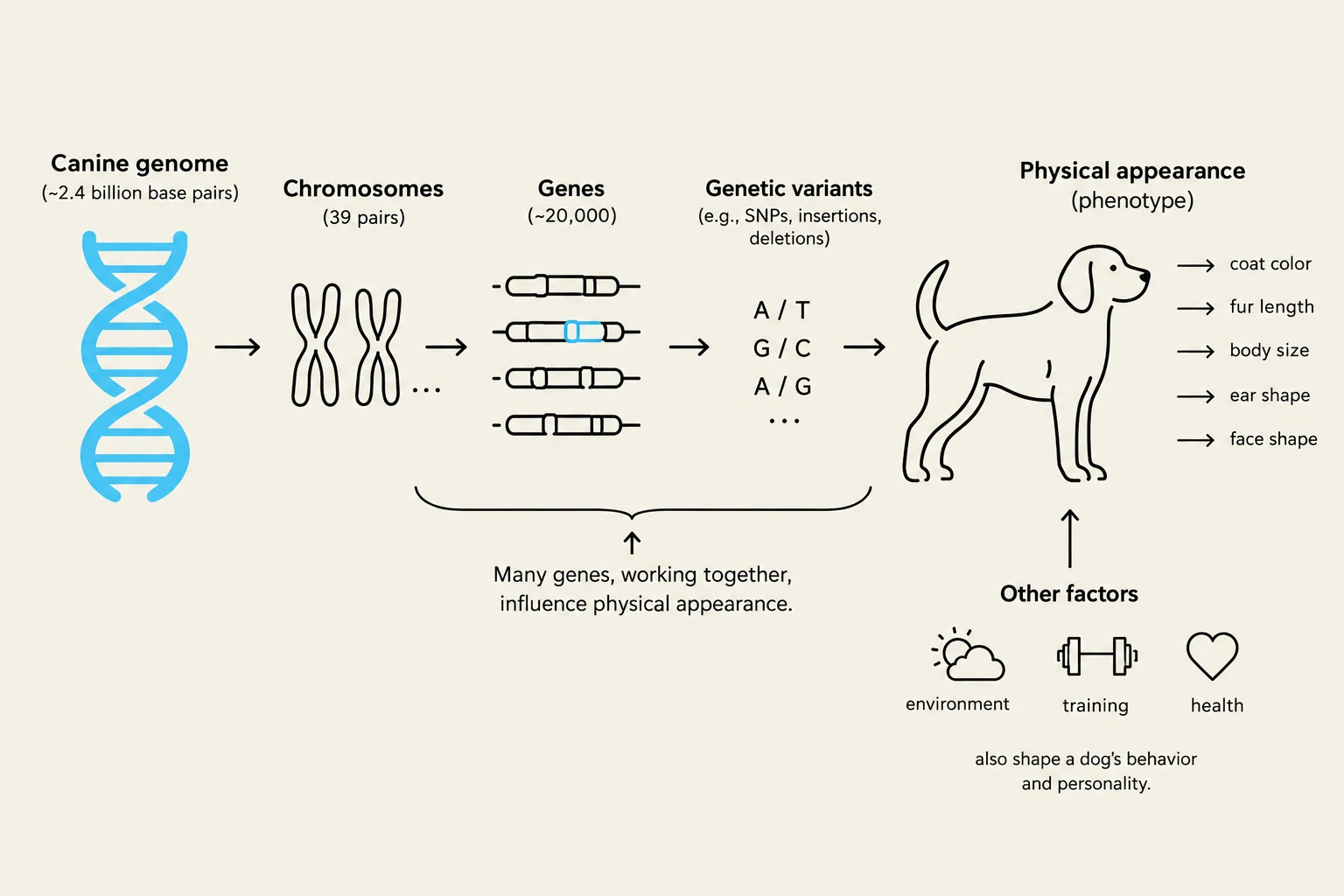
The canine genome is an immense blueprint consisting of approximately 20,000 genes. While this sounds like a massive number, it is important to distinguish between the genes that dictate "how a dog looks" and those that dictate "how a dog thinks."
Interestingly, the genes responsible for a dog's physical appearance—such as coat color, ear shape, or height—represent a tiny fraction of their total genetic makeup. Research shows that variation in only about 50 genes determines breed-defining physical traits. When you look at a dog, you are seeing the expression of only about 0.25% of its entire genome.
The remaining 99.75% of the genome includes the thousands of genes responsible for brain development, neurological function, and internal physiological processes.
This diagram illustrates how canine genetics, including the genome, chromosomes, and genes, contribute to physical appearance (phenotype) through genetic variants. It also shows that environmental factors, training, and health also influence a dog's behavior and personality.
Phenotype vs. Genotype: Understanding Traits
To study genetics, we must use two fundamental terms: Genotype and Phenotype.
Genotype: This is the internal genetic composition—the actual "code" or information present within the genes.
Phenotype: This is the observable physical trait or characteristic, such as fur color, height, or eye color.
Traits are inherited through alleles, which are different versions of the same gene. Every dog receives two alleles for a trait: one from the mother (maternal) and one from the father (paternal). These alleles can be dominant (represented by an uppercase letter, like F) or recessive (represented by a lowercase letter, like f). A dominant allele can "overpower" a recessive one in determining the phenotype.
Exam Tip: Remember that while the genotype is the "instruction manual" hidden inside the cells, the phenotype is the "finished product" you see when looking at the dog.
Genetic Influence on Behavior
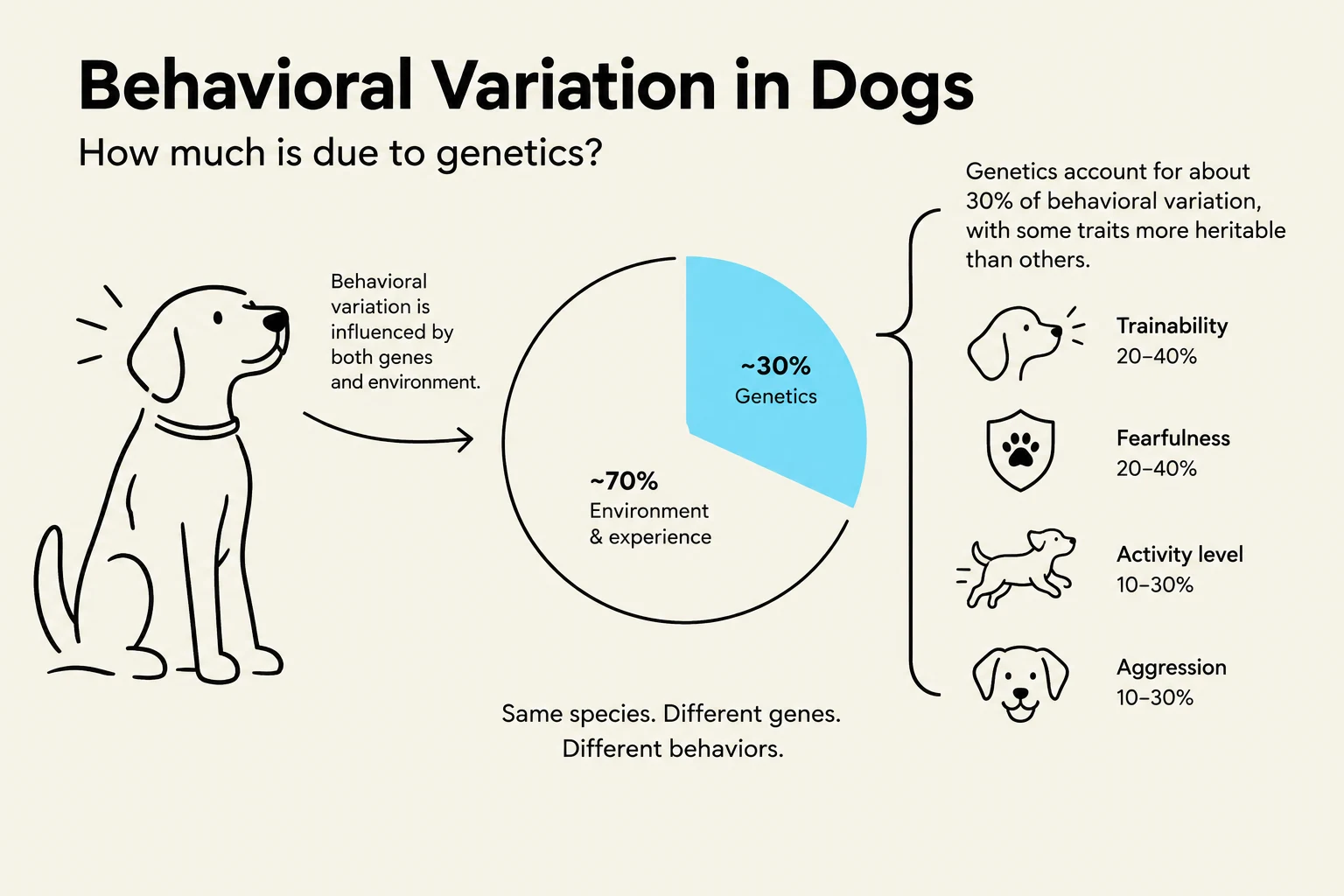
A common misconception is that behavior is strictly "hard-wired" by DNA. In reality, genetics creates a predisposition toward certain behaviors rather than a guaranteed outcome. Behavior in complex organisms is a result of the interaction between genetics and environmental factors.
However, we can quantify how much genetics matters. Studies indicate that for certain behavior traits, genes can account for 60% to 70% of the variation among breeds.
Key traits that show high genetic influence (up to 70%) include:
Trainability
Aggression towards strangers
Attachment and attention-seeking
Chasing behavior
Other behaviors show a significant, though slightly lower, genetic influence of approximately 50%.
This illustration explains that approximately 30% of behavioral variation in dogs is attributed to genetics, while the remaining 70% is influenced by environment and experience. It further breaks down the heritability of specific traits such as trainability, fearfulness, activity level, and aggression.
Purebred vs. Mixed Breed Gene Pools
The way genes are distributed differs significantly between purebred and mixed-breed dogs.
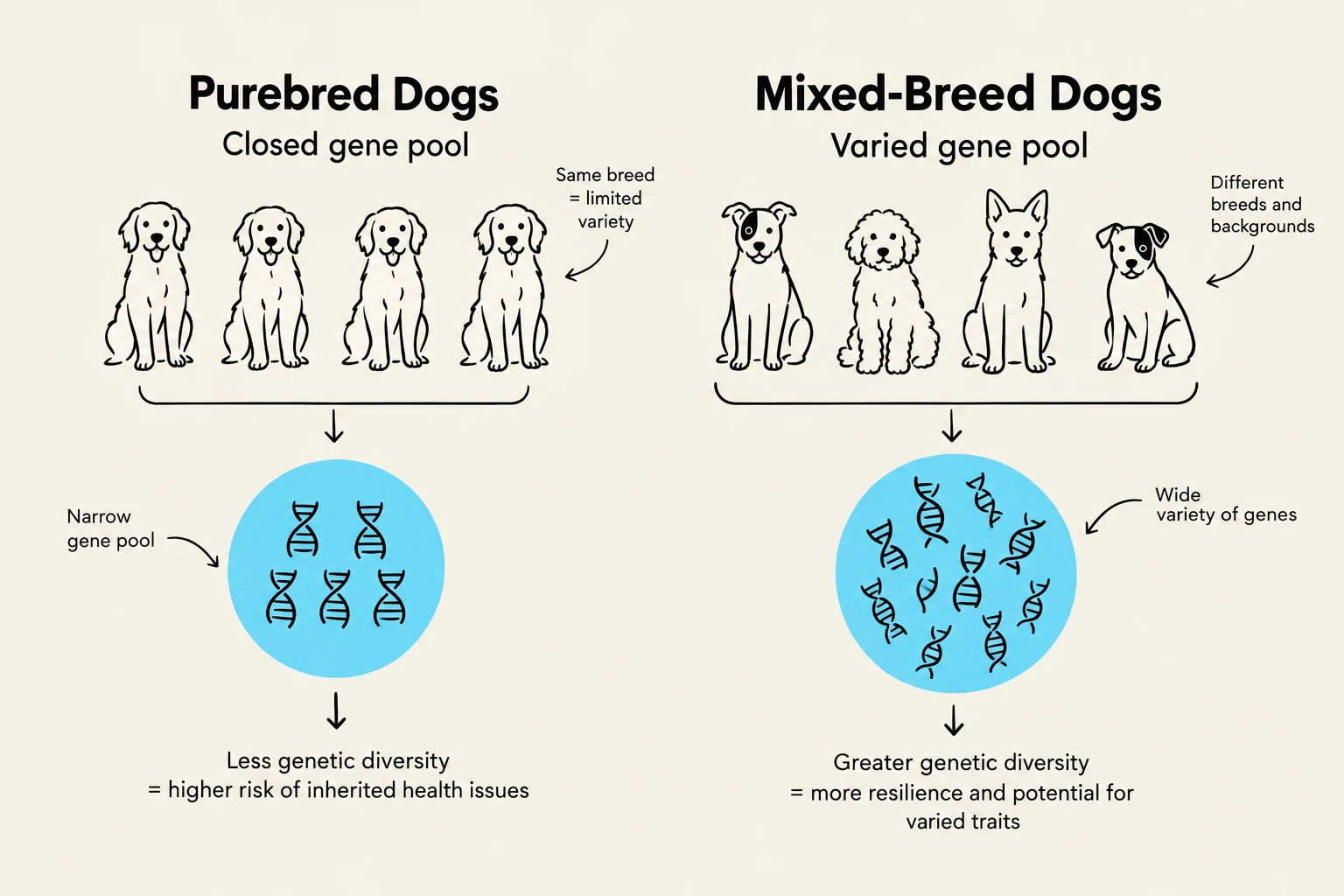
Purebred dogs come from a "closed" gene pool. Because they are bred within specific lineages, their genetic traits are more predictable. However, even purebred dogs are not clones; they have different DNA and can vary significantly in behavior.
Mixed breed dogs come from a "varied" gene pool. Once a dog is less than 100% of a single breed, it becomes genetically distinct. A crucial point for students of canine behavior is that a mixed-breed dog is not simply a "blend" of its parents. Because a mixed-breed offspring only inherits 50% of its DNA from each parent, we cannot know which specific genes were passed down.
This illustration compares purebred dogs and mixed-breed dogs, highlighting the genetic diversity within each group and its implications for health and resilience.
The Limitations of DNA Testing
With the rise of consumer DNA kits, many owners believe they can "solve" their dog's personality by reading a breed breakdown. This is a mistake. DNA tests are excellent for identifying ancestors, but they cannot accurately predict behavior for several reasons:
Environmental Interaction: All dogs, regardless of breed, are influenced by outside factors like training, socialization, and environment.
The "Which Part?" Problem: Even if a test says a dog is 12.5% Golden Retriever, we don't know which part of the dog that DNA affects. Does it affect their hips? Their digestion? Their temperament? We cannot be sure.
Unique Genomes: Every mixed-breed dog has a unique genome. Even siblings from the same litter will have different genetic combinations.
In conclusion, you cannot "judge a book by its cover." Because 99.75% of a dog's genome is invisible to the naked eye, we cannot accurately predict future behavior based solely on appearance, breed, or DNA results.
Keep reading for free.
Create an account to finish this reading and make it part of your study routine.