Canine Behavioral Genetics: Understanding the Roots of Dog Behavior
Explore the emerging field of canine behavioral genetics, which investigates the link between a dog's DNA and behaviors such as anxiety, phobias, and aggression. Learn how domestication, genetic diversity, and environmental factors interact to shape canine behavior, and understand the ethical considerations in breeding
For decades, owners of dogs with intense fears or aggressive tendencies have often felt a sense of personal failure, wondering if their training methods or environments were to blame. However, emerging research in canine behavioral genetics is shifting this perspective, suggesting that many behavioral issues are deeply rooted in a dog's DNA. By studying the complex relationship between genes and behavior, scientists hope to not only understand why certain dogs struggle with anxiety or aggression but also to improve how we breed, treat, and support these animals.
The Foundation: Domestication and Genetic Diversity
The domestic dog is a unique subject for genetic research due to the history of domestication. Over many generations, humans have intensively selected dogs for specific morphological (physical) and behavioral traits. This has resulted in an enormous amount of variation within the species, making the dog one of the most valuable biological models for studying how genes influence complex traits.
Researchers look at two primary types of variation to understand these links:
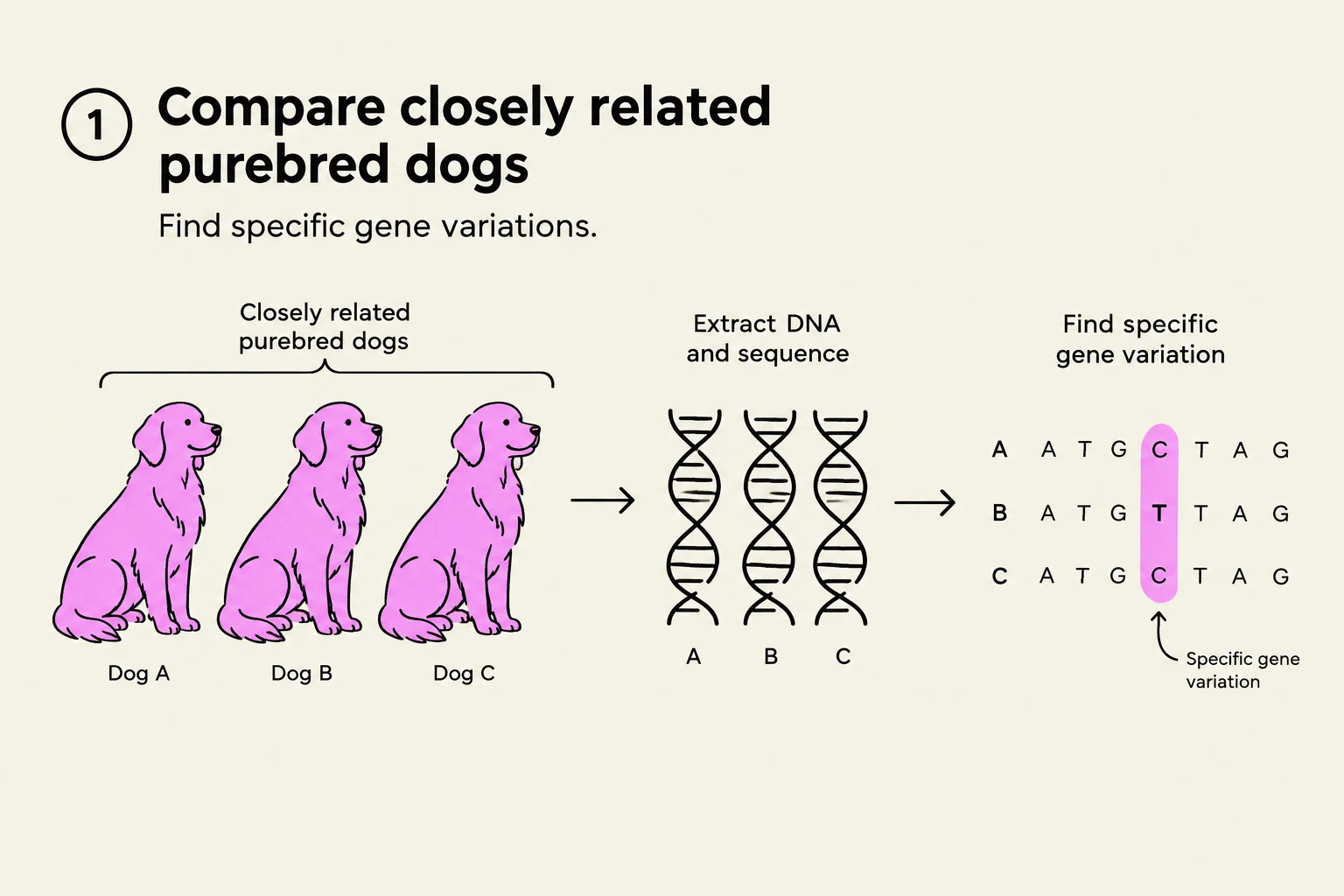
Purebred Genetic Variation: In purebred populations, there is relatively low genetic variation because all individuals descend from a limited number of ancestors. This makes it easier to pinpoint specific genes associated with a trait when comparing affected and unaffected relatives within a breed.
Genetic Diversity Across Breeds: By studying unrelated dogs across different breeds, researchers can identify common genetic variations that correlate with specific behaviors, regardless of the dog's breed.
This diagram illustrates the process of comparing DNA sequences from closely related purebred dogs to identify specific gene variations.
Study Tip: When evaluating genetic studies, distinguish between intra-breed studies (looking at low variation within a lineage) and inter-breed studies (looking for broad patterns across the species).
Investigating Behavioral Disorders
The "Dog Project"—a collaborative effort involving psychiatrists, geneticists, and veterinary behaviorists—focuses on identifying the genetic basis for several specific conditions.
Anxiety and Phobias
One of the most significant areas of study involves separation anxiety and noise phobia. For example, certain breeds, such as the Border Collie, may have a higher prevalence of noise phobia, which can manifest as extreme terror during thunderstorms or fireworks. Researchers also look at generalized anxiety, which can lead to symptoms like pacing, panting, or even catatonic states.
Obsessive-Compulsive Behavior
Dogs can exhibit obsessive-compulsive behavior that mirrors human conditions. These repetitive, ritualistic actions are often studied to see if they follow specific hereditary patterns.
Aggression
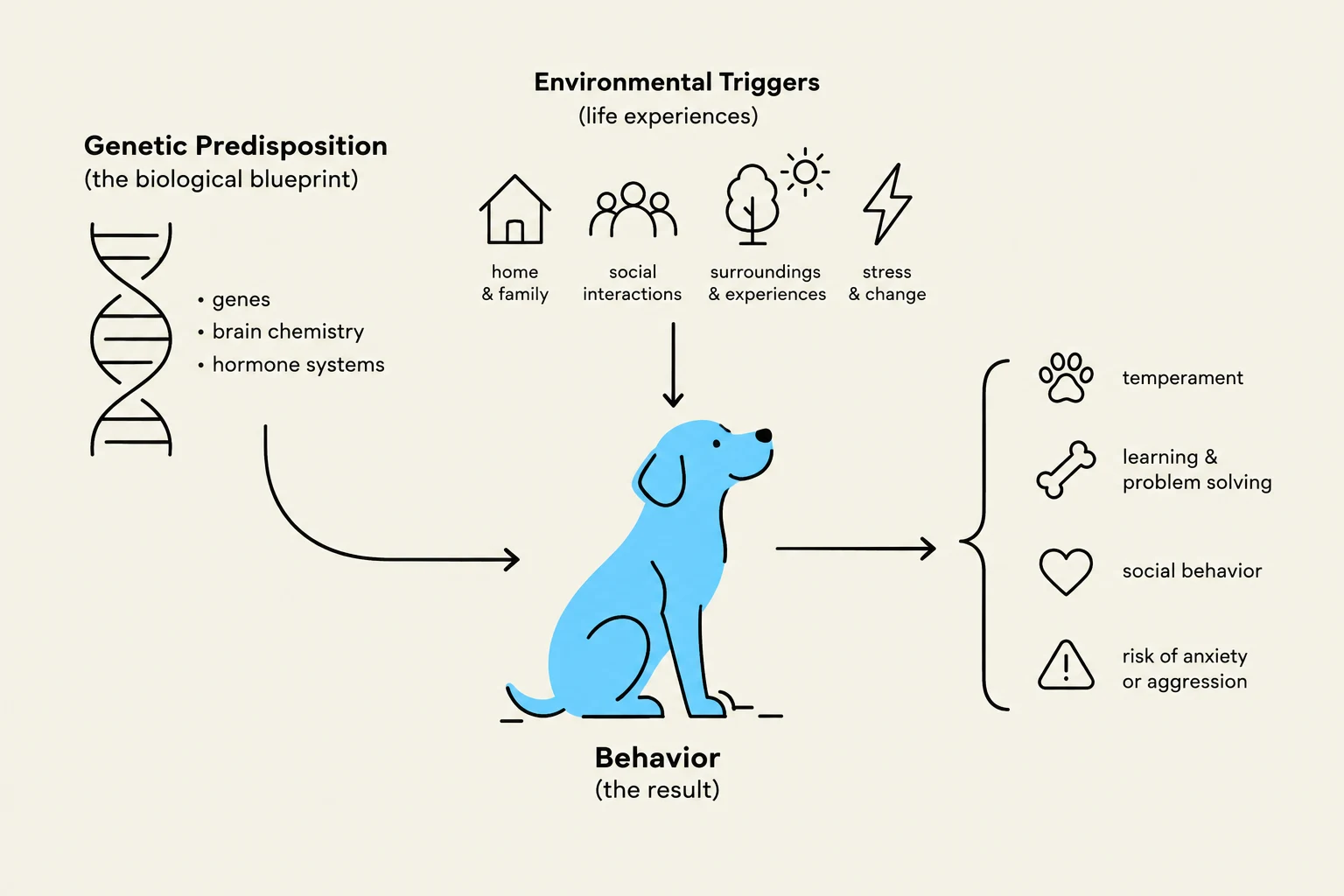
Researchers are particularly interested in aggression, specifically "out-of-the-blue" reactive responses where a dog reacts disproportionately to a stimulus that would not bother a normal dog. Understanding whether these responses are a result of a genetic predisposition or a combination of genetics and environment is a primary goal of current research.
This diagram illustrates how genetic predisposition and environmental triggers interact to influence an animal's behavior, affecting traits like temperament, learning ability, social behavior, and risk of anxiety or aggression.
From Genes to Management: Behavior Modification
A common misconception in behavioral genetics is the idea that "genes are destiny". Scientists emphasize that while a dog may have a genetic predisposition toward a certain behavior, genetics do not dictate a fixed outcome. Instead, knowledge of genetics can be used to "shape the destiny" of the dog through early intervention.
The Role of Medication and Training
For dogs suffering from severe issues, a combination of medical and behavioral approaches is often most effective. As seen in the case study of "Solo," a Border Collie with severe anxiety, medication (such as Prozac or Elavil) is not a "quick fix" but rather a tool to make the dog more receptive to behavior modification. Effective modification often includes:
Desensitization: Gradually exposing the dog to feared stimuli.
Counterconditioning: Changing the dog's emotional response to a stimulus.
Relaxation Training: Teaching the dog to remain calm in various contexts.
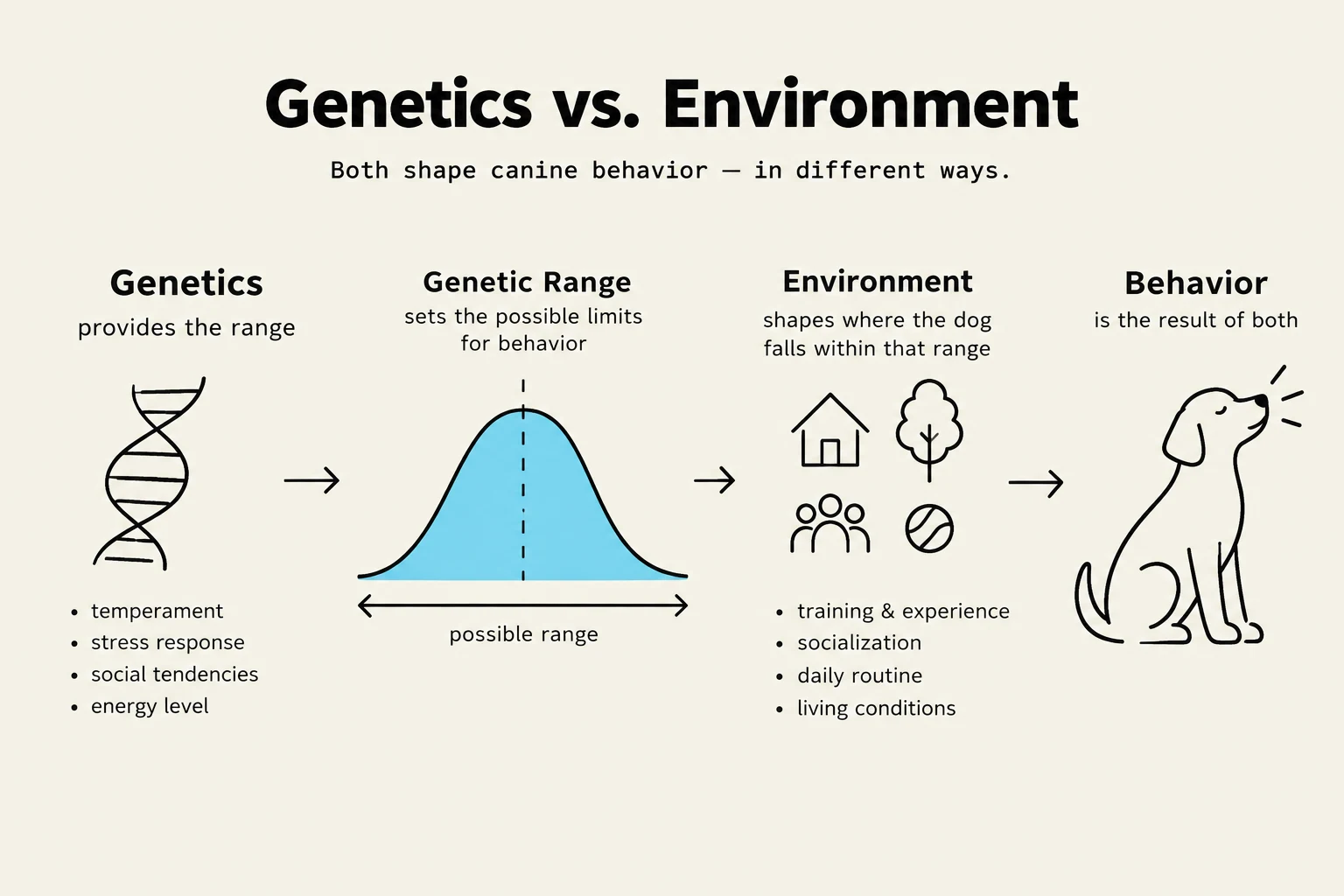
This diagram illustrates how genetics and environment interact to shape canine behavior. Genetics provides a range of potential traits, while environmental factors influence where an individual dog falls within that range, ultimately determining its behavior.
Ethical Considerations in Breeding and Legislation
The potential application of genetic data brings significant ethical debates. Some behaviorists argue that if we can identify genes for "behavioral unsoundness," breeders should use this information to avoid producing dogs prone to suffering, much like they avoid breeding for hip dysplasia. Others worry about the oversimplification of data, fearing it could lead to the selection against desirable breed traits or the implementation of unfair breed-specific legislation.
Ultimately, the goal of canine behavioral genetics is to move away from blaming owners and toward a more enlightened, science-based approach to animal welfare.
Key Concept: Genetic predisposition = Genetic inevitability.
The relationship can be thought of as:
Behavior=f(Genetics,Environment)
Where the genetic component sets the biological threshold, but the environment determines the actual expression of the behavior.
Keep reading for free.
Create an account to finish this reading and make it part of your study routine.