Calcium Channel Blockers: Mechanisms and Clinical Implications
This content explains the mechanism of action, classification, side effects, contraindications, and nursing implications of Calcium Channel Blockers (CCBs), a class of antihypertensive medications.
Hypertension is a significant global health concern and serves as the primary risk factor for stroke and a major contributor to heart disease. Among the various pharmacological interventions used to manage blood pressure, Calcium Channel Blockers (CCBs) represent a vital class of antihypertensive medications. By targeting the cellular mechanisms of muscle contraction, these drugs provide powerful control over vascular resistance and cardiac output.
Mechanism of Action
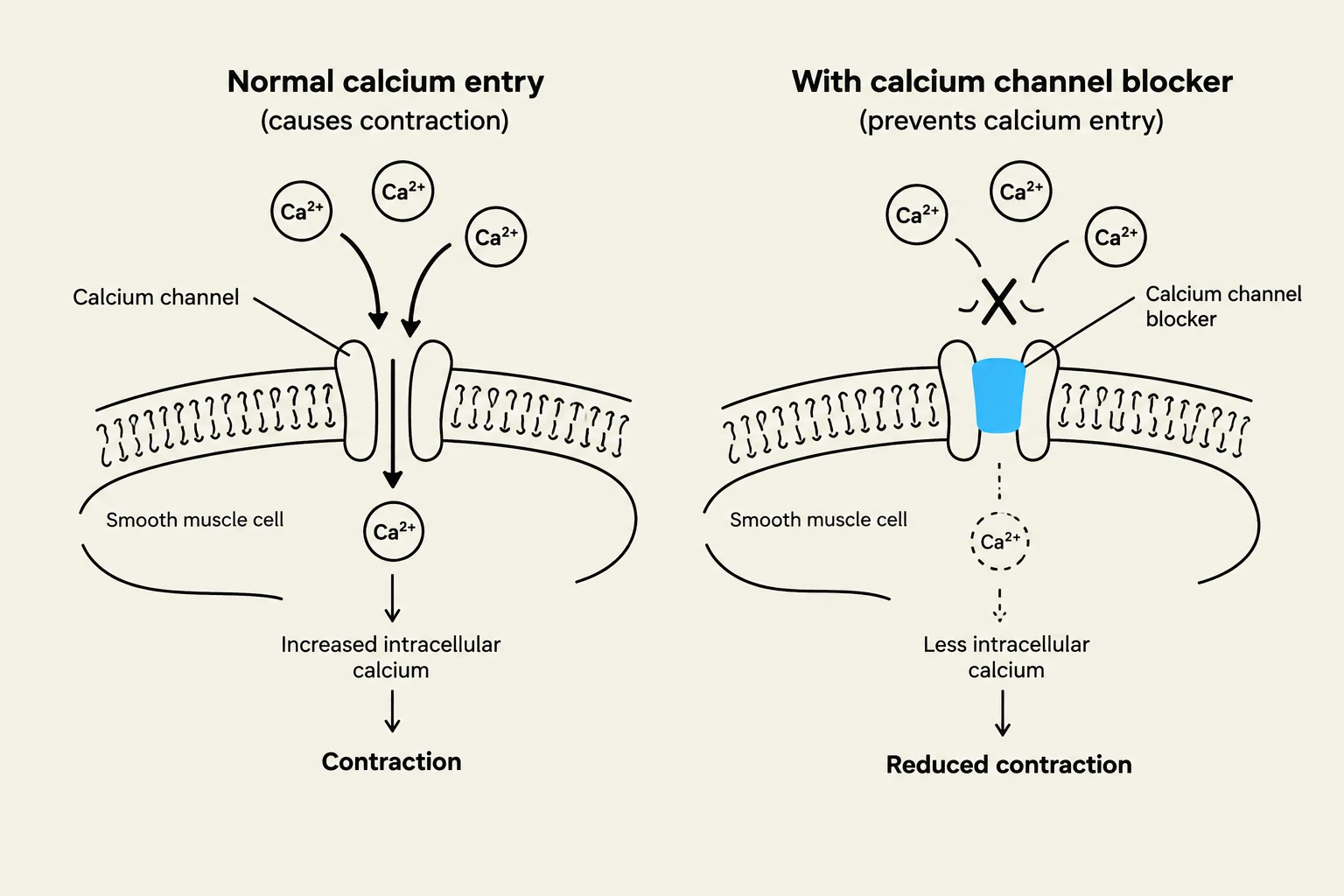
The fundamental function of Calcium Channel Blockers is to interfere with the movement of calcium ions into cells. Specifically, CCBs prevent calcium from binding to receptors located within the heart and vascular smooth muscle cells.
In a healthy physiological state, the influx of calcium into these cells is a necessary trigger for muscle contraction. By inhibiting this binding process, CCBs prevent the contraction of the smooth muscles that line the blood vessels. This inhibition leads to muscle relaxation, which results in vasodilation—the widening of the blood vessels. As the vessels dilate, peripheral vascular resistance decreases, subsequently lowering the systemic blood pressure.
Diagram illustrating normal calcium entry into a smooth muscle cell leading to contraction, and how a calcium channel blocker prevents calcium entry, resulting in reduced contraction.
Classification of CCBs
CCBs are not a monolithic group; they are categorized into two primary classes based on their physiological effects and where they exert their dominance within the cardiovascular system.
Dihydropyridines
Dihydropyridines are characterized by their potent effect on the peripheral vasculature. They act as strong vasodilators but have little to no significant effect on the conduction of the atrioventricular (AV) node in the heart. This makes them highly effective for lowering blood pressure through vascular relaxation.
Common Examples: Amlodipine (Norvasc), felodipine (Plendil), flunarizine, and nifedipine XL (Adalat XL).
Nondihydropyridines (NDs)
Nondihydropyridines have a more balanced effect, impacting both the blood vessels and the heart's electrical conduction system. They are often used when a reduction in heart rate or conduction speed is therapeutically desired.
Common Examples: Diltiazem (Cardizem CD, Tiazac) and verapamil (Isoptin SR).
This diagram compares the effects of dihydropyridines and nondihydropyridines on the cardiovascular system, illustrating their impact on vasodilation, heart rate, and AV node conduction, along with their common clinical uses.
Side Effects and Adverse Reactions
While CCBs are effective, their impact on the cardiovascular system can lead to various side effects. It is crucial for clinicians to distinguish between common, manageable side effects and severe, life-threatening adverse reactions.
Common Side Effects
These are typically less severe but can impact patient adherence and quality of life:
Vascular/Skin: Ankle edema (swelling), flushing, and headache.
Neurological: Dizziness and fatigue.
Gastrointestinal: Nausea and constipation.
Cardiac: Palpitations and variations in heart rate, such as tachycardia (fast heart rate) or bradycardia (slow heart rate).
Adverse Effects
These represent more serious clinical complications that require immediate medical attention:
Dermatological: Stevens-Johnson Syndrome, a rare but extremely serious skin reaction.
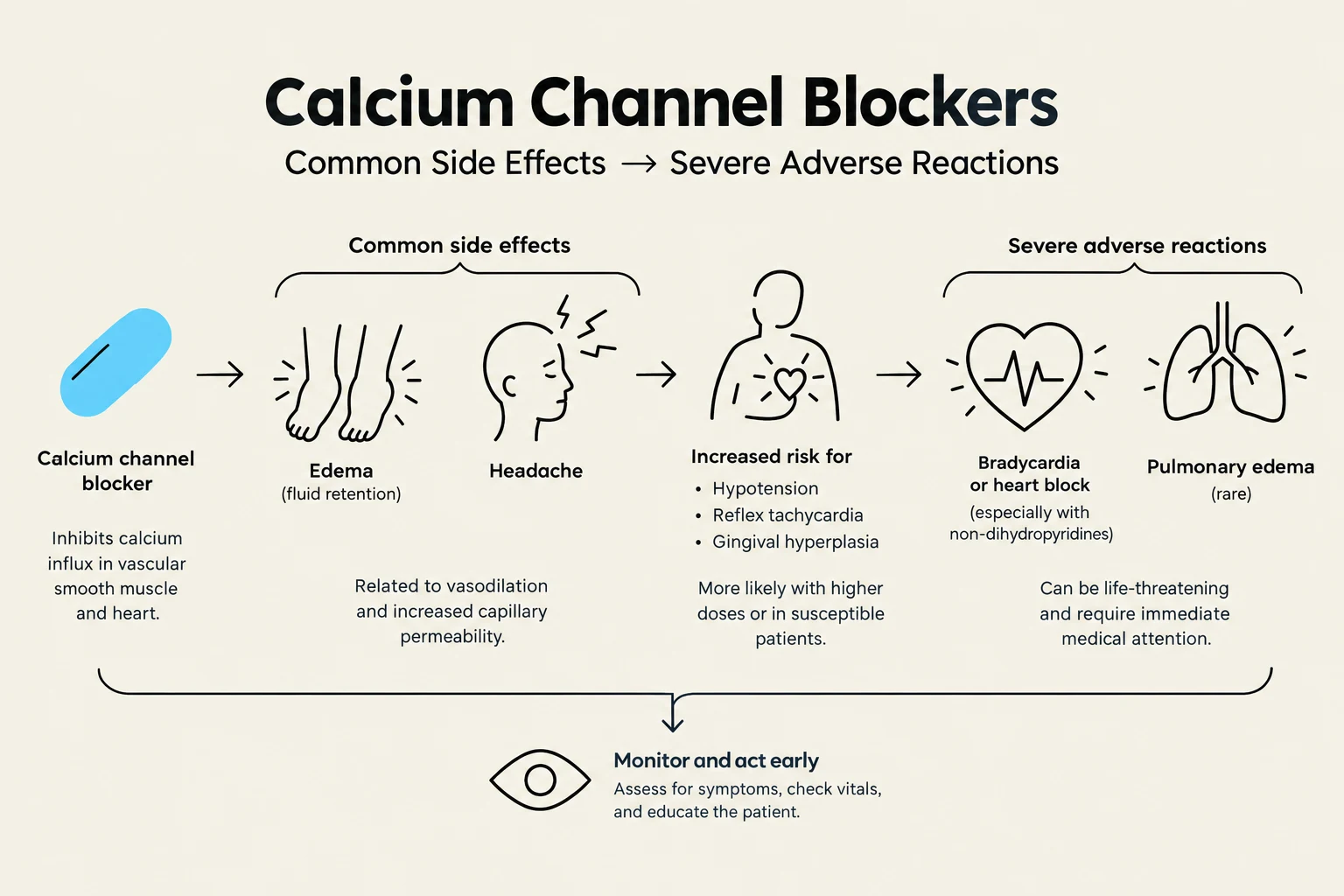
This diagram illustrates common and severe adverse reactions associated with calcium channel blockers, including edema, headache, hypotension, reflex tachycardia, gingival hyperplasia, bradycardia or heart block, and pulmonary edema. It also emphasizes the importance of monitoring and early intervention.
Clinical Considerations: Contraindications and Interactions
Contraindications
Clinicians must screen patients for specific conditions before prescribing CCBs to prevent harm:
Known Drug Allergy: Any history of hypersensitivity to the medication class.
Acute Illness: Specific acute conditions that may be exacerbated by blood pressure changes.
Hypotension: Since CCBs lower blood pressure, they are contraindicated in patients who are already hypotensive.
AV Block: Patients with 2nd or 3rd-degree AV block should not take CCBs unless they are equipped with a pacemaker.
Drug and Food Interactions
Safety is heavily dependent on managing how CCBs interact with other substances:
Drug-Drug Interactions: Clinicians must be vigilant regarding specific drug-drug interactions as outlined in pharmacological references.
Drug-Food Interactions: A critical teaching point for patients is to avoid grapefruit juice while taking CCBs, as it can interfere with the medication's metabolism.
Exam Tip: When assessing a patient on CCBs, always check both blood pressure and pulse. If a patient presents with significant bradycardia or hypotension, the medication may need to be held according to facility protocol.
Nursing Implications and Patient Education
Effective management of a patient on CCB therapy requires proactive monitoring and thorough patient education.
Monitoring:
Vital Signs: Monitor blood pressure and pulse regularly. In a hospital setting, blood pressure should always be checked before administering an antihypertensive.
Physical Assessment: Watch for signs of edema (swelling of feet, ankles, or face), shortness of breath, or excessive fatigue.
Patient Teaching:
Adherence: Instruct patients never to stop the medication abruptly, as this can cause a "rebound hypertensive crisis," potentially leading to a stroke.
Safety: Advise patients to change positions slowly to prevent dizziness caused by orthostatic hypotension.
Administration: Patients should not crush, break, or open sustained-release (SR) capsules or extended-release (ER) tablets.
Lifestyle: Encourage a DASH-like diet, weight management, smoking cessation, and stress reduction to complement pharmacological therapy.
Keep reading for free.
Create an account to finish this reading and make it part of your study routine.