


The integumentary system serves as the body's primary interface with the external environment, acting as a complex barrier against physical, chemical, and biological threats. While this system is remarkably resilient, it is susceptible to significant trauma, most notably burns, and undergoes profound transformations from embryonic development through the aging process. Understanding the physiological mechanisms of burn injury and the developmental timeline of the skin is essential for clinical assessment and long-term health management.
Understanding Burn Injuries
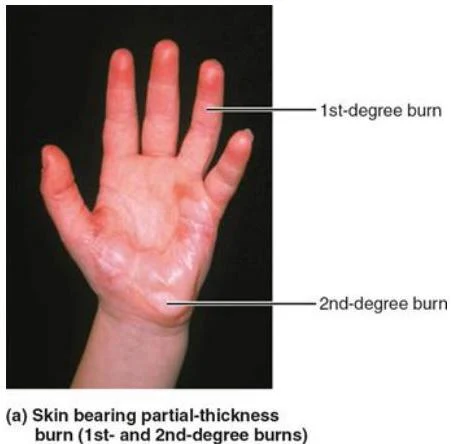
A burn is defined as tissue damage resulting from exposure to heat, electricity, radiation, or certain chemicals. At a cellular level, the primary mechanism of damage is the denaturation of proteins, which destroys the structural integrity of the cells.
The most immediate and life-threatening physiological consequences of severe burns are dehydration and electrolyte imbalance. If these are not managed promptly, they can lead to circulatory shock and renal (kidney) shutdown.
The Rule of Nines
To manage these patients effectively, clinicians must estimate the extent of the injury to predict fluid loss. This is achieved using the Rule of Nines, which divides the body into sections that represent approximately 9% of the total body surface area (TBSA).
Figure 5.13 Estimating the extent and severity of burns using the rule of nines.
The body is partitioned as follows:
- Head and Neck: 9% (4% anterior, 4% posterior)
- Upper Limbs: 18% (9% each arm)
- Trunk: 36% (18% anterior, 18% posterior)
- Lower Limbs: 36% (18% each leg)
- Perineum (Genitals): 1%
Exam Tip: Remember that the Rule of Nines is an estimation tool used to calculate fluid resuscitation needs. Always check if the question specifies "anterior" or "posterior" to avoid doubling the percentage for a single body part.
Keep reading for free.
Create an account to finish this reading and make it part of your study routine.
Continue reading freeAlready have an account? Log in
Updated