


The intersection of Eastern spirituality and Western psychology offers a profound landscape for understanding the human condition. While Western psychotherapy often focuses on the development and integration of the "self," Buddhist psychology approaches the mind through the lens of liberation from the cycles of suffering. By comparing the Buddhist "Wheel of Life" with various psychological traditions, we can gain a more comprehensive view of what it means to be mentally healthy and how we might navigate the complexities of our internal worlds.
The Wheel of Life and the Architecture of Suffering
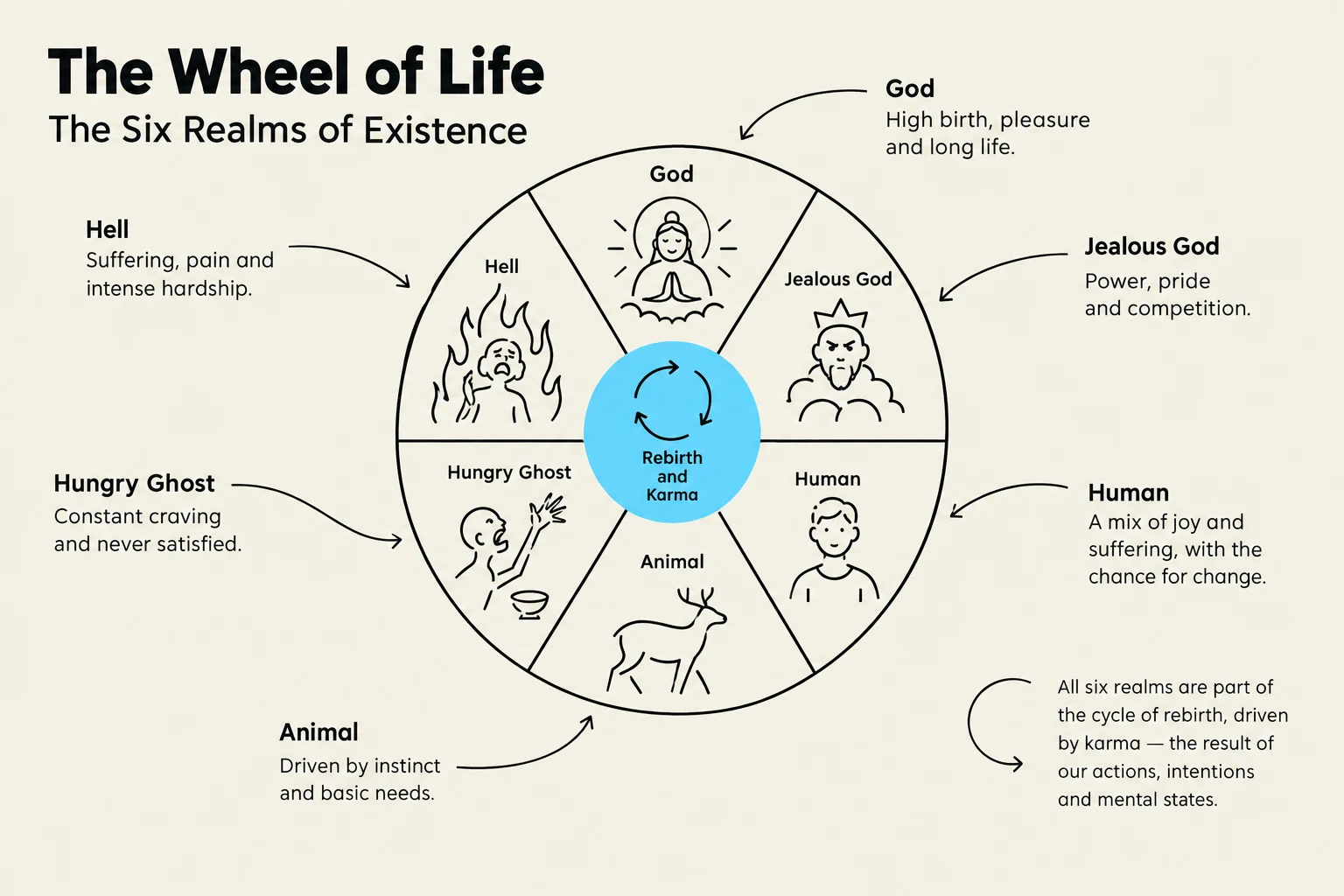
In the Buddhist tradition, the Wheel of Life (or Wheel of Samsara) serves as a ubiquitous map of sentient existence. Rather than a literal description of reincarnation, this mandala can be understood psychologically as a representation of neurotic suffering—the various states of mind that trap us in repetitive, unfulfilling patterns.
The wheel is composed of the Six Realms of Existence, which represent different psychological dimensions:
- The Hell Realm: Characterized by intense aggressive and anxiety states.
- The Animal Realm: The domain of instinctual gratification and biological drives.
- The Realm of the Hungry Ghosts: A state of insatiable craving and attachment to the past.
- The Realm of the Jealous Gods: Driven by egoic striving, competition, and aggression.
- The God Realm: A state of bliss, "peak experiences," and temporary ego-dissolution.
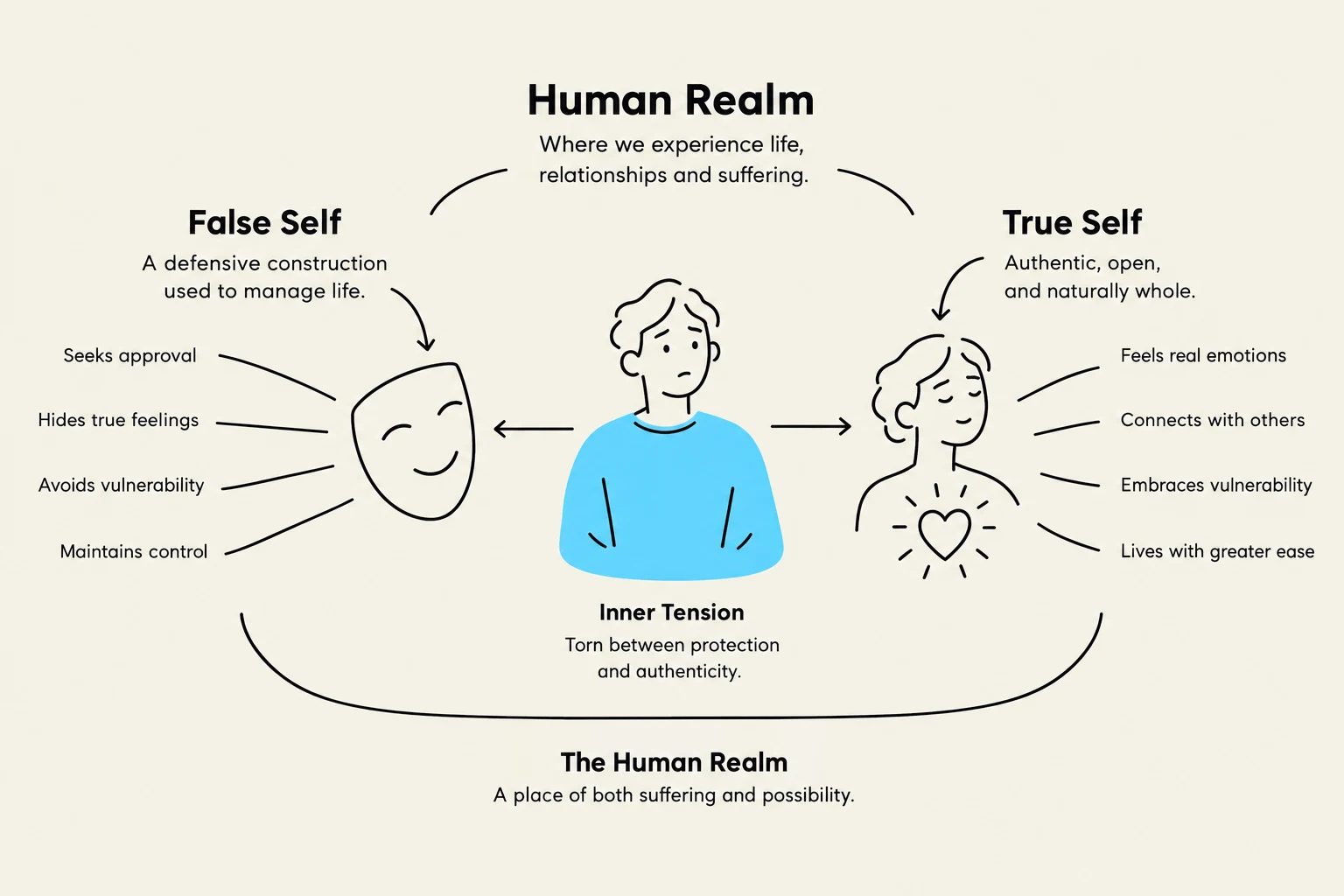
- The Human Realm: The linchpin of the wheel, representing the search for identity and the unique opportunity for awakening.
At the center of the wheel are the three driving forces: greed, hatred, and delusion, represented by a pig, a snake, and a rooster. These forces perpetuate Samsara—the endless cycle of conditioned existence—by keeping us ignorant of our true nature.

Keep reading for free.
Create an account to finish this reading and make it part of your study routine.
Continue reading freeAlready have an account? Log in
Updated