


Breast cancer management is a complex, multidisciplinary endeavor that requires tailoring therapy to the specific biological characteristics of the tumor. Modern treatment strategies integrate surgical interventions, systemic therapies (chemotherapy and targeted agents), and endocrine therapies to improve survival and quality of life. Clinical research continues to refine these approaches by investigating the optimal timing of treatment, the utility of predictive biomarkers, and the efficacy of novel drug combinations.
Surgical and Oncoplastic Approaches
The primary goal of surgical management is the effective removal of the malignancy while preserving as much healthy tissue and aesthetic integrity as possible.
For patients requiring more extensive removal, a skin-sparing mastectomy may be performed, which involves removing the breast tissue while preserving the skin envelope, often followed by immediate reconstruction. However, for many patients, breast-conserving surgery (BCS) remains a preferred option. To facilitate this, surgeons utilize oncoplastic surgery. This approach incorporates plastic surgery techniques, such as volume-displacement techniques, to manage tissue volume. This allows for the removal of larger or more centrally located tumors while maintaining a natural breast shape and aesthetic outcome.
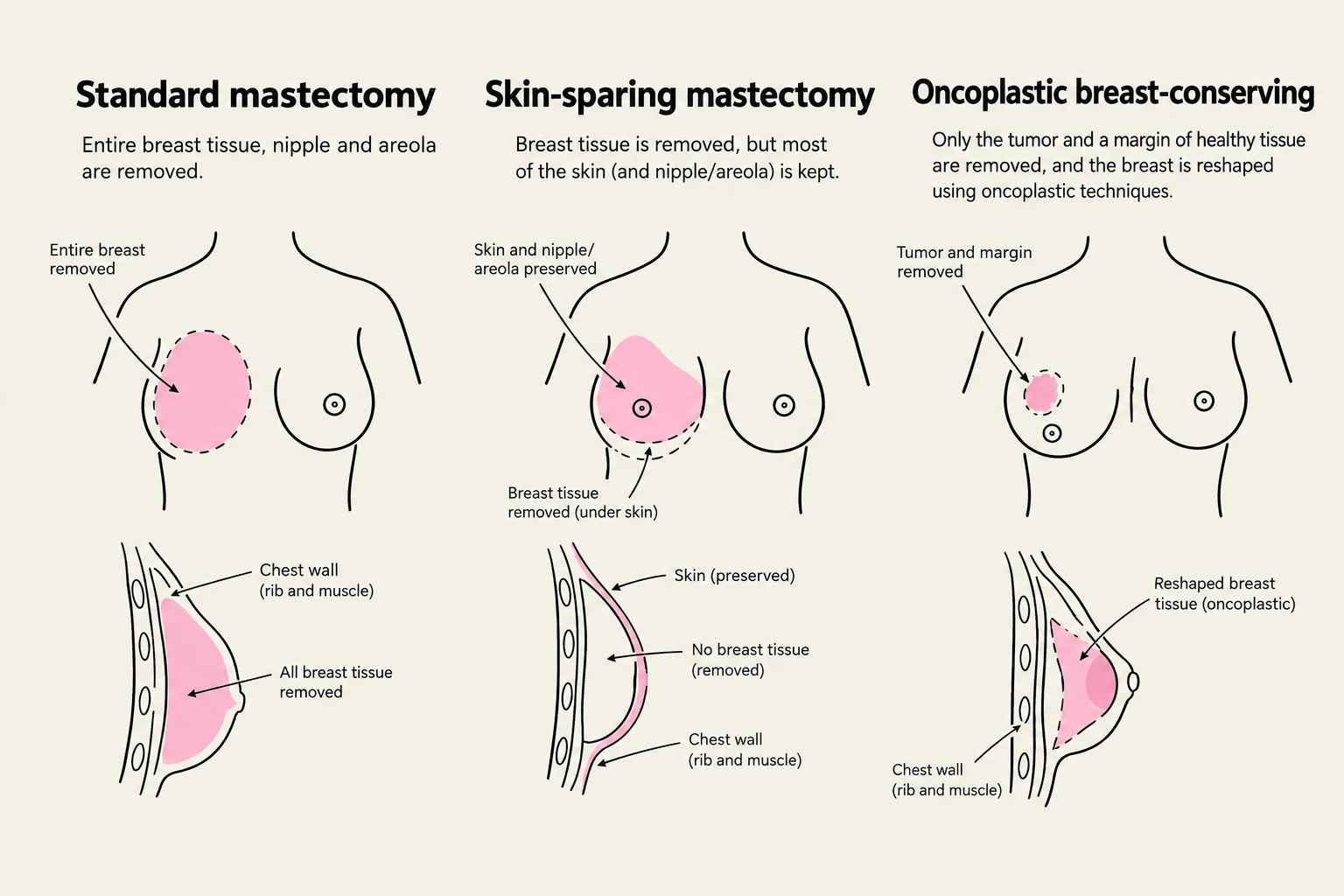
Clinical Note: The choice between BCS and mastectomy often depends on tumor size relative to breast volume, tumor location, and the patient's preference.
Systemic Therapy and Neoadjuvant Strategies
Systemic therapy can be administered either before surgery (neoadjuvant) or after surgery (adjuvant). The shift toward neoadjuvant strategies has been driven by the desire to assess tumor biology in real-time and to downstage tumors for better surgical outcomes.
Keep reading for free.
Create an account to finish this reading and make it part of your study routine.
Continue reading freeAlready have an account? Log in
Updated