


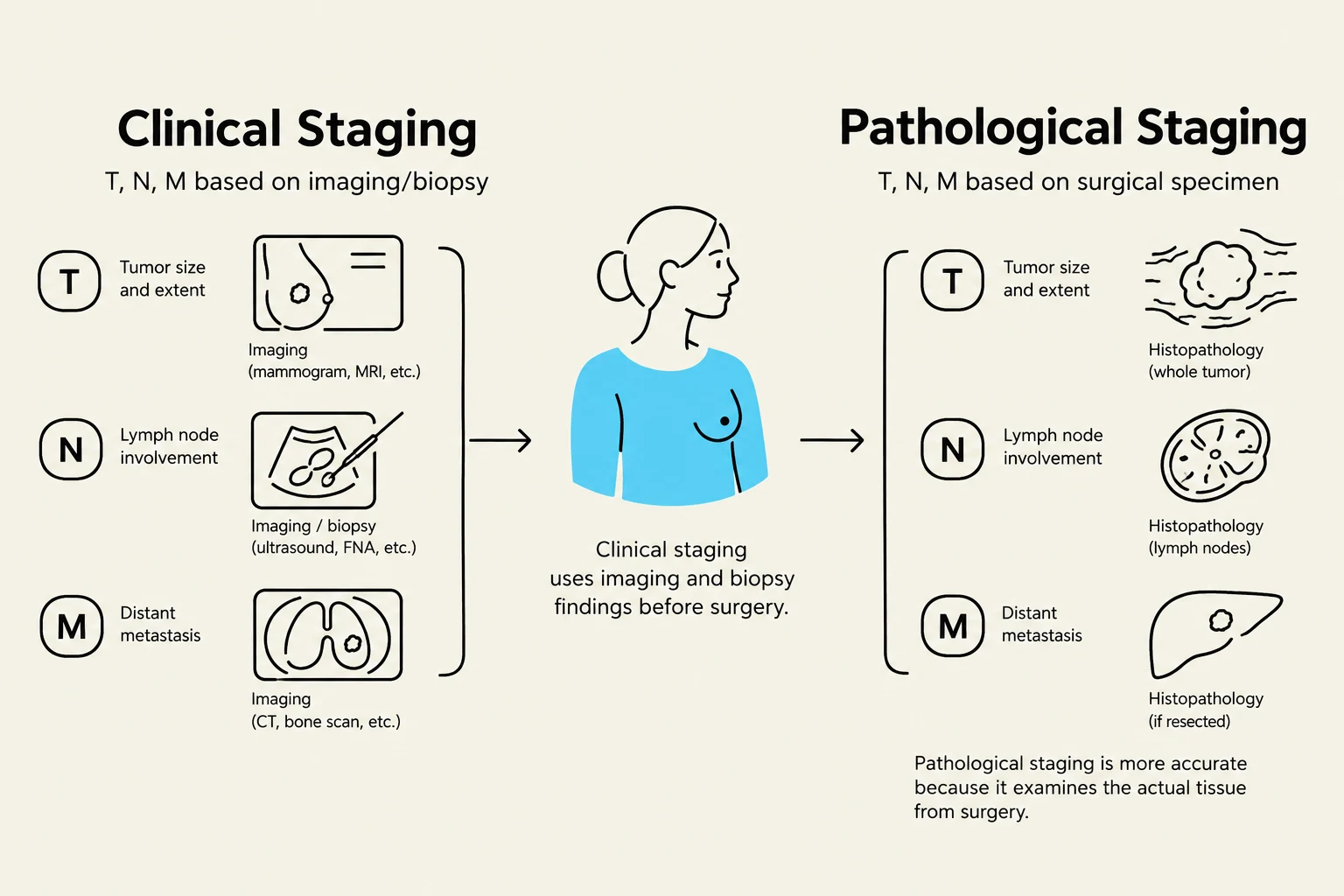
Understanding the classification and staging of breast cancer is fundamental to modern oncology. By identifying the specific histologic type of a tumor and determining its stage through anatomical and biological markers, clinicians can tailor treatment strategies—ranging from localized surgery to systemic chemotherapy—to optimize patient outcomes. This article explores the WHO classification of breast tumors and the complex staging systems used to establish prognosis.
Histologic Classification of Breast Tumors
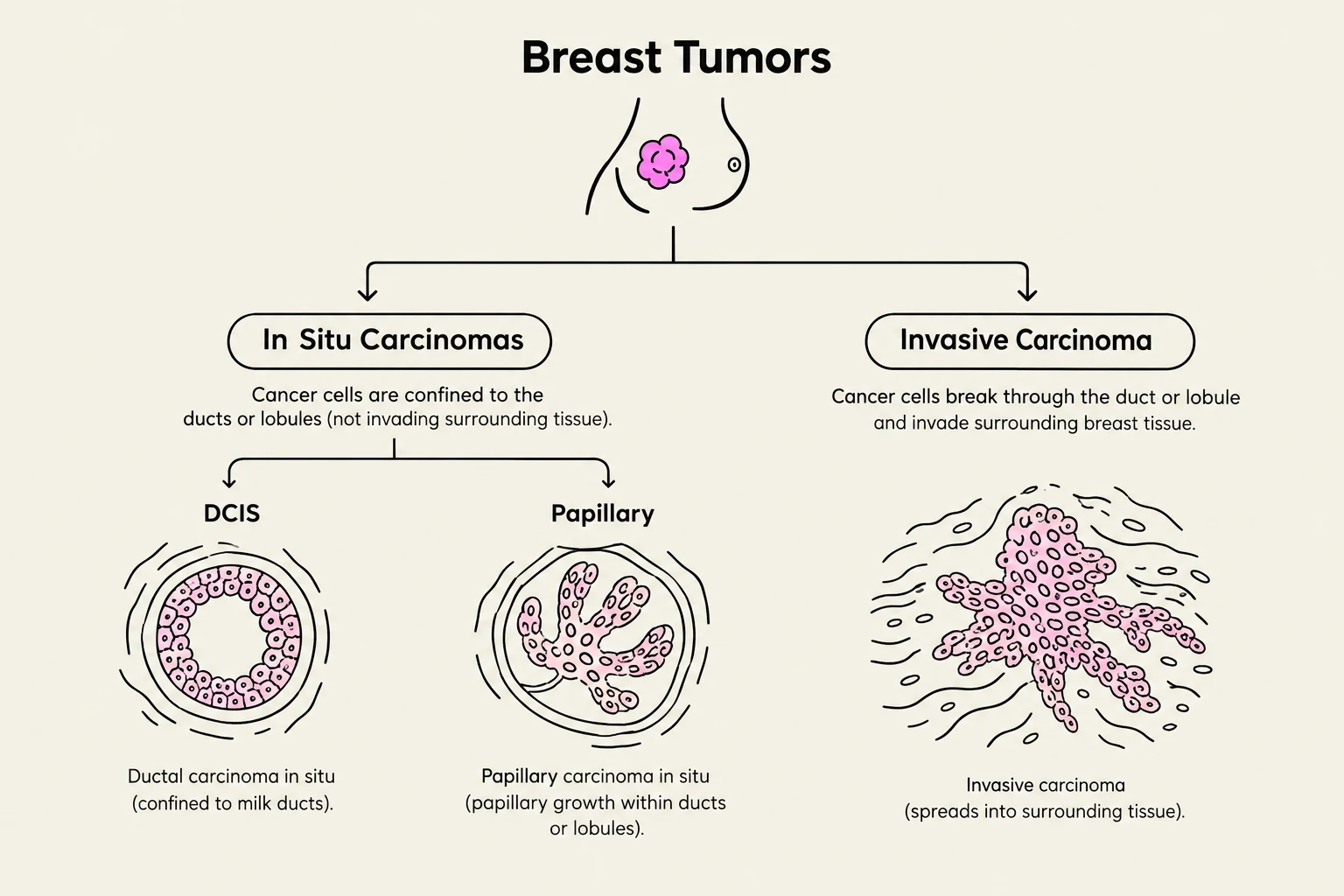
The World Health Organization (WHO) 5th Edition classifies breast cancers into two primary categories based on whether the malignant cells have breached the basement membrane: in situ carcinomas and invasive carcinomas.
In Situ Carcinomas
In situ carcinomas are non-invasive; the malignant cells are confined within the milk ducts or lobules and have not spread into the surrounding breast tissue.
- Ductal Carcinoma In Situ (DCIS): This is the most common in situ type. It is further categorized by nuclear grade into low, intermediate, or high grade, which helps predict the risk of progression to invasive disease.
- In situ Papillary Neoplasms: These include specific types such as encapsulated papillary carcinoma.
Invasive Carcinomas
Invasive carcinomas occur when malignant cells break through the basement membrane and gain the ability to invade surrounding tissue and potentially metastasize.
- Invasive Breast Carcinoma of No Special Type (NST): The most common form of invasive breast cancer.
- Invasive Lobular Carcinoma: A distinct subtype characterized by a different growth pattern.
- Special Subtypes: These include Tubular, Cribriform, Mucinous, Microinvasive, and Metaplastic carcinomas.
Some of these subtypes, such as tubular or mucinous carcinomas, are often considered favorable histologic types because they typically exhibit a less aggressive clinical course compared to NST.
Keep reading for free.
Create an account to finish this reading and make it part of your study routine.
Continue reading freeAlready have an account? Log in
Updated