


The brainstem serves as the critical bridge between the brain and the spinal cord, acting as a high-traffic conduit for motor and sensory information. Beyond simple communication, it houses the nuclei for most cranial nerves and serves as the command center for life-sustaining functions, including autonomic control and consciousness regulation. For clinicians, understanding the relationship between brainstem anatomy and cranial nerve (CN) function is essential for localizing neurological lesions and identifying life-threatening "red flags."
The Brainstem: Anatomy and Neurotransmitter Systems
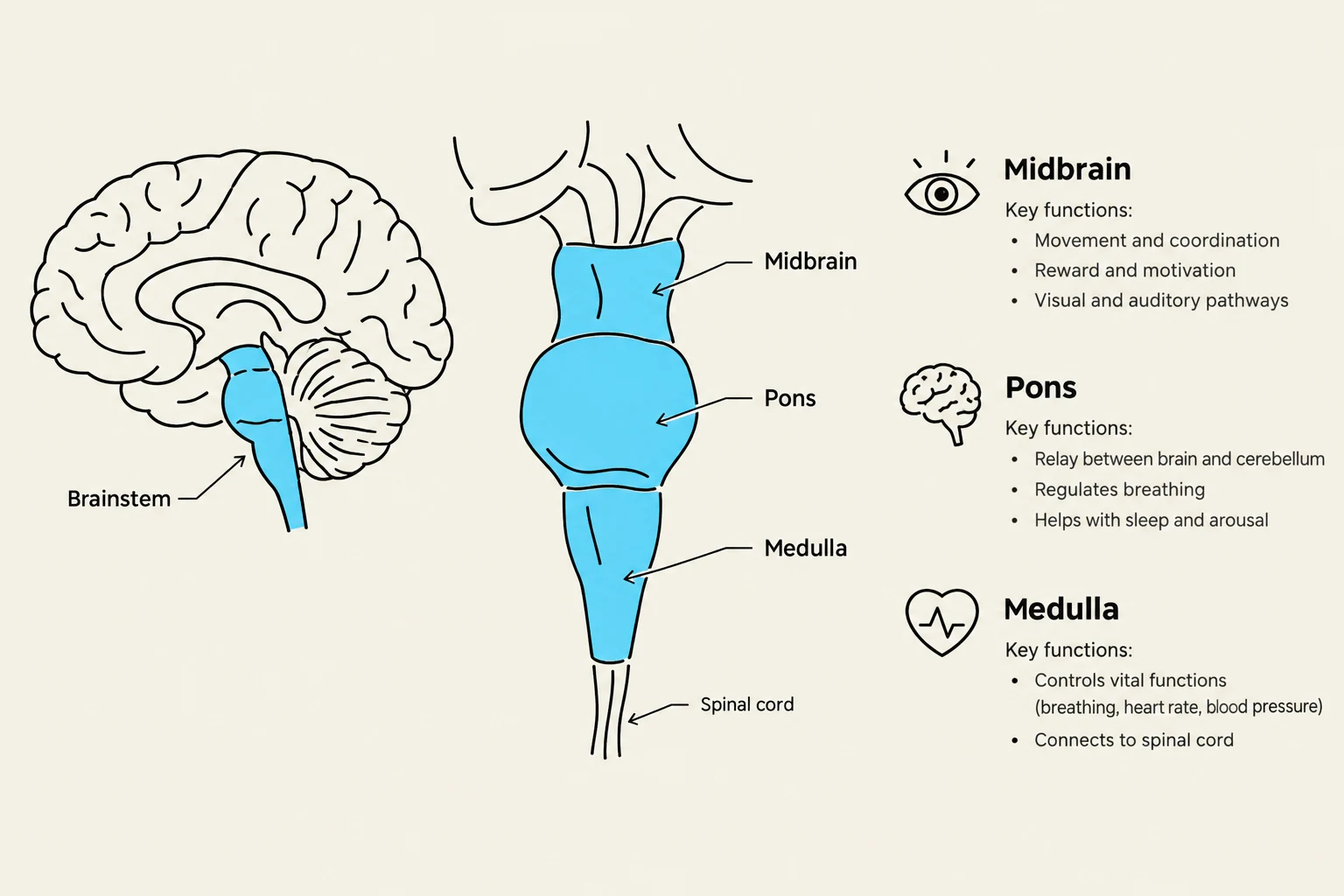
The brainstem is divided into three primary regions: the midbrain, the pons, and the medulla. Each region contributes uniquely to the body's ability to interact with the environment and maintain homeostasis.
The Midbrain
The midbrain is involved in visual and auditory processing, specifically through the superior and inferior colliculi. It also contains the substantia nigra, a major site for dopamine production. Degeneration of these dopaminergic neurons is a hallmark of Parkinson’s disease.
The Pons
The pons acts as a relay station, particularly for motor activity between the cerebral cortex and the cerebellum via the pontine nuclei. It is also home to the locus coeruleus, which produces norepinephrine to regulate arousal, attention, and stress responses.
The Medulla
The medulla is the most caudal part of the brainstem, merging into the spinal cord. It is responsible for vital autonomic reflexes, including heart rate, blood pressure, breathing, and digestion. Because it controls these fundamental life functions, a brainstem stroke in this region can be devastating.
Exam Tip: Remember that the brainstem is not just a "passageway." It is a major site for neurotransmitter production, including Acetylcholine (arousal/attention), Serotonin (mood/sleep), and Glutamate/GABA (excitatory/inhibitory signaling).

Keep reading for free.
Create an account to finish this reading and make it part of your study routine.
Continue reading freeAlready have an account? Log in
Updated