Explores the biological perspective on criminality, focusing on the roles of brain structures like the prefrontal cortex, traumatic brain injury, and brain chemistry in influencing behavior, impulsivity, and judgment.
The intersection of neuroscience and criminology offers a profound shift in how we understand human behavior. Rather than viewing criminal acts solely as products of "evil" intent or social environment, the biological perspective suggests that the physical architecture of the brain plays a critical role in an individual's ability to adhere to social and legal norms. By examining specific brain structures, the impact of physical trauma, and the underlying chemical processes, researchers can begin to map the biological pathways that may lead to impulsivity, aggression, and impaired judgment.
The Role of Brain Structures
To understand criminality, one must first understand the physical landscape of the brain. The brain is not a monolithic entity; it is composed of various specialized regions that govern everything from basic survival to complex moral reasoning. In the context of criminology, we are specifically interested in how the integrity of these structures influences a person's capacity for self-regulation.
When we discuss "brain structures" in a forensic or psychological context, we are looking at the anatomical foundations that allow for the processing of stimuli and the execution of controlled responses. If these structures are malformed, underdeveloped, or damaged, the resulting behavioral output may deviate significantly from societal expectations.
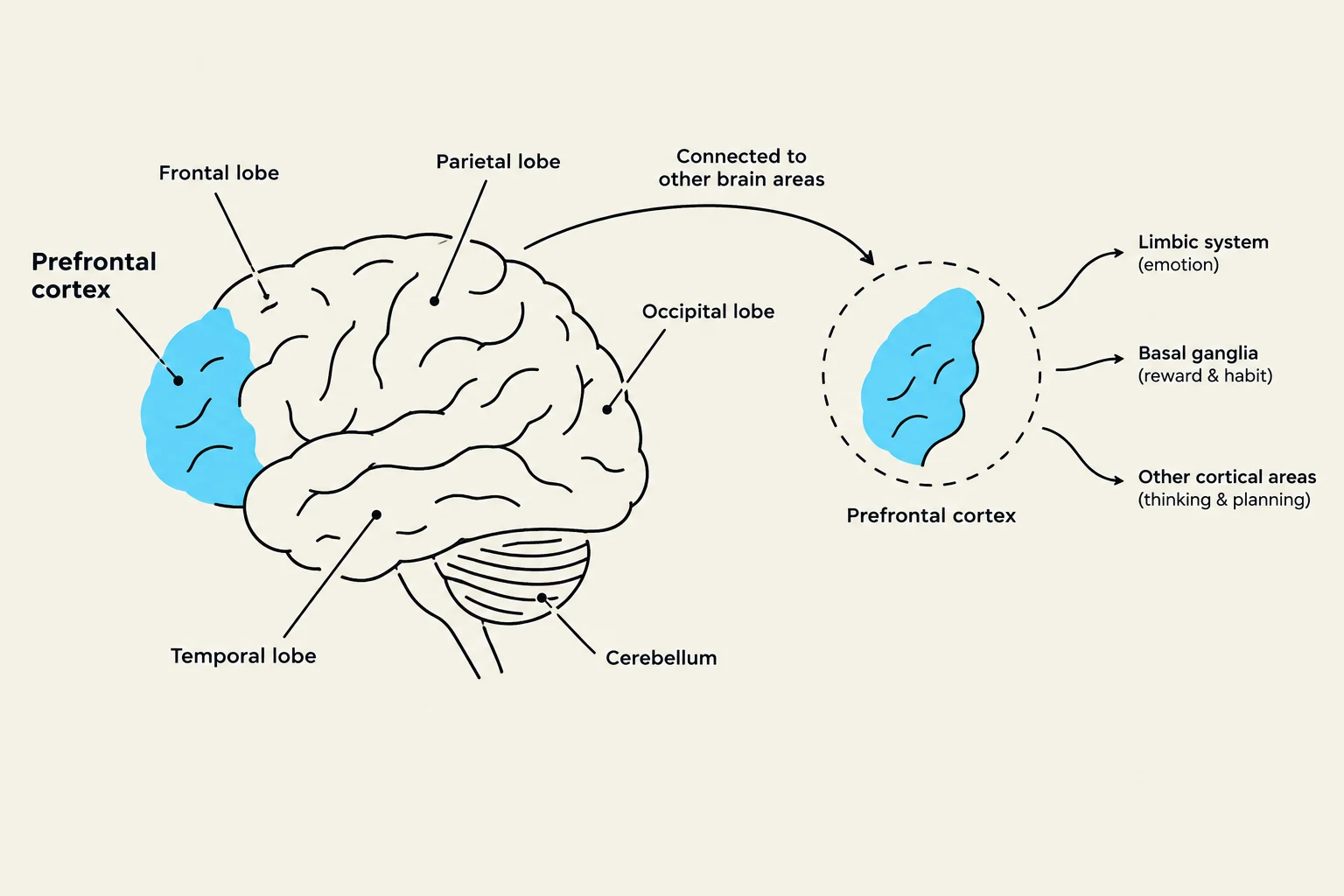
Diagram illustrating different lobes of the human brain and their functions, including the prefrontal cortex, frontal lobe, parietal lobe, occipital lobe, temporal lobe, cerebellum, limbic system, basal ganglia, and other cortical areas.
The Prefrontal Cortex and Executive Functioning
The most critical structure in the study of criminal behavior is the prefrontal cortex (PFC). Located at the very front of the frontal lobe, the PFC acts as the "CEO" or the command center of the brain. It is responsible for a suite of high-level cognitive processes known as executive functioning.
Executive functioning is the mental toolkit that allows humans to navigate complex social environments. It includes three primary pillars:
Impulse Control: The ability to suppress immediate, often irrational, urges or aggressive impulses in favor of long-term goals.
Decision-Making: The cognitive capacity to weigh the potential consequences of an action before committing to it.
Emotional Regulation: The ability to manage internal emotional states and social responses, ensuring that anger or fear does not lead to uncontrolled outbursts.
When the prefrontal cortex is compromised—whether through developmental issues or physical damage—the individual's "braking system" is effectively removed. This can lead to a state where the individual perceives a stimulus (such as an insult or a temptation) and reacts instantly without the moderating influence of logic or consequence.
Exam Tip: If asked to define the relationship between the prefrontal cortex and criminality, focus on the concept of "diminished capacity for self-control." The PFC provides the executive functioning necessary to resist impulses; without it, the biological capacity for social regulation is lowered.
Traumatic Brain Injury (TBI)
While some individuals may be born with structural differences, others acquire them through external force. Traumatic Brain Injury (TBI) is a major factor in the biological analysis of criminal behavior. A TBI occurs when an external force causes physical damage to the brain tissue, often disrupting the delicate neural pathways that facilitate communication between different brain regions.
Because the prefrontal cortex is often susceptible to injury (due to its position and the mechanics of impact), a TBI can lead to a sudden and drastic shift in personality. Common behavioral outcomes of TBI-related damage include:
Increased aggression and irritability.
Impaired judgment and inability to assess risk.
Loss of social inhibitions.
In legal and psychological evaluations, determining whether a crime was committed by an individual with a history of TBI can be essential for understanding the level of culpability and the potential for rehabilitation.
Beyond Structure: The Role of Brain Chemistry
It is a mistake to view the brain solely as a collection of "parts." Even if the physical structure (the anatomy) is intact, the way those parts communicate depends heavily on brain chemistry (neurochemistry).
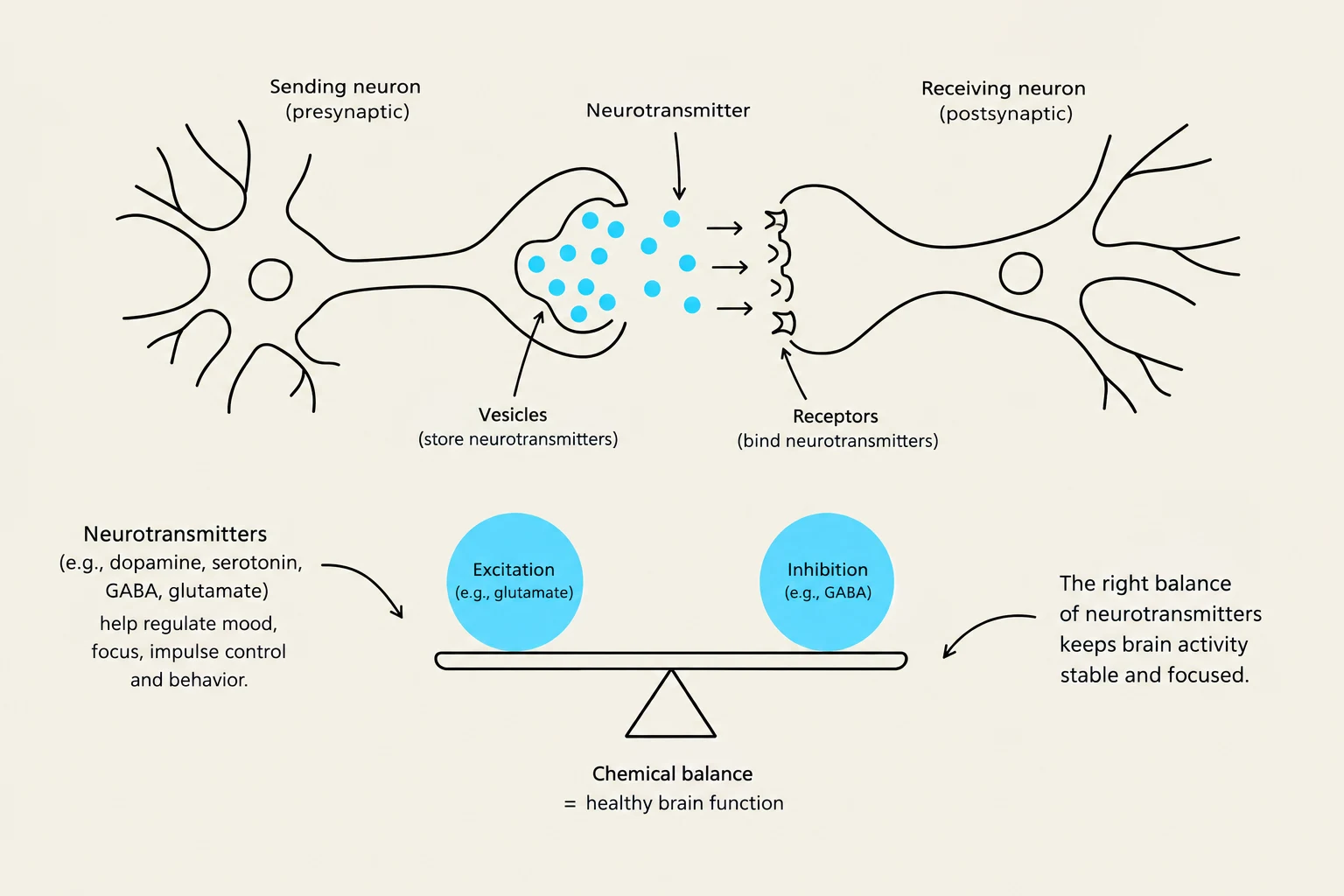
Neurochemistry involves the neurotransmitters and hormones that act as chemical messengers. These chemicals dictate how an individual processes environmental stressors and reacts to stimuli. Factors that can influence this chemical balance include:
Hormonal fluctuations: Such as testosterone or cortisol levels.
Nutritional factors: Including diet, blood sugar levels, and hydration.
Environmental contaminants: Exposure to toxins that can alter brain function.
If the chemical signaling is disrupted, even a structurally perfect prefrontal cortex may fail to function correctly, leading to the same types of impulsive or aggressive behaviors seen in structural damage.
This diagram illustrates the process of synaptic transmission, showing how neurotransmitters are released from a sending neuron, bind to receptors on a receiving neuron, and influence brain function through excitation or inhibition. The chemical balance of neurotransmitters is crucial for stable and focused brain activity.
Summary Table: Biological Factors in Criminality
Factor
Primary Mechanism
Behavioral Impact
Prefrontal Cortex
Executive Functioning
Loss of impulse control and decision-making
TBI
Physical Neural Damage
Increased aggression and impaired judgment
Brain Chemistry
Neurotransmitter/Hormonal Imbalance
Altered reaction to stress and stimuli
In conclusion, the biological perspective suggests that criminality is a complex interplay of structure, injury, and chemistry. By recognizing that certain individuals may struggle with the cognitive demands of legal and social norms due to these physiological realities, the field of criminology can move toward more nuanced and effective approaches to justice and rehabilitation.
Keep reading for free.
Create an account to finish this reading and make it part of your study routine.