This content explains the physiological pillars of organ viability, clinical targets (Rule of 100's), and management of hemodynamics and endocrine complications in brain death organ donation.
When a patient is declared brain dead, the clinical focus shifts from life-sustaining intervention for the patient to the meticulous preservation of organs for transplantation. The primary objective of organ donation management is to ensure maximum organ viability by maintaining robust tissue perfusion and preventing ischemia. This requires a highly coordinated effort between ICU staff and the Organ Procurement Organization (OPO) to manage complex physiological shifts that occur after neurological death.
This diagram illustrates the four physiological pillars essential for maintaining organ viability: oxygenation, thermoregulation, hydration, and infection control.
The Physiological Pillars of Organ Viability
To prevent organ failure before procurement, clinicians must stabilize several core physiological systems. The goal is to mimic a healthy physiological state as closely as possible to minimize the "warm ischemia time"—the period during which organs are without adequate blood flow.
Airway and Oxygenation
Maintaining a patent airway and ensuring adequate oxygenation is the first line of defense. Without mechanical ventilation and precise titration of oxygen, the organs will quickly succumb to hypoxia.
Thermoregulation
Temperature management is a delicate balancing act. Generally, clinicians aim to maintain a normal body temperature to support metabolic function. Specifically, the body temperature should be kept above 34∘C to prevent various complications. However, in certain clinical scenarios, controlled cooling of the body may be utilized to decrease the metabolic oxygen demand and mitigate the effects of ischemia.
Hydration and Volume Management
Maintaining adequate hydration is essential for preserving systemic perfusion. Clinicians use volume expanders and blood products as needed to maintain circulating volume and ensure that organs receive a steady supply of oxygenated blood.
Infection Control
Proactive prevention of infection is a critical component of the management protocol. Any systemic inflammatory response or infection can compromise the quality of the organs and render them unsuitable for transplantation.
The Rule of 100's: Clinical Targets
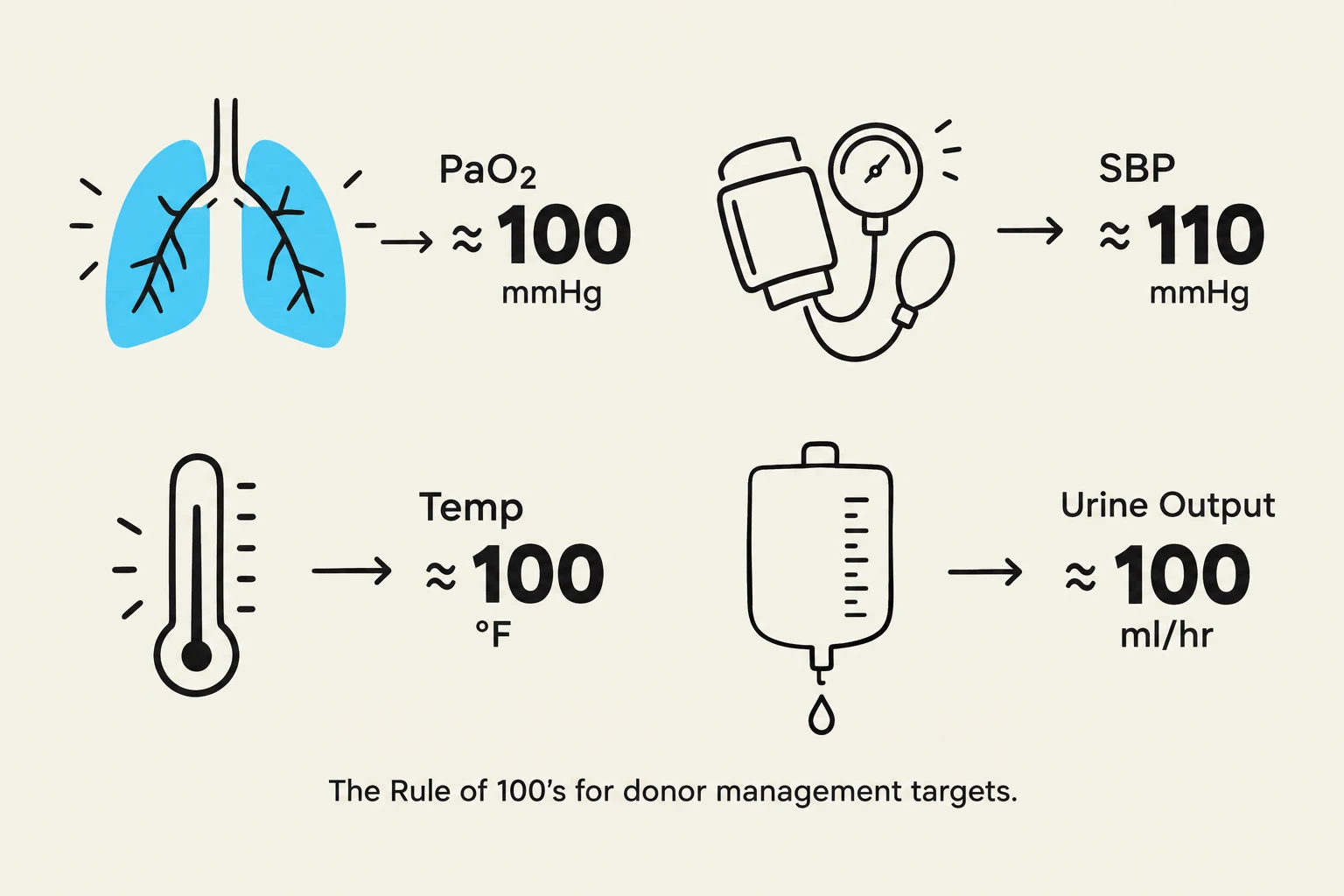
The Rule of 100's for donor management targets, including PaO2, SBP, temperature, and urine output.
A helpful framework for managing a brain-dead donor is the Rule of 100's. This provides clinicians with specific physiological targets to aim for during the maintenance phase:
Parameter
Target Value
PaO2
≈100 mm Hg
Systolic Blood Pressure (SBP)
≈110 mm Hg
Body Temperature
≈100∘F (Range: 97∘F to 102∘F)
Urine Output
≈100 ml per hour (Ideally <200 ml total)
Exam Tip: While intracranial pressure (ICP) management is a priority in patients with neurological insults, it is not required once brain death has been officially confirmed, as the brain is no longer a functional organ within the system.
Managing Hemodynamics and Endocrine Complications
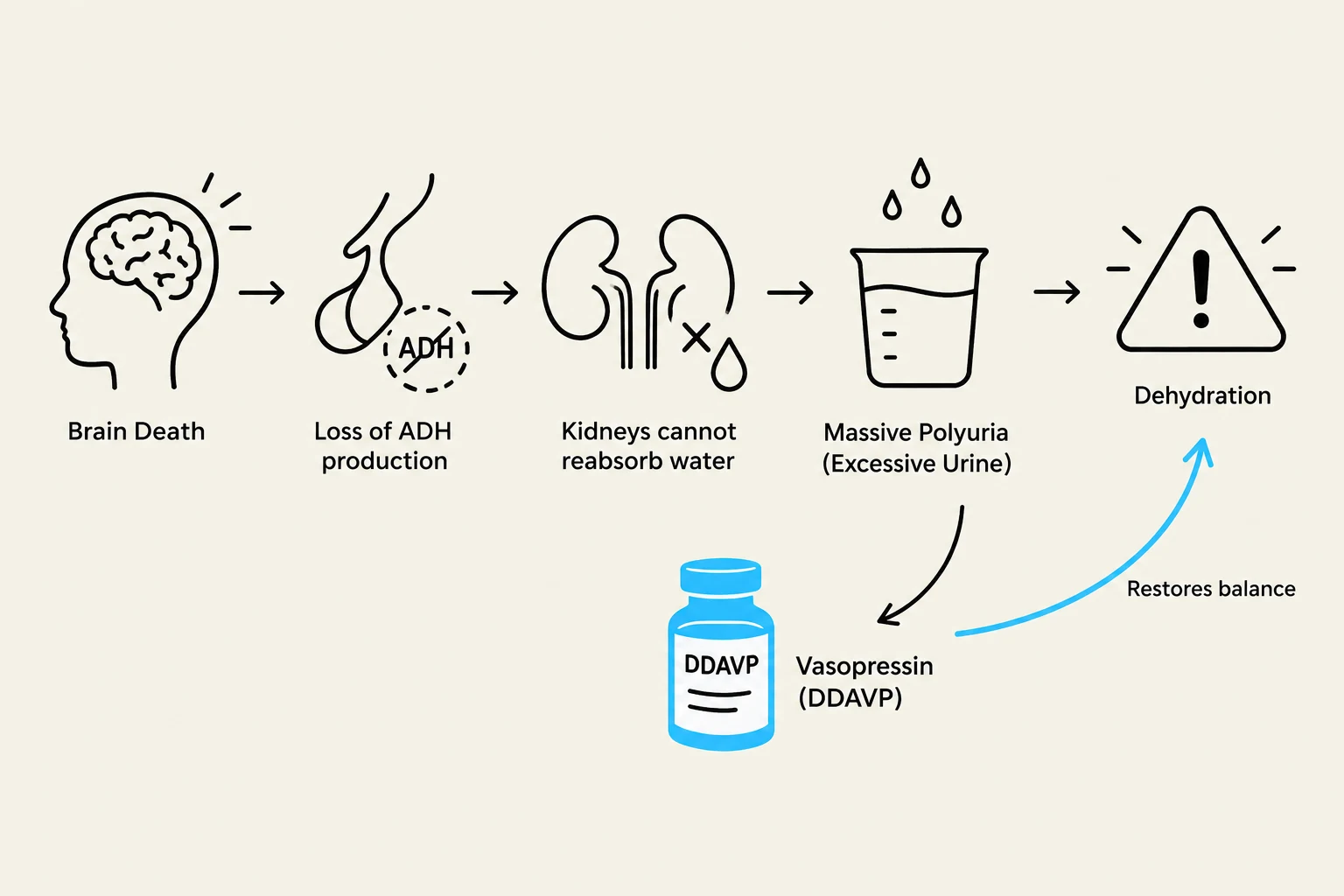
This diagram illustrates the physiological process of dehydration resulting from brain death and the subsequent loss of ADH production, leading to impaired kidney function and excessive urine output. It also shows how Vasopressin (DDAVP) can restore balance.
Maintaining hemodynamic stability is one of the most significant challenges in donor management. Because the body's natural regulatory mechanisms are lost following brain death, clinicians must intervene pharmacologically to manage blood pressure.
Vasopressors and Vasodilators
To preserve tissue perfusion, blood pressure must be tightly controlled. This often involves the use of vasopressors to increase systemic vascular resistance and blood pressure, or vasodilators if the patient experiences hypertensive crises that could damage organs.
Diabetes Insipidus (DI)
A critical complication affecting up to 98% of brain-dead donors is Diabetes Insipidus. DI occurs due to the loss of antidiuretic hormone (ADH) production, leading to massive polyuria (excessive urine production) and subsequent dehydration. This is typically managed with Vasopressin, specifically in its aqueous form known as DDAVP.
Surgical Pathways: Brain Death vs. DCD
The management and surgical process differs significantly depending on whether the donation is from a brain-dead donor or a Donation after Circulatory Death (DCD) donor.
Brain Dead Donor
In the case of a brain-dead donor, the patient is typically moved to the operating room (OR) for preparation, draping, and the subsequent lengthy dissection and organ removal process.
Donation after Circulatory Death (DCD) Donor
The DCD process is more complex regarding staffing and timing:
The patient is taken to the room, but ICU staff must remain present throughout the process.
The process includes extubation and the administration of comfort care.
Clinicians must wait for cardiac standstill to occur.
Once standstill is achieved, a mandatory five-minute waiting period is observed before death is pronounced.
Following pronouncement, the OPO manages the perfusion and organ removal.
Organ Placement and Logistics
Once the organs are recovered, they must be allocated through the proper legal and medical channels. This process is managed by the local Organ Procurement Organization (OPO).
Organ Placement: This involves running "the list" to find compatible recipients.
Multiple Lists: Organs may be offered to various regional or national registries.
Directed Donation: In some cases, a donor may have specified a particular recipient through legal documentation.
Multi-organ Donation: A single donor may provide multiple organs to different recipients simultaneously.
Keep reading for free.
Create an account to finish this reading and make it part of your study routine.